

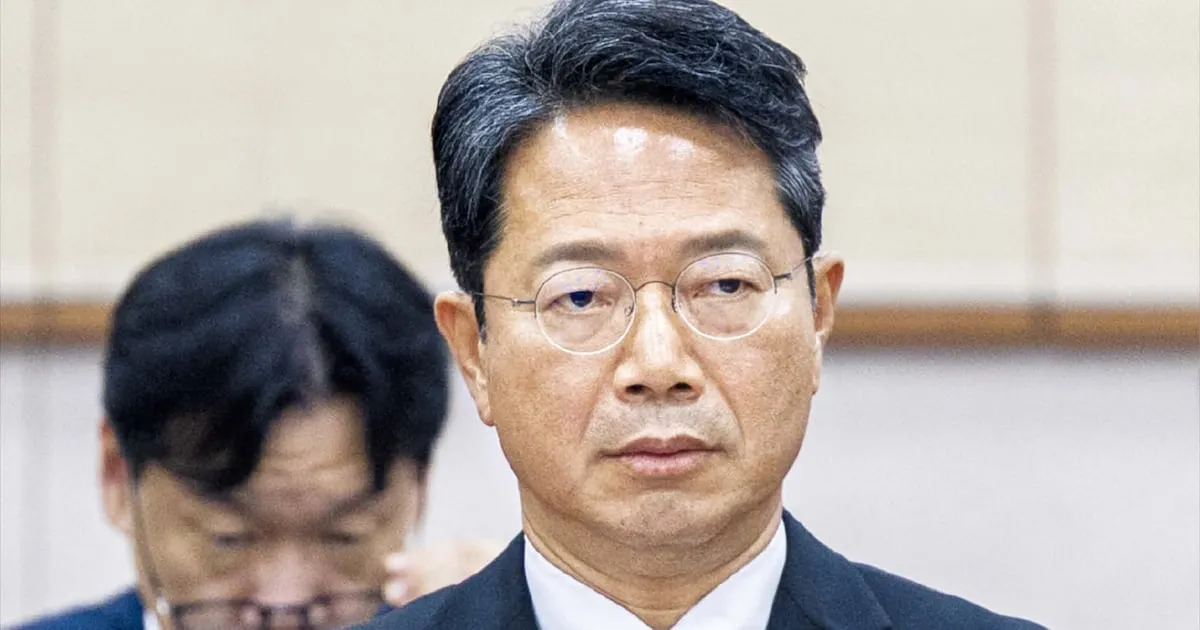
Kim Sung-won, a nominee for Justice Minister, faced intense questioning during a parliamentary confirmation hearing on October 15th regarding allegations of lobbying related to pharmaceutical products. Despite the controversy, Kim asserted that if appointed, the ministry would investigate individuals who may have leaked investigative materials for political purposes.
Allegations of Pharmaceutical Lobbying
The core of the controversy centers on accusations that Kim Sung-won engaged in lobbying activities while serving as a high-ranking official at the Ministry of Food and Drug Safety. Specifically, the allegations involve influencing the approval process for a COVID-19 treatment developed by a company called Celltrion. During the hearing, Kim largely denied these claims, stating that discussing the specifics would violate the principle of ‘fair trial,’ which prohibits the disclosure of criminal facts before an indictment.
Kim reiterated his previous stance that his actions concerning a broker named Yang were merely a ‘public interest’ transmission of constituent requests to the head of the Food and Drug Safety Agency. He explained that his understanding was that Celltrion’s drug could be obtained at a lower price point, around 100,000 won, compared to foreign treatments costing 700,000 to 800,000 won. When questioned about Celltrion allegedly submitting falsified data, including reports of hamster deaths, Kim stated, “As I am from a non-science background, I could not know the efficacy of the treatment.”
Denials and Counter-Accusations
Kim Sung-won strongly criticized Representative Han Dong-hoon, who raised the lobbying allegations. Kim accused Han of “playing games with investigative records” and stated that “misleading public opinion is a great enemy of democracy.” Several Democratic Party lawmakers also echoed concerns, arguing that Han’s use of a recorded conversation with the broker Yang, which they deemed illegally obtained, was inappropriate for a parliamentary setting.
One lawmaker, speaking outside the hearing, directly challenged Kim’s nomination, stating, “Lobbyist Kim Sung-won and those trying to appoint him as Justice Minister are enemies of democracy.” Another legislator intended to testify during the hearing but was unable to participate due to a lack of agreement between the ruling and opposition parties.
Refusal to Submit Documents
A significant point of contention during the hearing was Kim Sung-won’s refusal to submit most of the requested documents, citing the protection of ‘personal information.’ This decision further fueled the opposition’s criticism.
Representative Park Hyung-soo of the People Power Party pointed out that the Democratic Party had planned a confirmation hearing without witnesses, and Kim had failed to provide 64.6% of the requested materials. The hearing itself was reportedly contentious, with disagreements over document submission and the proceedings.
Past Actions and Ongoing Investigations
The scrutiny of Kim Sung-won stems from actions taken in 2021. At that time, he requested the head of the Food and Drug Safety Agency to expedite the clinical trial approval process for Celltrion’s COVID-19 treatment, following a petition from the broker Yang. Prosecutors have since recommended a suspension of charges against Kim in 2024.
Broker Yang and Kang Mo, a founder of Celltrion, are currently facing retrial on suspicion of conspiracy to offer bribes. The investigation into these matters continues to unfold.
Justice Minister’s Role and Presidential Pardon
In a separate line of questioning, Kim Sung-won addressed inquiries related to the alleged special consideration in the dismissal of charges for Lee Jae-myung, a prominent political figure. Kim stated that the Minister of Justice does not have the authority to dismiss charges and that he has no intention of directing investigations through the Prosecutor General’s office.
The confirmation hearing highlighted significant political divisions, with both sides expressing frustration over the process and the handling of information. The opposition parties expressed strong dissatisfaction with the lack of transparency and the nominee’s responses throughout the proceedings.
Conclusion
The confirmation hearing for Kim Sung-won revealed deep-seated concerns regarding alleged lobbying activities, transparency in regulatory processes, and the handling of sensitive information. While Kim has denied the accusations and emphasized the importance of fair trial principles, the opposition remains critical, questioning his suitability for the role of Justice Minister. The ongoing investigations and political debates surrounding these issues are likely to continue shaping the public discourse.
