

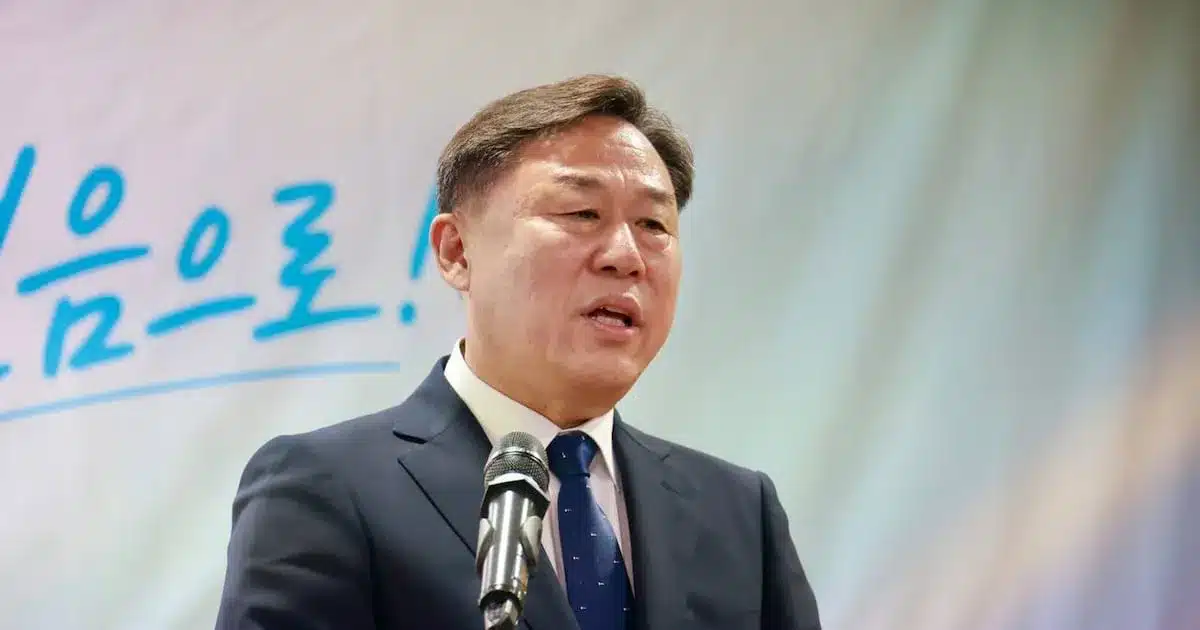
Kim Jong-hoon, former Dong-gu District chief of Ulsan, has been elected as the new leader of the Progressive Party. The announcement came on March 24th, following a party leadership election held from March 20th to the 24th. Kim secured a significant victory, garnering 26,452 votes out of a total of 42,314 cast, which amounts to 62.51% of the vote, decisively defeating his opponent, Lee Sung-soo.
Kim Jong-hoon’s Political Background
Kim Jong-hoon brings a wealth of experience in local politics to his new role. He previously served as the Dong-gu District chief of Ulsan for two terms, from the 6th to the 9th terms. His political career also includes a stint as a member of the National Assembly representing the Dong-gu constituency of Ulsan during the 20th term. More recently, he ran as a candidate for the Ulsan mayorship in the June 3rd local elections. In that election, he unified with Kim Sang-wook, the current Ulsan mayor and a member of the Democratic Party, demonstrating a willingness to collaborate for broader political goals.
Vision for the Progressive Party
Upon his election, the new party leader outlined his vision for the Progressive Party, emphasizing a strategic focus on the upcoming 2028 general elections. “We will concentrate all our efforts on achieving victory in the 2028 general elections to become a major party that the people choose and the ruling party prepares for,” Kim stated. He further elaborated on his ambition to establish the party as a significant third force in the political landscape, aiming to implement a “negotiation body within the floor” in the upcoming general elections. This suggests a strategy to increase the party’s parliamentary influence and negotiation power.
Transition to a Single Leader System
The election of Kim Jong-hoon also marks a significant structural change within the Progressive Party. Previously, the party operated under a joint leadership system, with a supreme leader and co-leaders working together. However, with this new leadership transition, the party has officially moved to a single-leader system. Kim Jong-hoon will therefore be the first party leader under this new structure, signaling a move towards a more centralized leadership model. This change is expected to streamline decision-making processes and present a more unified front in national politics.
New Supreme Council Members and Youth Leader
In addition to the party leader, the election also saw the selection of new members for the Supreme Council. Song Young-joo, Kim Hyun-jong, Shin Chang-hyun, Jeong Tae-heung, and Jang Jin-sook were elected as members of the council. These individuals will play a crucial role in shaping the party’s policies and direction alongside the new leader. Furthermore, Lee Hae-ji was elected as the Youth Leader of the Progressive Party, having run unopposed for the position. His unopposed candidacy suggests strong support for his vision for the party’s youth wing.
Term of Office
The newly elected leadership, including Kim Jong-hoon and the Supreme Council members, will serve a two-year term, commencing on March 25th. This period will be critical for the party as it navigates its new leadership structure and prepares for the significant political challenges and opportunities ahead, particularly the 2028 general elections.
Conclusion
Kim Jong-hoon’s election as the new leader of the Progressive Party, coupled with the transition to a single-leader system and the election of new council members, represents a pivotal moment for the party. His focus on the 2028 general elections and his ambition to position the party as a key political force indicate a forward-looking strategy. The party faithful will be watching closely to see how this new leadership steers the Progressive Party towards its stated goals in the coming years.
