

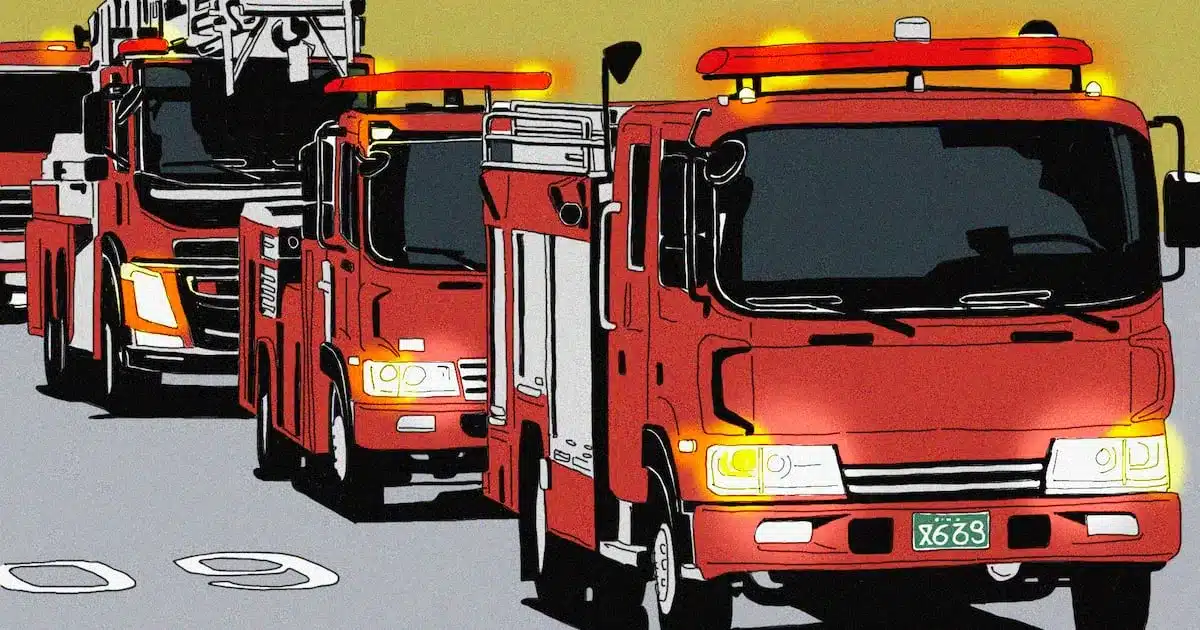
A significant fire broke out at an agricultural and marine products market in Songcheon-dong, Deokjin-gu, Jeonju, South Korea, on the evening of the 9th. The blaze, which began around 11:13 PM, prompted an escalated response from emergency services due to the potential for the flames to spread to surrounding areas.
Firefighters Mobilize for Large-Scale Response
Recognizing the risk of the fire spreading, the fire department elevated the incident to a Level 2 response approximately 16 minutes after the initial alarm, at 11:29 PM. This designation involves mobilizing a substantial number of resources, typically five to six fire stations, with personnel and equipment deployed to combat the escalating situation. The primary objective is to contain the fire and prevent it from engulfing adjacent structures and properties within the busy market district.
As of the latest reports, there have been no confirmed casualties or injuries resulting from the fire. Emergency services are prioritizing the safety of the public and are working diligently to bring the situation under control. The Jeonju city government issued a safety alert to residents in the vicinity shortly after the fire’s commencement, advising them to exercise caution and avoid inhaling smoke, which could pose health risks.
Ongoing Investigation into Cause and Damage Assessment
Once the fire is fully extinguished, fire officials and investigators are expected to launch a thorough inquiry to determine the precise cause of the blaze. Simultaneously, a detailed assessment of the property damage will be conducted. The agricultural and marine products market is a vital hub for local commerce, and understanding the extent of the destruction is crucial for the recovery and rebuilding efforts that will follow.
The Importance of Agricultural Markets
Agricultural markets like the one in Songcheon-dong play a critical role in the local economy and food supply chain. They serve as central points where farmers and producers can sell their goods directly to consumers, wholesalers, and retailers. These markets often feature a wide array of fresh produce, seafood, meats, and other agricultural products, contributing to the vibrant culinary landscape of a region.
The economic impact of such a fire can be substantial. Beyond the immediate damage to market stalls, storage facilities, and inventory, there are ripple effects on the livelihoods of numerous vendors and the availability of goods for consumers. The disruption can lead to temporary shortages and price fluctuations for certain products.
Emergency Response Protocols
The decision to escalate the response to a Level 2 alert signifies the seriousness of the fire. Fire departments utilize a tiered system to manage incidents based on their scale and potential impact. A Level 1 response is typically for smaller fires that can be handled by a single station. As the fire grows in intensity or threatens to spread, higher levels are invoked, bringing in more specialized equipment, additional personnel, and often mutual aid from neighboring jurisdictions.
Key elements of a Level 2 response include:
- Increased Personnel: A larger contingent of firefighters is dispatched to the scene to manage multiple aspects of the firefighting operation.
- Diverse Equipment: Specialized apparatus, such as ladder trucks, aerial platforms, and additional water tenders, are brought in to enhance firefighting capabilities.
- Command Structure: A more robust incident command system is established to coordinate efforts effectively, ensuring clear communication and strategic deployment of resources.
- Resource Allocation: Firefighting efforts are intensified, focusing on containment, extinguishment, and protecting exposures.
Community Impact and Safety Measures
The safety alert issued by the Jeonju city government underscores the potential hazards associated with large fires, particularly smoke inhalation. Smoke contains a complex mixture of toxic gases and fine particles that can cause respiratory distress and other health problems, even at a distance from the fire’s origin. Residents were advised to stay indoors, close windows and doors, and use air purifiers if available.
The swift action by emergency services in issuing warnings and mobilizing resources aims to mitigate not only the immediate danger of the fire but also its potential secondary impacts on the community. The focus remains on ensuring the safety of all individuals involved and minimizing the spread of the blaze.
Looking Ahead: Recovery and Prevention
The aftermath of such an event involves a multi-faceted approach to recovery. This includes supporting the affected vendors, assessing insurance claims, and planning for the reconstruction or relocation of market facilities. Furthermore, the investigation into the fire’s origin will be critical in identifying any potential lapses in safety protocols or infrastructure issues that may have contributed to the incident. Lessons learned from this event will likely inform future fire prevention strategies and emergency preparedness plans for similar large-scale public markets across the region.
The dedication and bravery of the firefighters who responded to the scene are paramount in managing this crisis. Their efforts to control the fire and protect the surrounding community highlight the essential role of emergency services in safeguarding public safety and property.
