

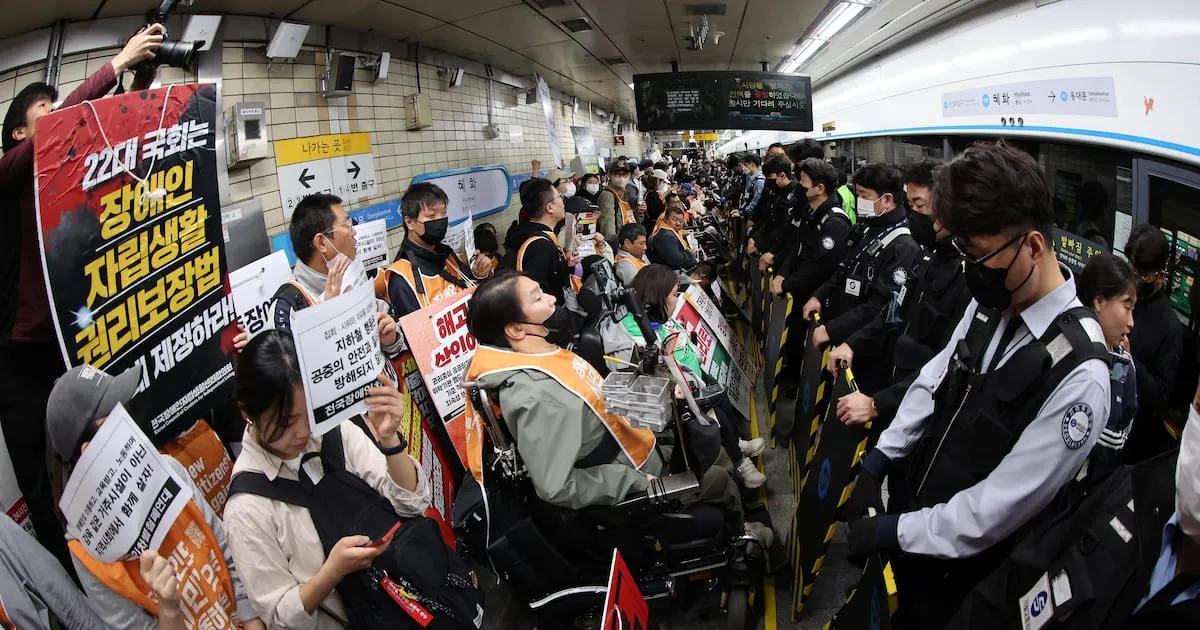
A protest by the National Federation of Persons with Disabilities (Jeonjangyeon) on the morning of October 3rd caused significant disruptions to Seoul’s subway system. Specifically, trains on Line 4 bypassed Hyehwa Station on the southbound platform (towards Sadang) as protesters demonstrated during the morning commute.
Protest Details and Impact
The incident began around 8:50 AM when Seoul Metro, the city’s public transportation authority, issued a safety announcement via text message. The message informed passengers that due to a gathering, trains on Line 4 would be passing through Hyehwa Station’s southbound platform without stopping. This measure was implemented to ensure passenger safety and manage the situation arising from the protest.
Jeonjangyeon, the organization spearheading the demonstration, stated that their protest, dubbed the ’70th Commute Subway Ride Protest,’ commenced at 8:00 AM. The group is advocating for the inclusion of disability rights budget allocations in the government’s proposed budget for 2027. Their demands center on securing adequate funding to support the rights and welfare of individuals with disabilities.
Background of Jeonjangyeon’s Demands
Jeonjangyeon has been vocal about the perceived inadequacy of government support for persons with disabilities. Their ongoing advocacy efforts aim to influence policy and budget decisions to reflect a stronger commitment to disability rights. The ‘Commute Subway Ride Protest’ is a recurring tactic employed by the organization to draw public attention and pressure the government into action.
The core of their demands revolves around specific budget items for the year 2027. While the exact figures and detailed proposals are extensive, the general thrust is to ensure that the government’s financial planning adequately addresses the needs of disabled citizens. This includes, but is not limited to, funding for accessibility improvements, support services, employment opportunities, and social integration programs.
The organization argues that current budget proposals fall short of what is necessary to achieve genuine equality and inclusion for persons with disabilities. They emphasize that their protests are not merely about financial allocations but about securing fundamental rights and ensuring that disabled individuals can participate fully in society.
Government and Public Response
The Seoul Metro’s immediate response of bypassing the station highlights the potential impact of such protests on public infrastructure and daily commutes. While aiming to mitigate direct confrontation, the disruption inevitably affects thousands of commuters who rely on the subway system.
The government has previously engaged in dialogues with Jeonjangyeon and other disability rights groups. However, achieving consensus on budget allocations and policy changes has often been a complex and protracted process. The organization’s persistent use of public disruption tactics underscores their frustration with the pace of progress and the perceived lack of substantive action from policymakers.
Public reaction to these protests is often divided. While many sympathize with the cause of disability rights and acknowledge the need for greater support, the inconvenience caused by transit disruptions can lead to frustration among commuters. The effectiveness of such protests often hinges on balancing the need to raise awareness and exert pressure with the potential to alienate the general public.
Looking Ahead: The 2027 Budget and Disability Rights
The upcoming 2027 government budget remains a critical focal point for Jeonjangyeon and the disability community. The organization plans to continue its advocacy efforts, utilizing various methods to ensure their demands are heard and addressed. The success of these efforts will likely depend on sustained public support, effective negotiation with government bodies, and the government’s willingness to make significant budgetary commitments.
The protest at Hyehwa Station serves as a stark reminder of the ongoing struggle for disability rights and the challenges in securing adequate resources and policy changes. As discussions around the 2027 budget intensify, the actions of Jeonjangyeon and the responses from the government will be closely watched by advocates, policymakers, and the public alike.
The organization’s commitment to regular protests, particularly during peak commute hours, signals their determination to keep disability rights high on the national agenda. Their strategy aims to maximize visibility and impact, ensuring that the issue remains a prominent topic of discussion and policy consideration.
Ultimately, the resolution of these demands will require a comprehensive approach that involves not only budgetary allocations but also a broader societal shift towards greater inclusivity and accessibility for all citizens. The ongoing dialogue between disability rights groups and the government is crucial in navigating these complex issues and working towards a more equitable future.
