

A recent investigation into a missing person case in Jeju, which was reportedly delayed due to a false report by a police officer, has drawn sharp criticism from members of the Democratic Party’s Police Reform Task Force and the Ministry of Interior and Safety. The incident, involving the discovery of Jang Mi-ran’s remains, has highlighted significant concerns regarding the police’s system for handling missing persons reports and their initial response.
Visit to Discovery Site and Initial Briefing
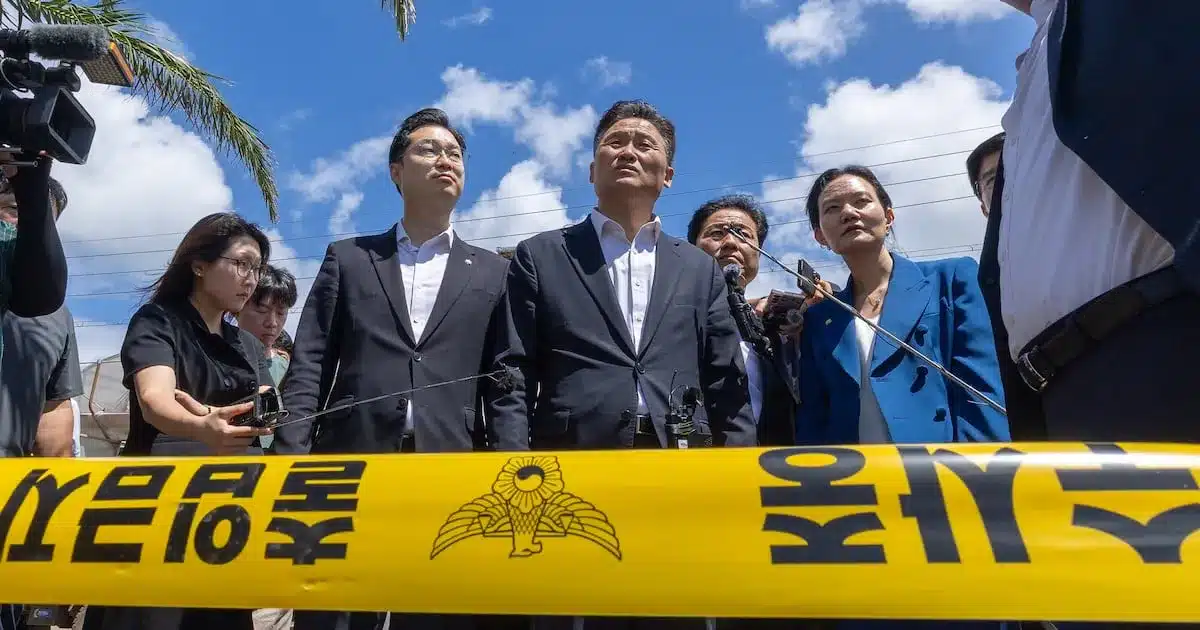
On the afternoon of October 28th, several lawmakers, including Kim Young-joo, who also serves as the Minister of the Interior and Safety, along with Kim Young-bae, co-chairs of the Police Reform Task Force Kim Nam-hee and Lee Hae-sik, and committee members Lee Ju-hee and Kim Dong-ah, visited the site in Hallim-eup, Jeju City, where Jang’s remains were found. They examined the location and surrounding terrain before proceeding to the Jeju Provincial Police Agency. There, they received a briefing from the head of the investigation division regarding the circumstances of the search, the number of personnel deployed, and other details pertinent to the case.
Calls for Systemic Improvement
Following their on-site inspection, the Democratic Party lawmakers emphasized the urgent need for comprehensive improvements to the entire system for searching for and responding to missing persons.
Critique of Initial Assessment and Response Protocol
Lawmaker Kim Young-jin stated, “If the situation had been accurately assessed at the time of the initial report, and the search area expanded accordingly, there might have been a possibility to conclude the case much earlier.” She further stressed the necessity of developing clearer manuals and regulations for handling missing persons. “The police must establish a system that prioritizes the life and safety of the missing person from the initial reporting stage,” Kim added.
Broader Systemic Failures Alleged
Kim Nam-hee, co-chair of the task force, expressed the public’s significant frustration with the entire process, from the initial missing person report to the eventual discovery of remains as a false report. “This incident cannot be viewed solely as an individual failure of the police officer in charge,” Kim asserted. He questioned whether the search operations would have proceeded with the same level of urgency and thoroughness if the case had not garnered significant public and media attention. “If this hadn’t been a high-profile case, would the search for the missing person have proceeded solely based on the system, without deeper investigation?” he queried, suggesting a potential over-reliance on procedural steps rather than proactive, human-centered investigation.
Further Engagements and Political Response
The Democratic Party delegation’s activities on that day extended beyond the site visit. They also held a meeting with the Jeju Provincial Police Commissioner. Meanwhile, Jang Dong-hyuk, the interim leader of the People Power Party, also visited the scene directly on the same afternoon, indicating the broad political interest and concern surrounding the case and its implications for police accountability and effectiveness.
Background of the Jang Mi-ran Case
The case that brought these issues to light involved Jang Mi-ran, who was reported missing. The subsequent investigation revealed that the initial report was ultimately determined to be a false report, allegedly made by a police officer. This revelation led to criticism that the police’s handling of the situation, particularly their initial assessment and subsequent search efforts, was inadequate and contributed to a delay in resolving the case. The discovery of Jang’s remains at the Hallim-eup site marked a tragic end to the search, prompting a deeper examination of the police procedures and protocols in place for such critical situations.
Implications for Police Reform
The incident has amplified calls for significant reforms within the Korean National Police Agency. Critics argue that the case exposes systemic weaknesses, including potential issues with how initial reports are evaluated, the speed and scope of initial searches, and the overall responsiveness of the police to missing persons situations. The Police Reform Task Force aims to address these shortcomings by proposing legislative changes and policy adjustments to ensure that future cases are handled with greater efficiency, accuracy, and a stronger emphasis on the well-being of individuals reported missing. The goal is to prevent similar tragedies and restore public trust in the police’s ability to protect its citizens.
Conclusion
The discovery of Jang Mi-ran’s remains and the subsequent revelations about the handling of her missing person report have cast a spotlight on the operational effectiveness and procedural integrity of the Jeju police and, by extension, the national police system. The strong reactions from political figures underscore the public’s expectation for a robust and sensitive response to missing persons cases. The ongoing scrutiny is expected to drive efforts toward implementing meaningful reforms that prioritize timely and effective action, ensuring that no life is lost due to systemic delays or misjudgments in the future.
