

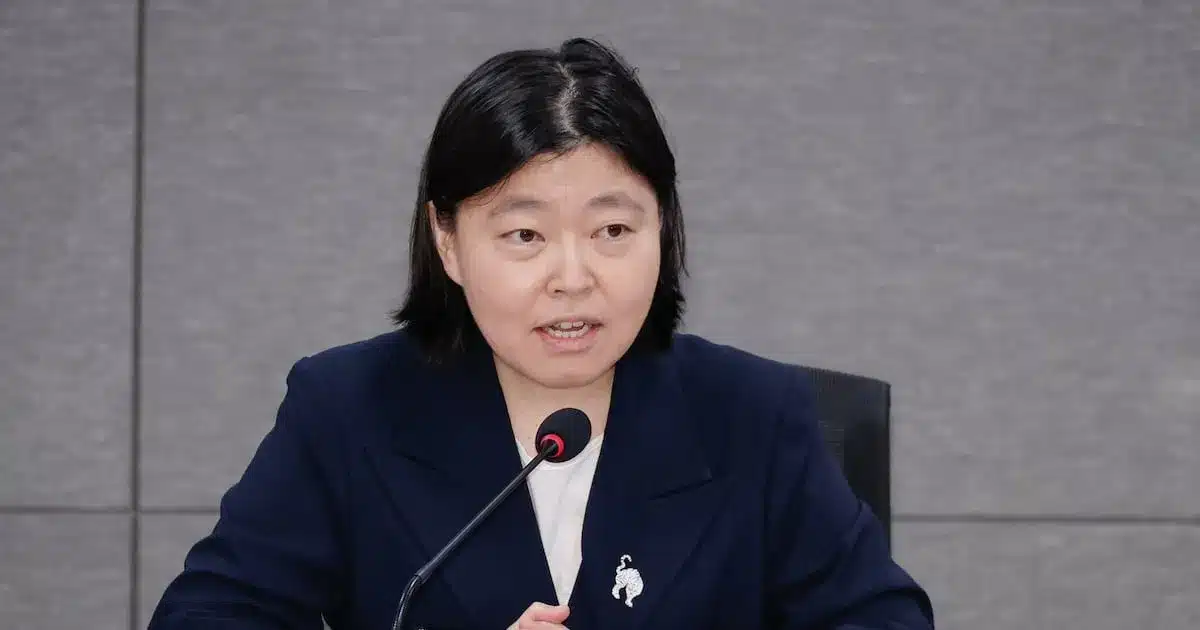
Im Eun-jeong, the current Prosecutor General of the Seoul Eastern District Prosecutors’ Office and a prominent figure advocating for prosecutorial reform, has reportedly applied for a position within the newly established Special Investigation Agency. This marks the first instance of a sitting prosecutor applying for a role in the agency, signaling a significant development in the ongoing restructuring of investigative bodies.
Im Eun-jeong’s Application for Special Investigation Agency
Sources confirmed on the 20th that Im Eun-jeong submitted an application for the special recruitment of prosecutors and investigators for the Special Investigation Agency. The agency is slated to launch on October 2nd, and the application period for these special appointments ran from the 7th to the 20th of the current month. This move by Im, a high-ranking prosecutor, to join the new agency is unprecedented among current prosecutors.
Under the ‘Special Investigation Agency Appointment Regulations,’ prosecutors and investigators currently serving in the prosecution service are eligible to transfer to the Special Investigation Agency without undergoing separate examinations. The regulations outline a tiered system for appointing investigators based on their current rank and experience within the prosecution service. Prosecutors General, like Im Eun-jeong, are designated to be appointed as ‘Grade 1 Investigators.’ Deputy Prosecutors General and Assistant Prosecutors General are slated for ‘Grade 2 Investigator’ roles. Prosecutors with over 10 years of legal experience will be appointed as ‘Grade 3 Investigators,’ while those with less than 10 years will be ‘Grade 4 Investigators.’
Background of Im Eun-jeong’s Interest
Im Eun-jeong had previously expressed her intention to work at the Special Investigation Agency. At the end of last year, during a meeting of the heads of the first-term agency, she conveyed her desire to be transferred. At that time, the Supreme Prosecutors’ Office conducted a survey among 910 prosecutors to gauge their future career aspirations. The survey revealed that only 0.8% of respondents, approximately seven individuals, expressed interest in working at the Special Investigation Agency. Im Eun-jeong was among this small group.
Following the survey, Im Eun-jeong shared her thoughts on social media, stating her support for the introduction of a rotation system. She emphasized that for the Special Investigation Agency to establish itself as a crucial investigative body, it must be led by individuals with high public trust and proven capabilities. She specifically mentioned the need for the initial head of the agency and the initial head of the first-term agency to be appointed based on their integrity and competence. Im concluded by expressing her readiness to dedicate her passion and efforts as an investigator.
The Special Investigation Agency: A New Era for Investigations?
The establishment of the Special Investigation Agency is a significant component of broader reforms aimed at reshaping South Korea’s investigative landscape. The agency is intended to handle complex and high-profile cases, potentially reducing the burden on existing prosecutorial offices and introducing a fresh approach to investigations. The special recruitment process, including the eligibility for current prosecutors to transfer, highlights the government’s strategy to infuse the new agency with experienced personnel while simultaneously signaling a shift in investigative authority.
The fact that a senior prosecutor like Im Eun-jeong, who is also known for her advocacy for prosecutorial reform, has applied for a position underscores the perceived importance and potential influence of the new agency. Her public statements suggest a belief that the agency can serve as a platform for more effective and trustworthy investigations, provided it is staffed with capable and ethical individuals.
Implications of the Special Appointment System
The special appointment system, allowing existing prosecutors to transition without additional exams, is designed to expedite the staffing of the Special Investigation Agency. This approach aims to leverage the existing expertise and institutional knowledge within the prosecution service. However, it also raises questions about the extent to which the new agency will represent a departure from the old system, particularly given that its initial personnel will largely come from the very institutions undergoing reform.
The tiered appointment structure, linking investigator rank to current prosecutorial positions, ensures a clear hierarchy and recognizes the experience levels of incoming staff. For Im Eun-jeong, her appointment as a Grade 1 Investigator signifies a senior role within the agency, reflecting her current standing as a Prosecutor General. This system aims to maintain a level of continuity and respect for seniority while building a new investigative body.
Future Outlook
The successful launch and operation of the Special Investigation Agency will depend heavily on the caliber of its leadership and staff, as well as its ability to gain public trust. Im Eun-jeong’s application is a notable event that could influence the perceptions and aspirations of other legal professionals. As the agency prepares for its inauguration, the focus will remain on how it navigates its mandate, fosters independence, and contributes to a more robust and equitable justice system.
The coming months will be critical in observing how the Special Investigation Agency integrates into the existing legal framework and whether it can fulfill its promise of enhanced investigative capabilities and reforms. The participation of figures like Im Eun-jeong suggests a commitment from some within the legal community to actively shape the future of investigations in South Korea.
