

The government has announced a comprehensive strategy to integrate artificial intelligence (AI) into public services, aiming to create a more responsive and citizen-centric administration. This initiative, dubbed ‘AI Democratic Government,’ seeks to enhance national services by leveraging AI to provide personalized support and streamline government operations. A key component of this plan involves making AI education mandatory for all public officials to foster a government-wide understanding and capability in utilizing AI technologies.
Enhancing Citizen Services with AI
The core objective of the ‘AI Democratic Government’ strategy is to proactively identify and deliver services that citizens need, while also ensuring public opinion is genuinely reflected in policy-making. This approach aims to bring about tangible improvements in people’s daily lives.
Personalized Support Across Key Sectors
Initially, the government will focus on improving citizen-facing services in five critical areas: welfare, safety, taxation, agriculture, and pharmaceuticals. AI-powered chatbot systems will be established to offer guidance and information on topics ranging from childcare services and tax compliance to infectious disease information and dietary advice.
Upgrading Public AI Services
Public AI services will undergo significant upgrades to enhance accessibility and user experience. The plan includes standardizing public services so they can be accessed through popular private platforms like Kakao and Naver, as well as a unified ‘Everyone’s AI’ service. This expansion aims to broaden access points for citizens interacting with government AI services.
Facilitating Public Engagement and Policy Input
A new platform, ‘Everyone’s Plaza,’ will be developed to facilitate the incorporation of public opinions into policy. AI will be employed to collect and analyze citizen feedback, ensuring that public sentiment directly influences government decisions. Furthermore, government websites and applications will be redeveloped with a more AI-friendly interface.
Tailored Services for Specific Demographics
The strategy also emphasizes providing personalized AI services to different age groups. For instance, an AI health management system will be offered to the elderly, while young people will receive customized information related to employment and career opportunities.
Transforming Government Operations with AI
The implementation of AI is not limited to citizen services; it will also fundamentally transform how public administration functions. A new intelligent work management system, ‘OnAI,’ is being introduced to automate various administrative tasks, including legal reviews and the drafting of reports.
Specialized AI Projects by Ministry
Various government ministries are undertaking specific AI projects tailored to their domains:
- The Ministry of Food and Drug Safety is developing an AI-based drug review and approval service.
- The Ministry of Land, Infrastructure and Transport is implementing an AI system for construction permit reviews.
- The Korea Meteorological Administration is working on developing a Korean-style AI foundation model for weather forecasting and climate prediction.
Developing AI Expertise within the Public Sector
To support the widespread adoption of AI, the government is investing in developing the AI capabilities of its workforce. Making AI education mandatory for all public officials is a cornerstone of this effort. Additionally, the government aims to cultivate 20,000 specialized personnel capable of developing AI independently. To further encourage AI adoption and innovation, AI utilization competitions will be held annually for public officials.
International Disaster Information Dissemination
In the realm of disaster safety, AI will be actively utilized to provide safety information in 22 languages. This initiative is designed to help foreign nationals quickly understand disaster situations and access necessary information, enhancing national resilience during emergencies.
Vision for an AI-Driven Future
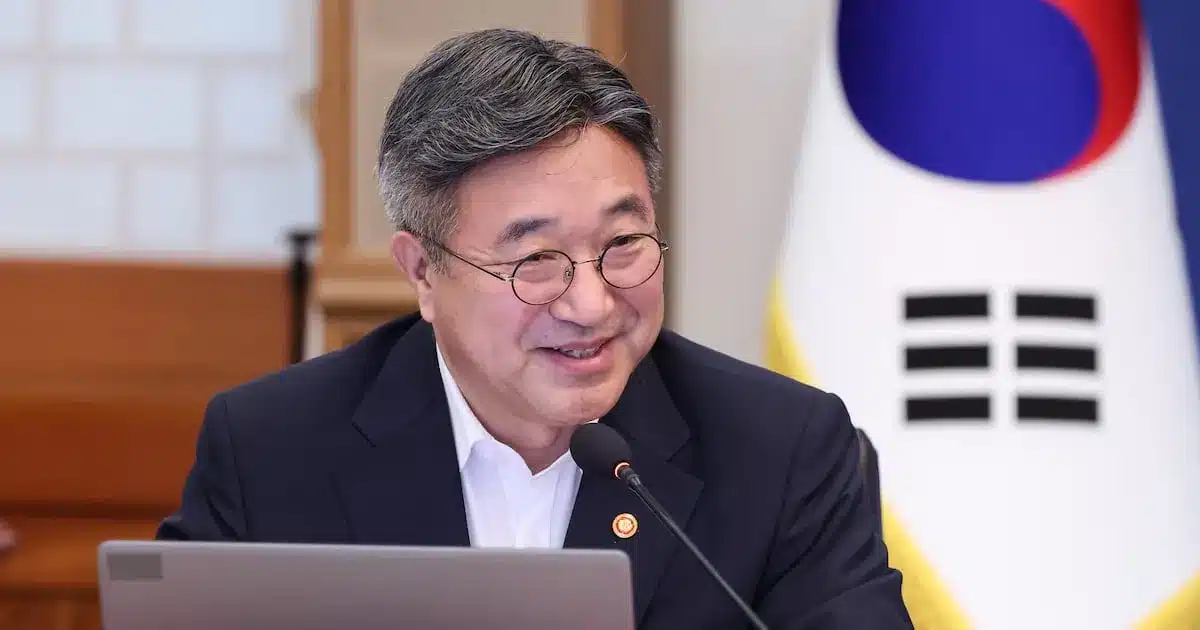
Minister of the Interior and Safety, Yoon Ho-joong, presented the ‘AI Democratic Government Implementation Strategy’ at a state affairs meeting. He emphasized that the core of this initiative lies not merely in technological adoption, but in empowering citizens to become the true masters of national governance through AI. “We will create changes and results that citizens can tangibly feel in their lives,” Yoon stated, underscoring the government’s commitment to delivering practical benefits through AI integration.
The strategy reflects a forward-thinking approach, aiming to harness the power of AI to create a more efficient, inclusive, and citizen-focused government that is prepared for the challenges and opportunities of the digital age.
