

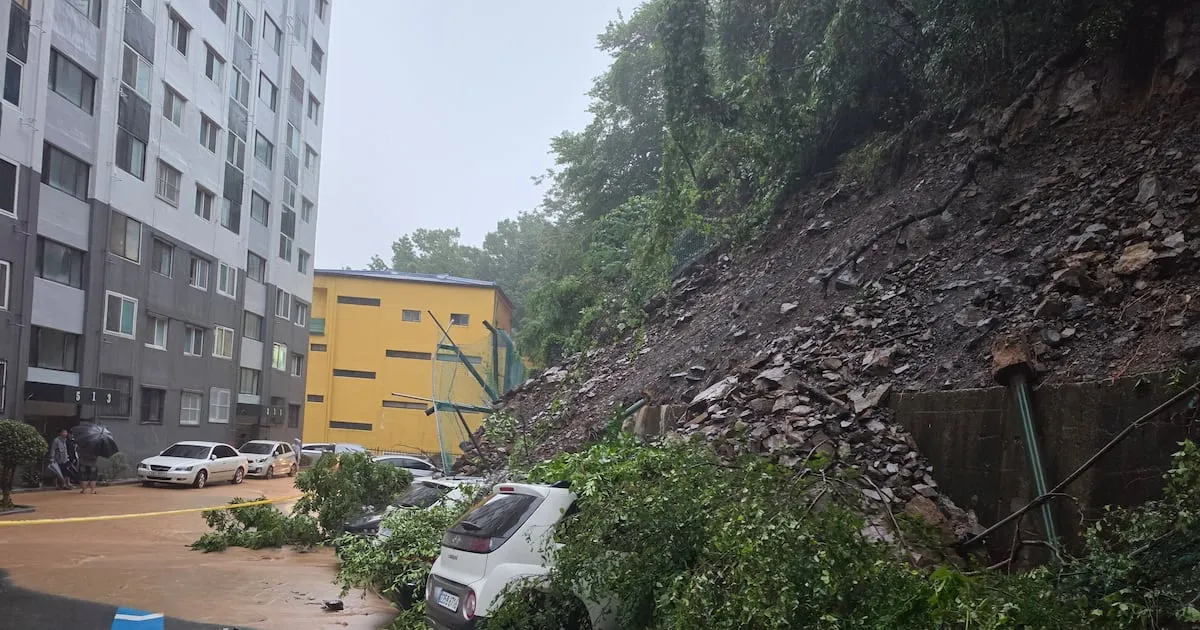
Torrential rainfall has inundated parts of South Korea’s southeastern coast, leading to widespread flooding, property damage, and emergency evacuations. The Ministry of the Interior and Safety has escalated its response by activating the Central Disaster and Safety Countermeasures Headquarters to Level 1 and dispatching emergency resources to manage the escalating crisis. The severe weather event, which began on July 15th, has caused significant rainfall accumulations, with Geoje in South Gyeongsang Province recording a staggering 782.5 mm as of July 17th. Tongyeong, also in South Gyeongsang, has received 628.9 mm, while Gangseo in Busan recorded 428.5 mm.
Intense Rainfall and Its Impact
The downpour has been particularly intense in certain areas. Geoje experienced a peak rainfall rate of 124.5 mm per hour, overwhelming drainage systems and leading to flash floods. Other regions also saw extreme hourly precipitation, with Gangseo in Busan recording 101.5 mm and Tongyeong receiving 97.4 mm within an hour. This concentrated rainfall has resulted in submerged homes and roads, and triggered landslides and mudslides, posing a significant threat to residents.
Emergency Response and Evacuations
In response to the immediate dangers, authorities have initiated rescue and evacuation operations. In Geoje, approximately 20 residents from areas like Hoejin Village were reported to be trapped by floodwaters, necessitating rescue efforts. Another 100 residents in the Yesol Village area of Ajudo were evacuated as a precautionary measure due to the imminent risk of landslides. By 4:30 AM on July 17th, the Fire Department reported that 154 individuals in Geoje required assistance, either through rescue or evacuation. The primary concern was landslides, affecting 101 people, followed by residential flooding (34 people), submerged vehicles (8), and fire hazards (3).
Widespread Damage Reported
The cumulative impact of the heavy rains across Busan and South Gyeongsang Province has led to over 600 reported incidents of damage. As of 6:00 AM on the same day, a total of 603 damage reports had been logged. The most frequent issue was blocked roads, accounting for 332 incidents. Residential flooding was also widespread, with 208 homes affected. Other reported damages included submerged infrastructure like underpasses (33 incidents) and landslides or rockfalls (30 incidents).
Government Activation of Disaster Headquarters
The activation of the Central Disaster and Safety Countermeasures Headquarters (CDSC) to Level 1 signifies the severity of the situation and the government’s commitment to a swift and effective response. This level of activation allows for the mobilization of national resources, coordination between different government agencies, and the implementation of comprehensive disaster management strategies. The focus is on rapid assessment of damage, efficient rescue operations, and providing immediate relief to affected populations. Officials are working around the clock to monitor the weather patterns, assess the ongoing risks, and ensure the safety and well-being of all residents in the affected regions.
Looking Ahead: Preparedness and Recovery
While the immediate focus is on rescue and mitigating further damage, authorities are also beginning to consider the long-term recovery efforts. This will involve assessing the full extent of the damage to infrastructure, homes, and public facilities, and planning for reconstruction and support for those who have lost property or livelihoods. The government has emphasized the importance of public cooperation and adherence to safety guidelines during this critical period. Residents are advised to stay informed about weather updates and follow instructions from emergency personnel. The activation of the CDSC at its highest level underscores the government’s determination to overcome this natural disaster through coordinated national efforts.
The meteorological agency has indicated that while the intensity of the rainfall may decrease in some areas, the risk of further landslides and flooding remains high due to saturated ground conditions. Continuous monitoring and preparedness are crucial as the affected regions navigate the aftermath of this severe weather event.
