

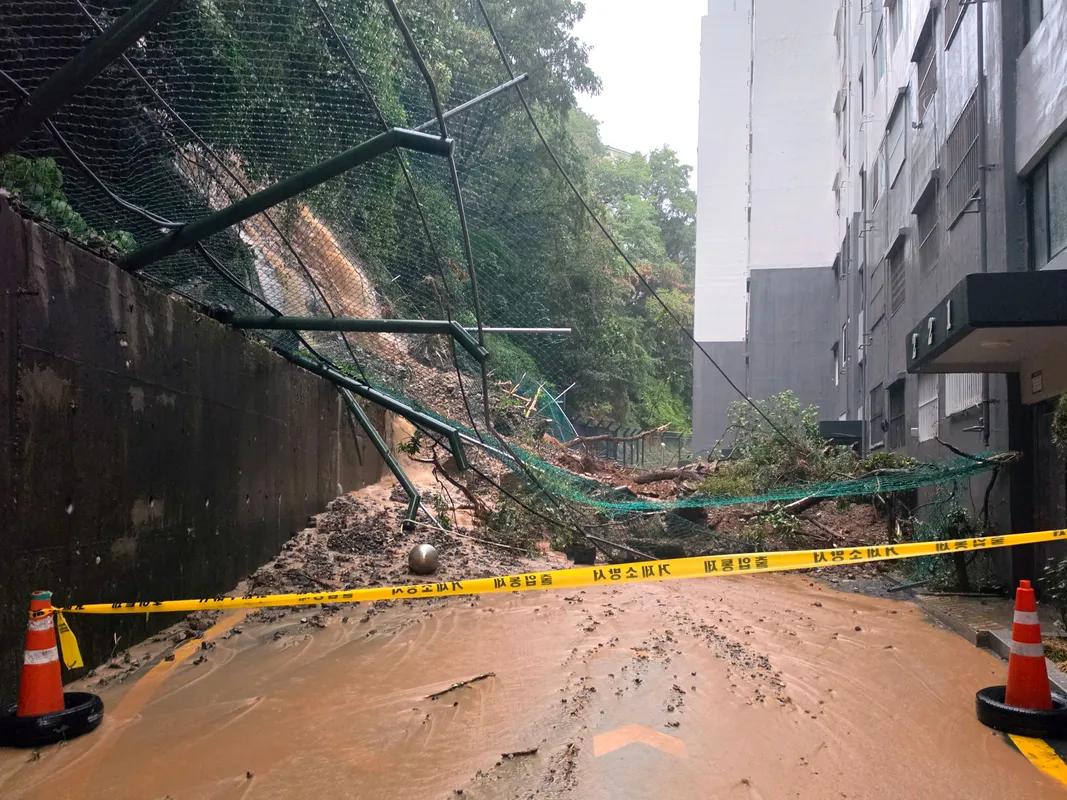
Torrential rainfall has devastated the city of Geoje, South Korea, triggering a severe landslide that resulted in casualties and extensive property damage. From July 15th to the morning of July 18th, the region experienced a staggering 782.5 mm of rain, with some areas recording an intense downpour of 124.5 mm per hour. This extreme weather event led to a significant landslide in Okpo-dong, a residential area, causing a local apartment complex to be partially buried and leaving residents in critical condition.
Devastating Landslide in Okpo-dong
The most critical incident occurred on July 17th around 4:32 PM in Okpo-dong, Geoje. A landslide originating from a hill behind an apartment complex buried the first floor of 104 units. The sheer force of the mud and debris overwhelmed the lower levels of the buildings, trapping residents inside.
Emergency services responded swiftly to the disaster. Firefighters and rescue teams worked tirelessly to extricate those caught in the landslide. Tragically, one individual was rescued in cardiac arrest and later pronounced dead at the hospital. Two other individuals were rescued with less severe injuries and are reported to be in stable condition. Rescue operations are ongoing, with authorities conducting further searches to ensure no one else is trapped or unaccounted for.
Eyewitness Accounts and Immediate Aftermath
Residents described scenes of chaos and destruction as the landslide struck. The sudden deluge of rain saturated the hillside, causing the soil to lose its stability. Mud, rocks, and debris cascaded down the slope, engulfing the lower floors of the apartment buildings. The sound of the landslide was reportedly deafening, followed by screams and the desperate calls for help.
The immediate aftermath saw a massive mobilization of emergency personnel. Fire trucks, ambulances, and heavy machinery were deployed to the site. The focus was on searching for survivors and providing medical assistance to the injured. The scale of the damage quickly became apparent, with the apartment complex showing visible signs of structural compromise.
Wider Impact of Extreme Rainfall
The Geoje region has been under siege from relentless rainfall for several days. The cumulative amount of precipitation has far exceeded typical levels for this time of year, overwhelming drainage systems and saturating the ground. This prolonged period of heavy rain is the primary factor contributing to the instability of slopes across the area.
Tongyeong Landslide Incident
The extreme weather was not confined to Geoje. On the same day as the Okpo-dong landslide, another mudslide occurred around 5:06 PM in Gollye-ri, Sanyang-eup, Tongyeong City. While the scale of this incident appears to be smaller, it still resulted in one person being rescued and requiring medical attention. This further underscores the widespread impact of the severe weather system affecting the region.
Contributing Factors and Weather Analysis
Meteorological reports indicate that the heavy rainfall in Geoje and surrounding areas is attributed to a stationary front combined with a tropical depression. These weather patterns created conditions ripe for prolonged and intense precipitation. The mountainous terrain of Geoje, while scenic, also makes it particularly vulnerable to landslides when saturated with water.
Experts have pointed to the increasing frequency and intensity of extreme weather events globally, potentially linked to climate change. While direct attribution requires further study, the pattern of severe rainfall events causing significant damage is a growing concern for coastal and mountainous regions worldwide.
Response and Recovery Efforts
Local government officials and disaster management agencies are coordinating relief efforts. The immediate priority is the search and rescue operation and providing support to those displaced by the landslide. Temporary shelters are being established for residents who have lost their homes.
The focus is now shifting towards assessing the full extent of the damage and beginning the long process of recovery. This will involve clearing debris, assessing structural integrity of damaged buildings, and providing financial and emotional support to the affected community. The resilience of the Geoje residents will be tested in the coming weeks and months as they work to rebuild their lives and their community.
Conclusion
The severe rainfall and subsequent landslide in Geoje serve as a stark reminder of the destructive power of nature. The tragic loss of life and the extensive damage highlight the vulnerability of communities to extreme weather events. As rescue and recovery efforts continue, the focus remains on supporting the affected population and understanding the factors contributing to such devastating incidents to better prepare for future challenges.
