

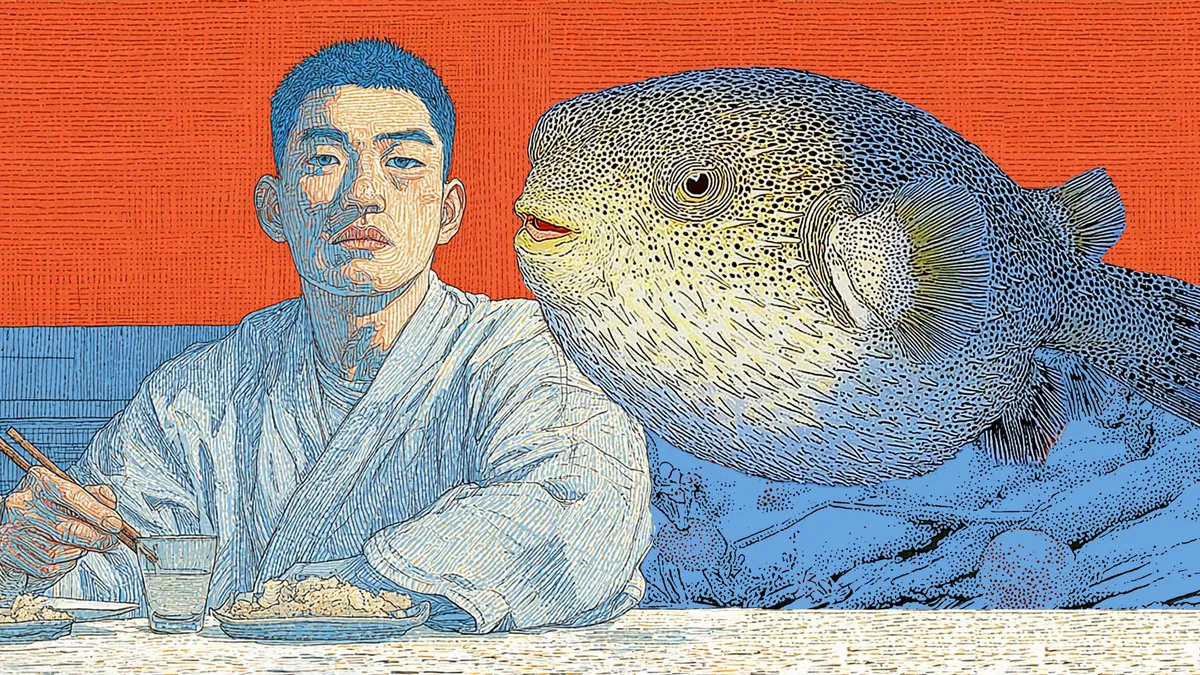
In the 1970s, Busan and other coastal areas of South Korea were abuzz with news reports of fatalities linked to pufferfish, or ‘bok-eo’. While this potent delicacy was a popular ‘haejang’ (hangover cure) dish for many, a lack of proper knowledge in preparing it led to frequent poisonings. Pufferfish, a delicious fish, presented a dangerous duality: a culinary delight that could also be lethal if mishandled.
The Peril of Tetrodotoxin
The primary culprit behind pufferfish poisoning is tetrodotoxin, a powerful neurotoxin. This toxin is concentrated in the fish’s internal organs, such as the liver and ovaries, but its location can vary depending on the species and where it was caught. Ingesting tetrodotoxin can cause a range of symptoms, starting with numbness in the lips and fingertips, which can spread to the limbs and the entire body, leading to paralysis. In severe cases, individuals can experience paralysis of the respiratory muscles while remaining conscious, resulting in death. Disturbingly, the toxin is not destroyed by cooking or freezing, nor is it neutralized by salting or prolonged soaking in water. The only way to safely consume pufferfish is to accurately identify edible species and meticulously remove all toxic parts.
The author recalls a childhood experience where their mother prepared pufferfish, but the spiky skin made it unpleasant to eat. The lingering fear from radio reports about pufferfish deaths made it difficult to enjoy. The fish’s spiky skin, a defense mechanism that becomes more pronounced when the fish inflates itself with water or air to deter predators, is a testament to its dangerous nature. Proper preparation involves removing the skin, scalding it in hot water, scraping off the spines, or finely slicing it for use in broths and skin preparations.
A Transformative Encounter with Fugu Tempura
Despite the ingrained fear, the author remained wary of pufferfish even after joining the navy. While they experienced various incidents at sea, pufferfish remained off-limits. Everything changed in 1986 during a culinary study trip to Japan. A chance encounter with fugu tempura at a restaurant was a revelation. The crispy exterior gave way to firm yet tender flesh that wasn’t heavy or oily like fatty fish. Instead, it offered a clean, subtle sweetness that lingered. Pufferfish is often described as ‘plain,’ but this ‘plainness’ signifies a delicate flavor, not an absence of taste. The process of cooking condenses the moisture and protein within the flesh, creating a subtle sweetness and umami. Tempura, in particular, seals the moisture inside the fish quickly due to the hot oil, creating a contrast between a crispy exterior and a moist interior.
This single bite of fugu tempura completely overturned the author’s perception of pufferfish. It transformed from a fish to be feared and avoided into a delicacy that demanded precise knowledge and skill to prepare. From that moment on, fugu became a culinary pursuit.
Mastering the Art of Fugu Preparation in Japan
Seeking to understand this newfound culinary passion, the author consulted a senior student and restaurant manager named Nishiguchi-san. Nishiguchi-san explained that in Japan, obtaining a fugu preparation license requires rigorous training. While specific regulations varied by prefecture, Osaka had long managed fugu handlers through intensive training and registration. Currently, national standards dictate that local governments verify a handler’s ability to distinguish between fugu species and remove toxic parts through written and practical exams.
In Osaka Prefecture, aspiring fugu chefs must pass an exam and register with the prefecture. However, earning a license is just the beginning. True mastery involves years of on-the-job experience: learning how thinly and evenly to slice fugu sashimi, how to separate flesh from skin and bones, which parts are best for soup or tempura, and how to judge the flesh’s condition based on season and size. The process starts with learning how to hold a knife, followed by cleaning, preparing ingredients, making stock, and finally, slicing sashimi.
The author began learning the intricacies of fugu preparation from Nishiguchi-san every night. During practical training sessions at school, the author’s rapid fugu dissection skills impressed the professor, who asked if they had prior experience in Korea. The author, recalling the late-night lessons, felt a quiet confidence. Their hands, guided by practice, were steady. Meticulously sharpening and maintaining their knife, the author passed the Osaka fugu preparation exam with flying colors.
Returning to Korea and Rediscovering Fugu
Upon returning to Korea, the demands of daily life and running a small restaurant pushed the fugu expertise aside. The 7-pyeong (approximately 23 square meter) establishment was incredibly busy, leaving no time to revisit the fugu skills learned in Japan. Survival and providing for the family took precedence over specialized culinary techniques. After a year, the author moved to a larger 24-pyeong (approximately 79 square meter) space and began focusing on fugu recipe photography.
With more space, the author could finally delve back into their stored knowledge of fugu. They meticulously documented the process of dissecting fugu, the different uses for each part, the precise angles for slicing sashimi, and methods for preparing the skin and bones. While explanations might seem simple, conveying the exact movements of the knife and hand positions proved challenging. Some pages required preparing multiple fish to capture a single shot. However, the author knew that true understanding couldn’t come solely from behind a desk; it required returning to the field.
A Pilgrimage to Fugu’s Esteemed Establishments
The author embarked on a journey to revisit Japan’s most renowned fugu establishments. The pilgrimage led them through Osaka, Shimonoseki, Kokura in Kyushu, and Hakata. Osaka, a city with a vibrant fugu culture, boasts numerous long-standing fugu restaurants in areas like Shinsaibashi and Dotonbori, known for their elaborate fugu displays. Kyushu’s Kokura and Hakata, being close to the sea, received fresh catches, while Shimonoseki was a central hub for fugu distribution and culinary tradition in Japan. In Shimonoseki, where fugu is called ‘fuku’ (meaning luck) instead of the standard ‘fugu,’ the author experienced the cuisine at Shunpanro, a restaurant frequented by Japanese royalty and officials. They also had a pivotal experience at ‘Ishimatsu,’ a hidden gem in Hakata.
Shunpanro is more than just an old fugu restaurant; it is recognized as the historical starting point for officially sanctioned fugu cuisine in Japan. During the Meiji era, many regions still prohibited pufferfish consumption. However, in 1888, Prime Minister Ito Hirobumi tasted fugu at Shunpanro in Shimonoseki and subsequently lifted the ban. Shunpanro became known as Japan’s first ‘public fugu restaurant,’ officially permitted to serve the dish. It was also the location where the Treaty of Shimonoseki, ending the Sino-Japanese War, was signed in 1895. Shunpanro stands as a significant site in modern Japanese history, as well as a fugu restaurant.
The fugu served at Shunpanro was characterized by its refined simplicity, emphasizing technique and precision over elaborate presentation. The author savored the transparently thin fugu sashimi, the clear broth, and the delicate flesh, contemplating why fugu had become such a high-end winter delicacy in Japan.
The Revelation of Hirezake: Fugu Fin Sake
However, the most profound impact came not from the esteemed Shunpanro, but from a small specialty shop in a Hakata back alley: Ishimatsu. It was there that the author experienced hirezake, or fugu fin sake, a drink on a different level entirely. Hirezake is made by drying and then lightly grilling fugu fins before steeping them in hot sake. While adding fish fins to sake might sound unappealing, when prepared correctly, it imparts a unique aroma and flavor. Thoroughly drying and slowly grilling the fins removes moisture and any fishy odor, while the protein and amino acids develop a rich, savory taste. When steeped in hot sake, the grilled fins release an aroma reminiscent of grilled fish and nuts, significantly enhancing the sake’s depth.
The thought, ‘I must steal this technique,’ immediately arose. The key was the meticulous grilling of the fins, far beyond simple roasting. Fugu fins, if merely seared over an open flame, can burn on the outside while remaining moist and fishy inside. Conversely, too low a heat fails to develop sufficient savory aromas. The process involves drying the fins for several days in a cool place, then slowly grilling them over a low flame until they become crisp like crackers. Much like coffee beans, the temperature and time of roasting fugu fins determine their flavor profile—sweetness, bitterness, and savoriness. Under-roasting results in a fishy taste, while over-roasting imparts a burnt flavor to the entire drink. Determining the precise moment to remove the fins from the heat relied not on a thermometer, but on color, aroma, and the feel of the fingertips. The critical moment was when the golden-brown color transitioned to a deeper brown.
To capture this technique, the author even offered their business card to the owner, persistently inquiring about the secret. Through repeated questions about the preparation method, the author became friendly with the owner and visited the shop every time they were in Fukuoka. By ordering ten cups of fugu fin sake each time, observing the changes in taste, aroma, and color, and asking questions, the author succeeded in uncovering the secret recipe.
