

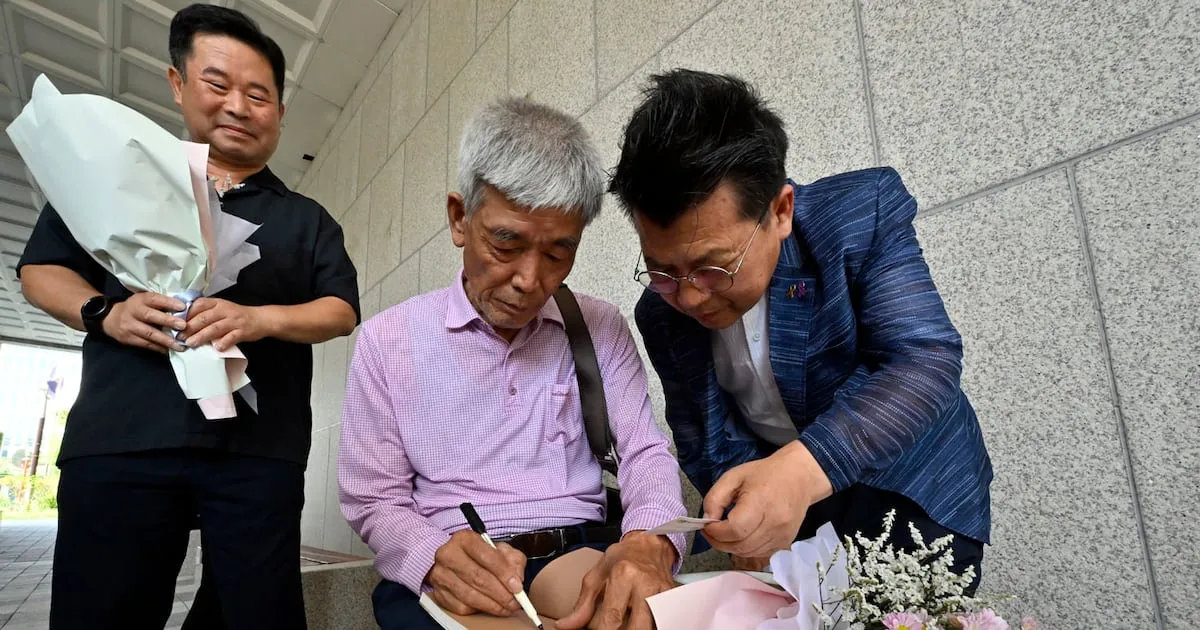
A Japanese company, Mitsubishi Materials Corporation, has appealed to the Supreme Court of South Korea following a lower court ruling that ordered it to compensate victims of forced labor during Japan’s colonial rule. The appeal marks a significant development in the ongoing legal battle concerning historical grievances between the two nations.
Background of the Forced Labor Lawsuit
The case involves six plaintiffs who were subjected to forced labor by Mitsubishi during the Japanese occupation of Korea. In a ruling delivered on October 23rd, the Gwangju District Court, specifically the Civil Affairs Division 2 presided over by Judge Park Jeong-hoon, partially ruled in favor of the plaintiffs. This decision upheld a previous ruling, ordering Mitsubishi to pay damages.
The appellate court’s decision on November 15th confirmed the initial ruling, with specific compensation amounts varying based on the plaintiffs’ circumstances. For three of the plaintiffs, Mitsubishi was ordered to pay 100 million Korean won (approximately $85,000 USD) each. For the remaining three, the court mandated compensation ranging from 11.76 million to 16.66 million Korean won (approximately $10,000 to $14,000 USD) each, depending on the specifics of their claims during the appeal process.
The Plight of the Forced Labor Victims
The individuals who brought this lawsuit were conscripted into labor by Mitsubishi’s subsidiary, Mitsubishi Mining Company (formerly Mitsubishi Mining and Cement), during the Japanese colonial era. They were forced to work in mines, enduring harsh conditions and exploitation.
One plaintiff, Mr. Lee Sang-eop, recounted being drafted into a mine in Kami-Yamada, Fukuoka Prefecture, Japan, at the tender age of 15. He stated that after enduring forced labor, he suffered from lifelong psychological trauma as a result of his experiences.
Another victim, the late Mr. Yoon Jae-chan, was forced to work in a Mitsubishi mine until December 1945, well after Korea’s liberation from Japanese rule. It is reported that Mr. Yoon, who was in Japan at the time, continued to work without even knowing that his homeland had been freed.
These harrowing accounts underscore the profound and lasting impact of forced labor on individuals and their families.
The Legal Process and Mitsubishi’s Appeal
The plaintiffs filed their lawsuit against Mitsubishi Materials Corporation in January 2020. However, the legal proceedings were significantly delayed, taking approximately six years and six months from the initial filing to the appellate court’s decision. These delays were partly attributed to difficulties in serving legal documents to the defendants in Japan.
According to the Civic Group for the Mobilization and Victims of Japanese Colonial Era Forced Labor, it is estimated that around 100,000 Koreans were subjected to forced labor by the Japanese during the colonial period. The group has been instrumental in supporting victims and their families in seeking redress.
Since 2019, the civic group has backed a total of 16 collective lawsuits against nine Japanese companies, including Mitsubishi Materials Corporation, seeking compensation for damages. Of these, three cases have reached final verdicts. The current case, involving Mitsubishi Materials, is one of the 13 cases still undergoing appellate review. The legal spectrum includes one Supreme Court appeal, eight appellate cases, and four first-instance cases.
Broader Context of Historical Compensation Claims
This legal battle is part of a larger, complex issue of historical compensation claims stemming from Japan’s colonial rule over Korea from 1910 to 1945. Numerous lawsuits have been filed by victims and their families seeking reparations from Japanese corporations that benefited from wartime forced labor.
The South Korean Supreme Court made a landmark ruling in 2018, ordering Japanese companies like Nippon Steel and Mitsubishi Heavy Industries to pay compensation to forced labor victims. This ruling significantly strained diplomatic relations between South Korea and Japan, as Japan maintains that all claims were settled under a 1965 treaty normalizing relations.
Mitsubishi Materials Corporation’s appeal to the Supreme Court signifies its continued resistance to the compensation orders. The company’s stance reflects a broader position held by many Japanese corporations and the Japanese government, which argue that the 1965 treaty resolved all outstanding claims related to the colonial period.
The outcome of this Supreme Court appeal could have significant implications for future compensation cases and the ongoing efforts to address historical injustices. It highlights the deep-seated nature of these historical disputes and the challenges in finding resolutions that satisfy all parties involved.
Conclusion
The appeal by Mitsubishi Materials Corporation to the South Korean Supreme Court underscores the persistent legal and diplomatic complexities surrounding wartime forced labor compensation. The court’s final decision will be closely watched, not only for its impact on the individual plaintiffs but also for its potential to shape the broader landscape of historical redress between South Korea and Japan. The ongoing legal actions reflect the enduring quest for justice by victims and their families, seeking acknowledgment and compensation for the suffering endured during a difficult historical period.
