

A poignant narrative unfolds in Yoon Sung-hee’s short story, ‘One Night,’ depicting an elderly woman’s reflections after a fall from a kickboard. As she faces her final days, the woman finds herself on a playground, the scene of her recent accident. The kickboard, a symbol of her past, was taken from this very spot. Night after night, she had ridden it through neighboring apartment complexes, a habit that led to her current predicament – lying injured and unable to move after a fall. Her calls for help go unanswered in the quiet of the night, prompting her to drift into memories of a life lived.
A Life of Struggle and Sacrifice
In her early married life, the protagonist and her husband faced considerable hardship. They shared simple meals, mixing gochujang with rice on the floor, yet these were times of contentment. Their interior design business eventually succumbed to market pressures, forcing the husband to seek work as a construction site security guard. A tragic accident on the job, stemming from a lapse in the proper rotation of duties, left him injured. The emotional toll of this event was immense, with the husband spending his days at home, consumed by news and expressing his distress through harsh words. To escape this oppressive atmosphere, the protagonist began her nightly rides on the kickboard.
Despite their financial struggles, the couple made a significant sacrifice: they sent their daughter to study in the United States. This decision, met with criticism from some who questioned selling their home for their daughter’s education, was one the protagonist firmly believed in. She saw her daughter as a child worthy of such an investment. Now, as her own life nears its end, she wonders if her daughter will return for her final days, especially with the approach of the Lunar New Year.
The Enduring Symbol of Dalmachikkot (Evening Primrose)
Memories of her daughter are often intertwined with the sight of the dalmachikkot, or evening primrose. The moon, hanging in the night sky, triggers these recollections. One vivid memory involves a trip to her father-in-law’s hospital ward. On a night when the last bus had already departed, she carried her daughter home, the path illuminated by the radiant bloom of evening primroses. The flowers were so beautiful that she momentarily forgot the gravity of her father-in-law’s condition.
Her daughter, who loved playing with flowers, would often pick evening primroses to make flower tea. They even fried them together as a summer vacation activity for a school assignment titled ‘Cooking with Mom.’ Another cherished memory involves acacia flowers, also fried. In middle school, her daughter wrote a story about making fried flowers for her ailing mother’s birthday, a tale that earned her a writing award and showcased her innate talent.
Yoon Sung-hee’s stories are known for their rapid shifts in narrative focus. However, the story of the evening primrose is presented with unusual detail. This suggests that the memories associated with these flowers, and by extension, her daughter, are among the author’s most treasured recollections.
A Glimmer of Hope and New Beginnings
As dawn breaks, a young man discovers the protagonist. He removes his jacket to cover her and calls for an ambulance. Finally able to open up, the woman asks the young man to return the kickboard to the playground. She no longer needs it. A new connection has formed; she has met someone in her apartment building with whom she has plans to share chicken and beer on their next encounter.
Yoon Sung-hee’s writing is characterized by its distinctive style: short, impactful sentences that convey a sense of speed and wit. Her narratives often feature unexpected twists and a unique, sometimes daring, sense of humor. The story of the elderly woman, who falls while riding a kickboard and recalls memories of the evening primrose, is a testament to this style.
The Botany of the Evening Primrose
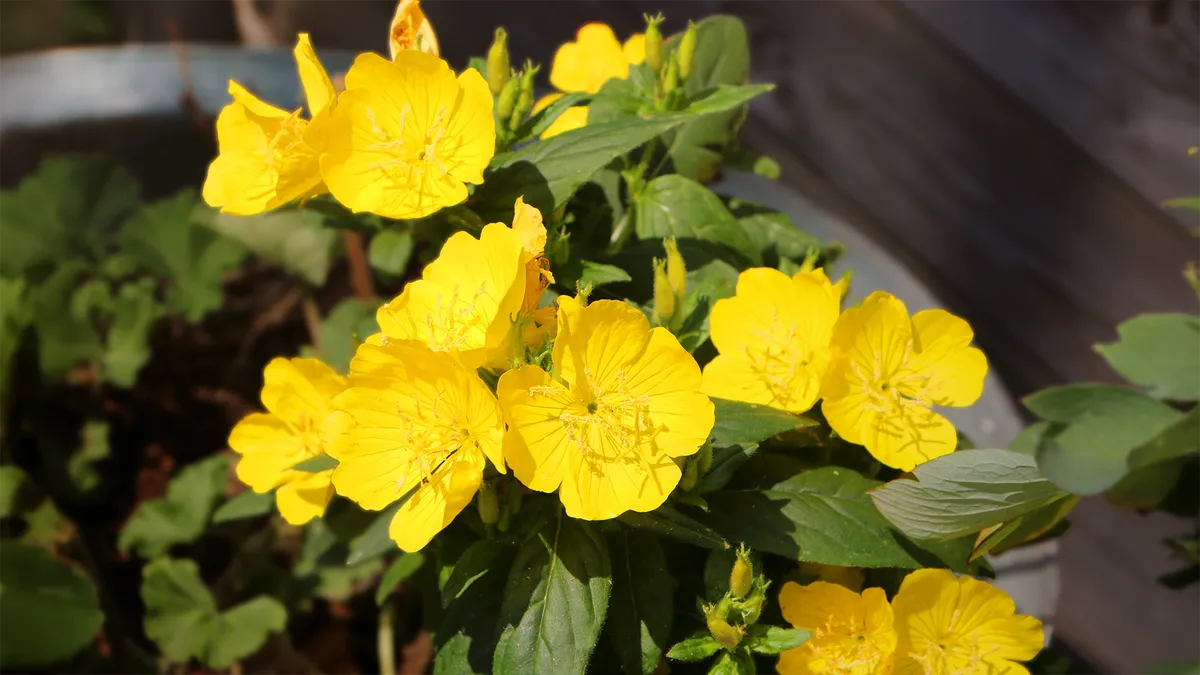
The evening primrose, which blooms in the summer, is a striking yellow flower composed of four petals, often with a reddish tinge. Its name comes from its habit of opening its blooms in the evening and closing them by morning. This nocturnal blooming is primarily to attract night-flying pollinators like moths and bats, aiding in pollination. While we often see the flowers drooping by morning, they are fully vibrant again by around 8 PM.
In winter, many plants adopt a rosette form, with leaves lying flat on the ground in a circular pattern. Examples include dandelion, chicory, and cat’s ear. The evening primrose also exhibits this trait, with its leaf edges tinged red, creating a color that is neither fully green nor entirely red. These plants survive the winter in this state, rapidly growing new shoots as spring arrives.
Though familiar from childhood, the evening primrose is an introduced species in Korea. It first appeared before the Gaehwagi period (late 19th to early 20th century) and has since spread nationwide. It thrives in disturbed habitats, such as open fields created by human activity or roadsides, rather than deep forests. The plant produces small, dark seeds within a capsule. Historically, oil extracted from these seeds was once popular for its purported health benefits, particularly for adult diseases.
The common name ‘Haebangcho’ (liberation grass) likely refers to its widespread distribution after Korea’s liberation from Japanese rule. While botanists believe the plant arrived earlier, its proliferation post-liberation is widely accepted. Other names, such as ‘Mangcho’ and ‘Gaemangcho,’ are thought to derive from the idea of a weed that spread across a nation on the brink of ruin.
In contemporary times, cultivated varieties of evening primrose, known as ‘Daytime Evening Primrose,’ are increasingly planted in gardens and flowerbeds. These hybrids typically have larger flowers than the original species and bloom during the day. Pink varieties, ‘Pink Daytime Evening Primrose,’ are also becoming more common.
The protagonist’s journey, from the solitary struggle and sacrifice to the unexpected encounter and renewed hope, mirrors the resilience and adaptability of the evening primrose itself – a flower that blooms in the quiet of the night but leaves a lasting impression.
