

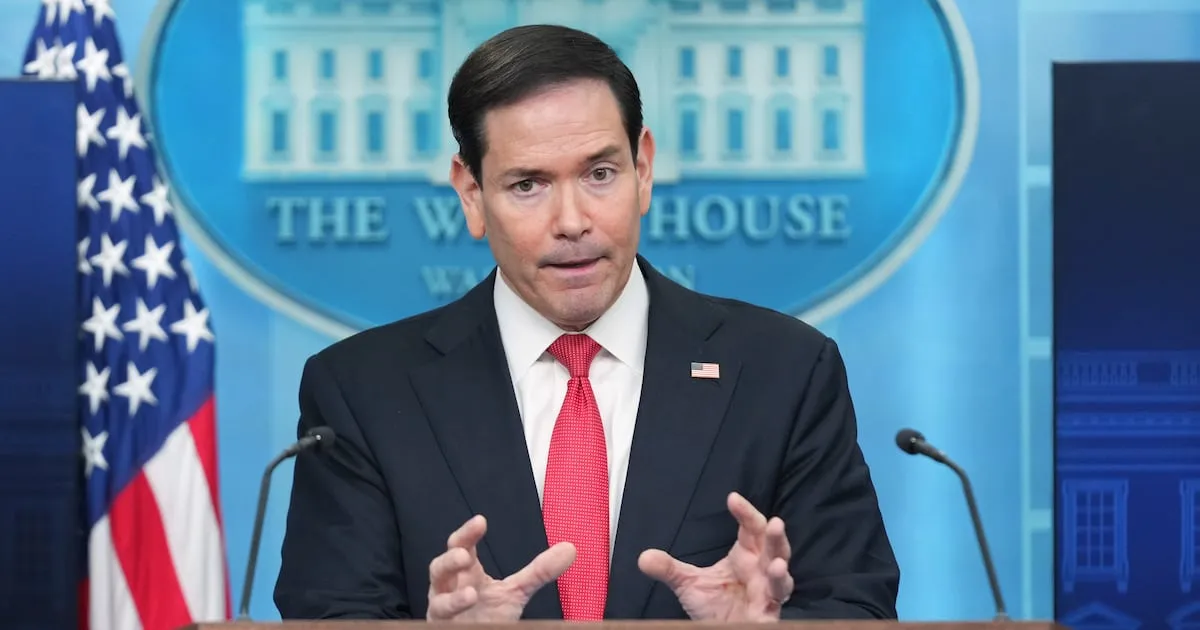
Senator Marco Rubio has underscored the significance of the U.S.-South Korea alliance, characterizing South Korea as an “indispensable partner” in a statement commemorating Korea’s Liberation Day. The remarks highlight the enduring strength and mutual importance of the bilateral relationship.
Rubio Extends Greetings on Liberation Day
On August 15th, marking the anniversary of Korea’s liberation from Japanese colonial rule, Senator Rubio issued a formal press statement extending his heartfelt congratulations to the Korean people. “On behalf of the United States government, I extend my sincere congratulations to the people of South Korea as they celebrate their liberation,” Rubio stated. This sentiment underscores the U.S. recognition of a pivotal moment in Korean history and its ongoing commitment to the nation.
‘Indispensable Partner’ – A Cornerstone of the Alliance
The Senator elaborated on the U.S.-South Korea relationship, emphasizing its deep roots and future potential. “The United States remains proud to stand with South Korea, an indispensable partner, as we continue to cooperate to expand prosperity and deepen the unique bond between our peoples,” he remarked. This description of South Korea as “indispensable” (eopseoseoneun an doeil in Korean) signifies its critical role in U.S. foreign policy and global strategy.
Rubio traced the alliance’s foundation over the past seven decades, noting that it has been built upon shared values, mutual trust, and a steadfast commitment to each other’s security and prosperity. “For over 70 years, the United States and South Korea have forged an alliance built on shared values, mutual trust, and a steadfast commitment to each other’s security and prosperity,” the statement read. This historical perspective provides context for the current strength and depth of the partnership.
Expanding Cooperation in Key Sectors
The statement also pointed to the recent expansion of cooperation between the two nations, particularly in economic and industrial sectors. Senator Rubio referenced the significant developments that have occurred following former President Donald Trump’s historic visit to South Korea in the fall. “Following President Trump’s historic visit to South Korea last fall, the United States and South Korea have ushered in a new era in our bilateral relationship, deepening cooperation on a range of issues including economic security, critical minerals, and the Korean Peninsula,” Rubio explained.
This deepening collaboration signifies a strategic alignment aimed at addressing contemporary global challenges. The focus on economic security and critical minerals suggests a joint effort to secure supply chains and foster economic resilience in the face of evolving geopolitical landscapes. Furthermore, the continued emphasis on issues related to the Korean Peninsula underscores the unwavering U.S. commitment to regional stability and denuclearization efforts.
Historical Context of the Alliance
The U.S.-South Korea alliance, forged in the crucible of the Korean War, has evolved significantly since its inception. Initially established as a military pact to counter North Korean aggression and Soviet influence, the partnership has broadened over the decades to encompass a wide array of shared interests. This includes robust economic ties, technological collaboration, and joint efforts to promote democracy and human rights globally.
The enduring nature of the alliance can be attributed to a shared understanding of democratic values and a mutual respect for sovereignty. Both nations have consistently demonstrated a commitment to upholding international norms and contributing to global peace and security. The strategic importance of South Korea to the United States is multifaceted, encompassing its geopolitical location, its advanced economy, and its role as a democratic beacon in Northeast Asia.
Economic Interdependence and Future Prospects
The economic dimension of the U.S.-South Korea relationship is particularly strong. South Korea is a major trading partner for the United States, with significant investments flowing in both directions. The two countries have actively pursued initiatives to enhance trade, promote innovation, and collaborate on cutting-edge technologies. This economic interdependence creates a powerful incentive for continued cooperation and mutual prosperity.
Discussions around critical minerals highlight a forward-looking approach to securing essential resources for future industries, such as electric vehicles and renewable energy. By working together, the U.S. and South Korea aim to diversify supply chains and reduce reliance on single sources, thereby enhancing their respective economic security and competitiveness on the global stage.
Geopolitical Significance and Regional Stability
The Senator’s mention of cooperation on the Korean Peninsula underscores the ongoing importance of this issue to both nations. The U.S. remains committed to the defense of South Korea and continues to work towards a peaceful resolution of the Korean War and the denuclearization of North Korea. The alliance plays a crucial role in maintaining stability in Northeast Asia, a region of immense strategic importance.
Rubio’s statement, delivered on Liberation Day, serves as a powerful reminder of the historical sacrifices made and the enduring strength of the U.S.-South Korea partnership. By reaffirming South Korea’s status as an “indispensable partner,” the United States signals its continued dedication to a relationship that is vital for both countries and for global security.
Conclusion
Senator Marco Rubio’s statement on Korea’s Liberation Day reaffirms the robust and multifaceted nature of the U.S.-South Korea alliance. By designating South Korea as an “indispensable partner,” the U.S. acknowledges the nation’s critical role in regional and global affairs, its economic prowess, and its shared commitment to democratic values. The ongoing expansion of cooperation across various sectors, from economic security to technological innovation, signals a promising future for this vital bilateral relationship, built on a foundation of mutual trust and shared objectives forged over more than seventy years.
