

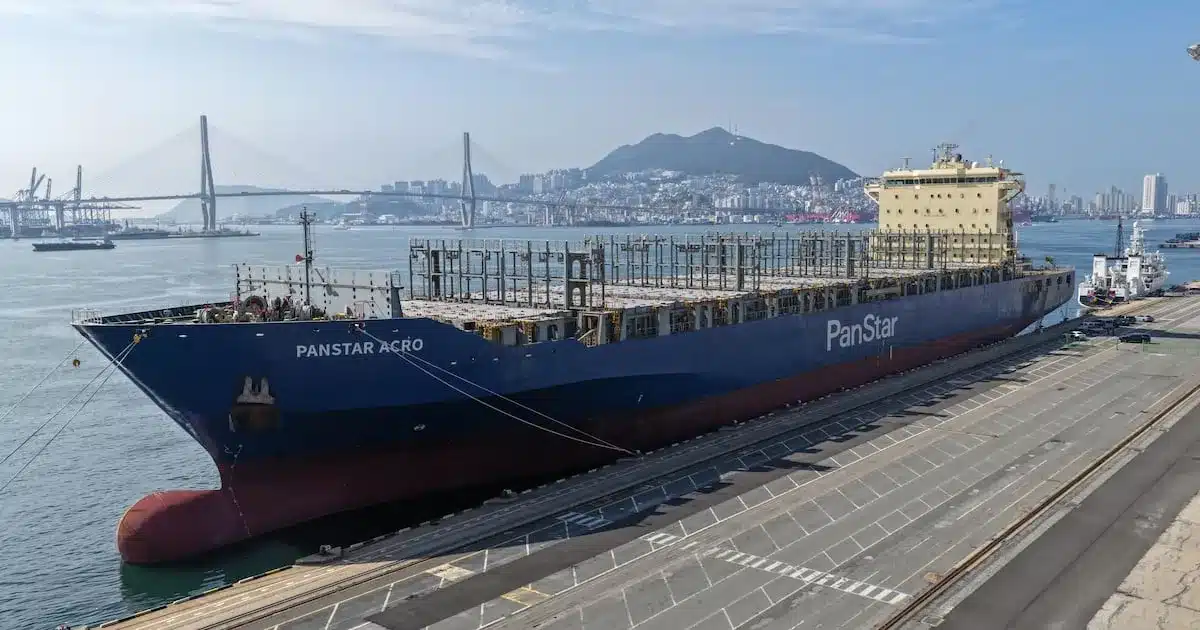
South Korea has launched its inaugural container ship service along the Northern Sea Route (NSR), a significant step in developing a new maritime trade path. The vessel departed on August 22nd, embarking on a 45-day trial voyage that aims to explore the feasibility and efficiency of this Arctic passage. This initiative is a key national project under the current administration, with plans to transition to commercial operations by 2030 following a five-year trial period.
Pioneering the Northern Sea Route
The Ministry of Oceans and Fisheries announced the commencement of the trial run, highlighting it as a pivotal moment in establishing a ‘New Silk Road through the Arctic Route’. The NSR offers a considerably shorter distance between Asia and Europe compared to existing routes. Shipping from Busan, South Korea, to Rotterdam, Netherlands, via the NSR is approximately 13,000 kilometers, a reduction of about 7,000 kilometers from the Suez Canal route (around 20,000 km). This geographical advantage translates to potential time savings of up to 10 days compared to the Suez route and 20 days compared to the Pacific route.
Historically, navigating the NSR has been challenging due to thick sea ice, often requiring icebreaker support during summer months or specialized ice-strengthened vessels. However, advancements in navigation technology and the impacts of climate change, leading to reduced ice cover, have made year-round, independent navigation increasingly possible. Current data indicates that Arctic sea ice extent is at one of its lowest levels since satellite monitoring began in 1979, further bolstering the viability of the route.
The current geopolitical climate, particularly the conflict in the Middle East and the subsequent closure of the Strait of Hormuz, has also underscored the need for alternative shipping lanes, adding urgency to the development of Arctic routes.
The Maiden Voyage Details
The container ship ‘Panstar Acro’, with a capacity of 2,758 TEU (Twenty-foot Equivalent Unit), is undertaking this pioneering voyage. Built in 2011, the 35,708-ton vessel departed from Busan, traversing the northern coast of Siberia before heading towards European ports. Its itinerary includes stops in Felixstowe, UK; Rotterdam, Netherlands; and Gdansk, Poland. Following its European leg, the ship is scheduled to return directly to Busan.
The Ministry estimates the total voyage duration to be 45 days, though this is subject to weather conditions in the Arctic region. The ship is expected to enter the Arctic region around August 30th and pass through it within approximately eight days, reaching its first European port, Felixstowe, around September 9th. Subsequent calls in Rotterdam and Gdansk are planned for September 11th and 15th, respectively. The return journey is targeted to conclude with an arrival back in Busan around October 5th.
Cargo and Future Prospects
The Panstar Acro is carrying a variety of export goods from 45 South Korean companies, totaling 737 TEU of cargo and 100 empty containers. Chemical products constitute the largest portion of the cargo at 43.4% (363 TEU), followed by used cars (16.8%), automotive parts (13.5%), and non-ferrous metal products (5.7%).
While the initial cargo volume is less than the 1,300 TEU initially targeted by the Ministry, officials view the current shipment as a significant achievement. Lee Soo-ho, Head of the Arctic Route Promotion Division at the Ministry, explained that the time lag between cargo demand surveys and vessel preparation led to the lower-than-expected volume for this first trip. He emphasized that securing and operating this initial cargo is meaningful and that future cargo types will be determined based on demand following the trial voyage.
The Ministry plans to gather crucial data on distance, transit time, fuel consumption, and operational costs during this trial run. This information will be vital for developing policies to activate the NSR and support its commercialization, with the ultimate goal of launching full-scale operations by 2030.
Navigational Challenges and International Relations
The successful utilization of the NSR hinges on cooperation with Russia. However, the ongoing international sanctions against Russia by European nations due to the conflict in Ukraine present a complex geopolitical backdrop. Reports suggest that some Western countries have expressed reservations about South Korea’s pursuit of the Arctic route trial, given the current international political climate.
Despite these concerns, the Ministry has stated that agreements with relevant Russian authorities have been finalized for the trial voyage, and all operations will adhere to international treaties and regulations. Lee Soo-ho assured that the government would comply with international norms.
Prioritizing Safety and Expertise
Safety has been the paramount concern throughout the preparation for this trial voyage. This marks the first time a South Korean container ship has sailed the NSR in a decade, and it is the first domestic container vessel to navigate this route. Consequently, the captain and crew of the Panstar Acro have undergone specialized training for operating in extreme polar regions.
Notably, the captain, who has extensive experience navigating the Arctic, is supported by a first mate with experience on the Araon, South Korea’s sole ice research vessel operating in polar regions. A robust system is in place to manage any unforeseen circumstances during the voyage, including 24-hour communication links between the ship and the shore-based situation room. Emergency response protocols, aligned with international agreements, are prepared for swift action.
Lee Soo-ho highlighted the necessity of satellite equipment for real-time communication in the high-latitude region, stating, “We have equipped the vessel with a system that allows for real-time communication with the situation room.” This comprehensive approach aims to ensure the safety and success of this groundbreaking Arctic maritime endeavor.
The trial voyage is expected to provide invaluable insights into the operational aspects of the NSR, paving the way for its future development as a viable and efficient global trade route.
