

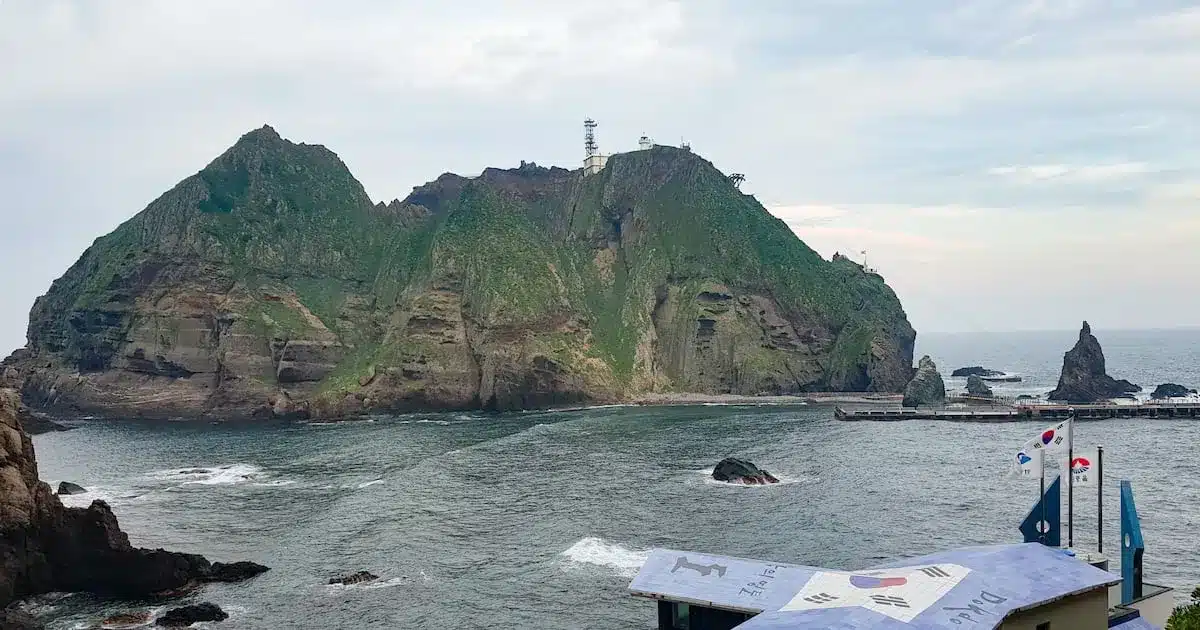
The question of who truly inhabits and sustains the Dokdo islets, a territory at the heart of a long-standing dispute, is being re-examined. While administrative records can quickly establish a symbolic presence, the reality of living on these remote islands presents significant challenges. The narrative surrounding Dokdo often focuses on its symbolic importance and the need to assert sovereignty, but the practicalities of establishing and maintaining a resident population are complex and have historically been a barrier to genuine settlement.
The Symbolic vs. The Real: Establishing a Presence
Registering an address on Dokdo, a process that can be completed in mere minutes, creates a formal, albeit often symbolic, connection to the islets. As of late last year, South Korea had approximately 4,668 individuals with registered addresses linked to Dokdo. This administrative act is intended to bolster the claim of sovereignty. However, the reality on the ground is starkly different. Currently, there are no permanent residents living on Dokdo. The last resident, Kim Shin-yeol, passed away, marking the end of an era for continuous civilian habitation.
The ease of administrative registration contrasts sharply with the difficulty of actually establishing a life on Dokdo. For decades, individuals who genuinely wish to reside there have faced considerable obstacles. A primary challenge is the lack of adequate living space. Furthermore, clear criteria for the settlement of new residents have not been established, leaving a vacuum that has been exploited by external claims. Japan, for instance, has consistently used such perceived gaps to further its territorial ambitions.
Japan’s Persistent Claims and Dokdo’s Strategic Importance
Japan’s Ministry of Foreign Affairs has repeatedly asserted that Dokdo is an inherent territory of Japan, most recently in a parliamentary speech in February. These claims, coupled with annual events like Shimane Prefecture’s ‘Takeshima Day’ and the screening of distorted videos at Tokyo’s ‘Territorial and Sovereignty Exhibition’, underscore a persistent strategy. The objective is clear: to continuously frame Dokdo as a disputed area, thereby creating grounds for international arbitration.
While Japan publicly advocates for improved relations with South Korea, its behind-the-scenes efforts to reclaim Dokdo involve a meticulous, state-level, long-term strategy. This persistent challenge from Japan makes the presence of any residents on Dokdo even more significant. The historical reality of people living and working on the islets, paying taxes, and participating in elections, serves as the most concrete evidence of South Korean sovereignty.
The Last Resident and the Desire for Continuity
The late Kim Shin-yeol, along with her late husband Kim Seong-do, lived and worked on Dokdo for many years, engaging in fishing activities and contributing to the local economy. Their lives on the islets, separate from the temporary postings of coast guard personnel or administrative staff, represented a tangible assertion of national territory. Their presence, and the taxes they paid, provided a powerful testament to South Korean sovereignty.
Ironically, the South Korean government itself appears to be hindering individuals who wish to become new residents. Kim Jin-hee, the 53-year-old daughter of the late Kim Shin-yeol, applied to move to Dokdo six years ago, seeking to be closer to her mother’s resting place. However, the Ulleung County office rejected her application, citing that her mother’s former residence was unoccupied. This decision highlights a critical issue: the need for clear, objective standards for evaluating residency applications.
Establishing Criteria for Future Residents
It is unsustainable to continue rejecting individuals with a clear intention to reside on Dokdo without established criteria. While the challenges of living on Dokdo are undeniable—including harsh weather, limited supplies, and intermittent power—these difficulties should not be a perpetual barrier to settlement. The government must urgently develop fair and objective criteria to assess residency intentions and capabilities. This process is crucial for selecting future residents who can genuinely contribute to the community and strengthen the claim to the territory.
Dokdo should not be a subject of diplomatic compromise or a point of contention in territorial disputes. It is a piece of land where South Korean citizens have historically lived and established roots. Kim Jin-hee expressed her deep distress whenever Japan asserts its territorial claims over Dokdo, stating, “It feels like the lives and history of the people who have lived there are being denied.” The core of defending Dokdo lies in continuing the history of lives lived there, transforming the islets from a mere administrative point into a place of enduring human presence and historical continuity.
Conclusion: The Path Forward
The future of Dokdo hinges on more than just administrative registrations or diplomatic statements. It requires a commitment to enabling genuine human settlement. By establishing clear residency criteria and supporting those who wish to make Dokdo their home, South Korea can solidify its sovereignty not just on paper, but through the lived experiences of its citizens. This approach ensures that the history and lives of those who have called Dokdo home are not forgotten, but rather become the foundation for its continued existence as an integral part of South Korea.
