

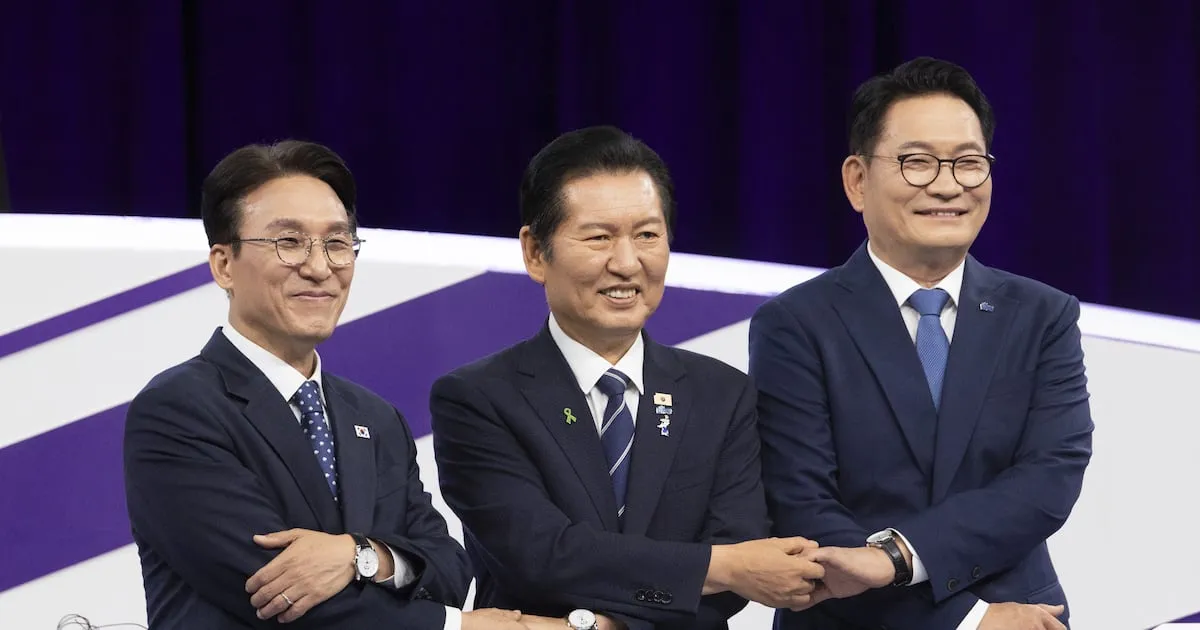
The Democratic Party of Korea is set to commence the first regional contest for its upcoming leadership election on August 1st in the Chungcheong region. This event marks the initial step in selecting the party’s next leadership team, ahead of the national convention scheduled for August 17th. The party has been actively engaging its members through various voting methods in the lead-up to these regional rallies.
Chungcheong Region Gears Up for First Leadership Contest
In preparation for the August 1st event, the Democratic Party conducted online voting for registered members in the Chungcheong area on July 28th and 29th. For members who could not participate in the online polls, an Automated Response System (ARS) voting period was held on July 30th and 31st. These preliminary voting stages are designed to gauge the sentiment of the party base before the official regional contests.
The August 1st schedule is packed, featuring joint rallies for candidates vying for the party leadership. These rallies will take place across the Chungcheong provinces, allowing candidates to present their platforms directly to the party members in the region. Following the rallies, the results of the member votes from the Chungcheong region will be announced.
Joint Rallies and Voting Schedule
The day’s events will begin with a joint rally at 10:00 AM at the Chungnam Transportation Vocational School in Gongju, Chungnam Province. This will be followed by a second rally at 2:00 PM at the CJB Media Center in Cheongju, Chungbuk Province. The final rally of the day is scheduled for 5:00 PM at the Daejeon Convention Center.
The results from the Chungcheong regional vote are expected to be announced around 7:00 PM at the Daejeon Convention Center, following the conclusion of the day’s campaigning and voting activities. This announcement is anticipated to provide the first significant indicator of the national mood within the party.
Understanding the Voting Mechanics for Party Leadership
The election for the party leader is a closely watched contest, with candidates Song Young-gil, Jeong Cheong-rae, and Kim Min-seok being the prominent figures. The election employs a preferential voting system, where party members rank their preferred candidates. However, for the initial regional announcements, only the first-choice rankings will be revealed.
The second-choice rankings, which play a crucial role in determining the final outcome, will be incorporated later. These will be combined with the first-choice rankings from all national regional contests, as well as the results from the national convention delegates’ votes and a general public opinion poll. The second-choice votes are particularly important in scenarios where no candidate secures an outright majority. In such cases, the second-choice votes cast by members who ranked a third-place candidate first will be reallocated to the top two candidates, influencing the final decision.
Supreme Council Elections
In addition to the party leader election, the party will also select five members for its Supreme Council. This election involves eight candidates: Choi Min-hee, Kim Yong, Kim Young-ho, Seo Mi-hwa, Han Min-soo, Lee Seong-yun, Park Seon-won, and Im Mi-ae. Members will cast their votes for two candidates from this list, employing a joint voting method.
Regional Contest Significance and Candidate Strategies
Political observers are keenly watching the Chungcheong regional contest, viewing its results as a potential indicator of the overall trend for the entire national leadership race. A key point of interest is how well Jeong Cheong-rae, who hails from the Chungnam province, will perform against his main rivals, Kim Min-seok and Song Young-gil. Jeong’s camp is reportedly hoping to build significant momentum by leveraging strong support within the Chungcheong region.
Conversely, Kim Min-seok’s campaign team believes that even if they face a setback in Chungcheong, they can still turn the tide in subsequent regional contests in other parts of the country. In a previous media interview, Kim suggested that if the vote difference between him and Jeong Cheong-rae does not exceed 7 percentage points in the early stages of the race, he is confident in his ability to secure a stable victory. This highlights the strategic importance of managing the initial vote gaps.
Song Young-gil’s team has set a clear objective: to secure second place in the Chungcheong region and prevent any single candidate from achieving an overwhelming majority of first-place votes. This strategy focuses on disrupting the dominance of front-runners and ensuring a more competitive race.
Upcoming Regional Contests and Final Announcement
Following the Chungcheong contest, the Democratic Party’s leadership race will continue with a series of regional rallies and voting sessions across the country:
- August 2nd: Busan, Ulsan, and Gyeongnam
- August 8th: Jeju and Incheon
- August 9th: Gangwon, Daegu, and Gyeongbuk
- August 15th: Jeonnam, Gwangju, and Jeonbuk
- August 16th: Gyeonggi and Seoul
The final results of the leadership election, consolidating all votes from the regional contests, delegate votes, and public polls, are scheduled to be announced on August 17th. This date will mark the culmination of the party’s internal selection process for its new leadership.
The ongoing leadership race is a critical juncture for the Democratic Party, shaping its direction and strategy as it prepares for future political challenges. The outcomes in each region will be closely scrutinized by party members and political analysts alike, offering insights into the evolving dynamics within the party.
