

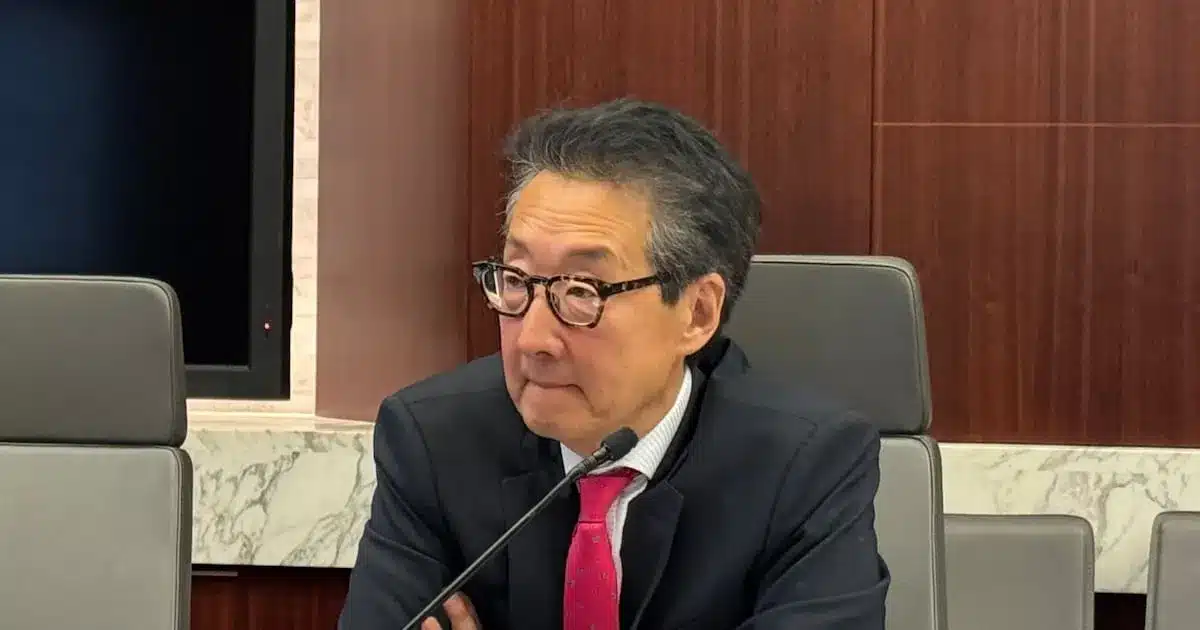
US Policy Expert’s Call for ‘Cold Peace’ with North Korea Faces Opposition
A proposal advocating for a “cold peace” with North Korea, suggesting that immediate denuclearization is an unrealistic goal, is drawing significant criticism. Victor Cha, a senior associate for Korea at the Center for Strategic and International Studies (CSIS), argues that the United States should engage in dialogue with Pyongyang to freeze and roll back its nuclear and missile programs.
Cha, who was involved in U.S.-North Korea negotiations during the George W. Bush administration, previously held a hardline stance against the regime. However, a recent article in Foreign Affairs by Cha acknowledged the reality of North Korea’s nuclear capabilities and called for renewed U.S.-North Korea talks to achieve denuclearization.
Concerns Raised Over Impact on South Korea
Lee Shin-hwa, a professor of political science and international relations at Korea University and former Special Representative for North Korean Human Rights, expressed strong reservations about Cha’s proposal. In a commentary for Foreign Affairs, Lee argued that while North Korea’s nuclear expansion is a given, Cha’s “cold peace” approach could inadvertently create a “hot risk” for South Korea.
Lee warned that if the U.S. prioritizes its own security interests over those of South Korea in negotiations with North Korea, Pyongyang could exploit this division. This could lead to North Korea testing its coercive power through “gray zone” tactics, such as cyberattacks, targeting South Korea.
Furthermore, Lee stated that easing pressure on the North regarding issues like political oppression and forced labor, while negotiating on arms control, would only serve to solidify the Kim Jong Un regime. Lee emphasized that the U.S. must avoid transferring risk to Seoul.
Counterarguments Highlight Long-Term Security Strategy
Nicholas Eberstadt, a senior fellow at the American Enterprise Institute (AEI), and David Maxwell, a senior fellow at the Center for Asia-Pacific Strategy (CAPS), also voiced their opposition. They contend that North Korea’s nuclear and missile capabilities have advanced significantly since the initial U.S.-North Korea agreements 30 years ago.
“The policies that Dr. Cha is advocating cannot reverse this trend, as the North Korean regime believes that nuclear weapons guarantee its survival,” they stated. They further argued that a free and unified South Korea is the only sustainable path to peace, human rights, and the elimination of nuclear threats on the Korean Peninsula.
While acknowledging that unification might be economically prohibitive, Eberstadt and Maxwell asserted that making it a strategic long-term goal for the U.S. and its allies is both feasible and essential for national security. They believe a democratic, non-nuclear, and economically integrated South Korea would align with the long-term strategic interests of the U.S. and its allies in Asia.
Cha Defends ‘Cold Peace’ as Pragmatic Solution
Responding to the criticisms, Cha defended his “cold peace” proposal, stating that it aims to enhance South Korea’s security by mitigating the threat of North Korean intercontinental ballistic missiles (ICBMs) targeting the U.S. mainland. He argued that by reducing this threat, North Korea would be less likely to use U.S. cities as leverage, thereby strengthening South Korea’s security.
Cha also addressed concerns about the potential reduction of U.S. forces on the Korean Peninsula. He maintained that even with troop reductions, the crucial element of “immediate U.S. intervention” in case of conflict would remain, ensuring that the U.S. would still be directly involved in any hostilities.
He characterized his “cold peace” approach as a “pragmatic solution” to counter the rapidly escalating North Korean nuclear threat. Cha concluded that fixating on denuclearization or unification alone is insufficient to prevent North Korea’s nuclear proliferation or guarantee the safety of the U.S. and its allies.
