

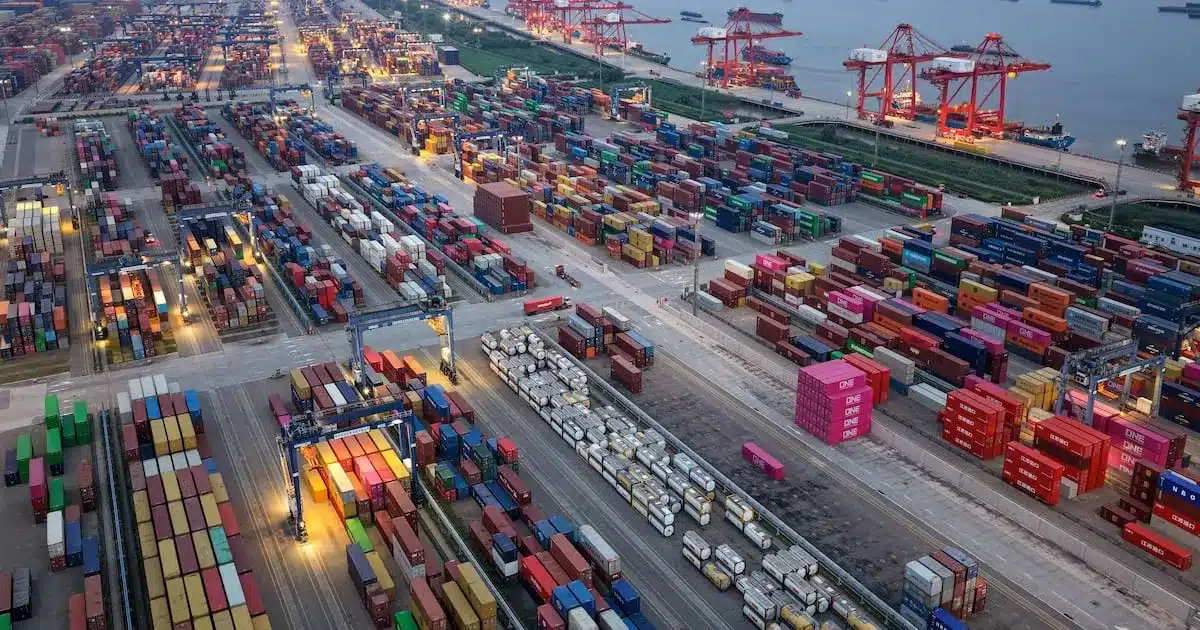
China’s manufacturing sector has shown signs of recovery, moving out of a period of stagnation and entering an expansionary phase in June. This turnaround is largely attributed to a surge in exports, significantly boosted by the global demand for artificial intelligence (AI) related products and technologies. The National Bureau of Statistics of China reported that the Manufacturing Purchasing Managers’ Index (PMI) reached 50.3 in June, indicating a return to growth.
Manufacturing PMI Shows Expansion in June
The Purchasing Managers’ Index (PMI) is a key economic indicator derived from surveys of purchasing managers in businesses across various sectors. A PMI reading above 50 signifies economic expansion, while a figure below 50 suggests contraction. China’s manufacturing PMI had previously hovered around the expansionary threshold, recording 50.4 in March and 50.3 in April, after hitting a low of 49 in February. However, the index dipped slightly to 50.0 in May before rebounding in June.
Specifically, the sub-index for high-tech manufacturing, which includes AI-related industries, saw a notable increase. This segment recorded a PMI of 53.5 in June, a 0.6 point rise from the previous month, according to senior statistician He Hui from the National Bureau of Statistics. This strong performance in the high-tech manufacturing sector has been a primary driver behind the overall manufacturing PMI’s ascent.
AI Boom Fuels Export Growth
Analysts suggest that the current manufacturing rebound is intrinsically linked to the global artificial intelligence boom. The increasing demand for AI hardware, software, and related services worldwide has led to a significant uptick in China’s exports of these advanced technological products. This surge in external demand has provided a much-needed stimulus to China’s manufacturing base, helping it overcome domestic economic headwinds.
The growth in high-tech manufacturing exports is a critical factor. As global companies ramp up their AI capabilities, they are sourcing components, chips, and finished products from Chinese manufacturers. This has not only boosted production volumes but also encouraged investment in advanced manufacturing facilities within China. The emphasis on AI development and production positions China to capitalize on one of the most significant technological shifts of the current era.
Concerns Over Domestic Demand and Economic Imbalance
Despite the positive manufacturing PMI figures, concerns remain regarding the sustainability of this recovery, particularly its reliance on external demand. Experts point out that the rebound is heavily dependent on exports, especially those related to AI and other high-tech industries. If domestic consumption and investment do not show corresponding signs of life, maintaining this growth trajectory could prove challenging.
The Wall Street Journal highlighted this imbalance, noting that while China’s economy continues to grow, driven by robust overseas demand amidst sluggish domestic conditions, this recovery is disproportionately tied to exports and AI-related technologies. The report indicated that consumer spending in China experienced its first contraction in three years in the previous month, and investment also weakened, exacerbating economic imbalances.
This reliance on exports, particularly in a sector as dynamic and potentially volatile as AI, presents a risk. Fluctuations in global tech demand, geopolitical factors, or increased competition could quickly impact China’s manufacturing output. Furthermore, a lack of robust domestic demand means that the broader Chinese economy may not fully benefit from the manufacturing sector’s resurgence. The government faces the challenge of stimulating domestic consumption and investment to create a more balanced and resilient economic recovery.
Future Outlook and Challenges
The June PMI data offers a glimmer of optimism for China’s manufacturing sector, signaling its ability to adapt and capitalize on global technological trends. The AI boom presents a significant opportunity, and China’s established manufacturing prowess positions it well to be a key player in the global AI supply chain. However, the underlying economic vulnerabilities, particularly weak domestic demand and investment, cannot be ignored.
Moving forward, the Chinese economy will need to foster stronger domestic consumption and investment to complement its export-driven growth. Policies aimed at boosting household income, encouraging consumer spending, and stimulating private investment will be crucial. Balancing the growth of high-tech exports with a healthy domestic market will be key to achieving sustainable and inclusive economic development. The performance of the manufacturing sector, while encouraging, is just one piece of a larger economic puzzle that requires careful management and strategic policy interventions.
