

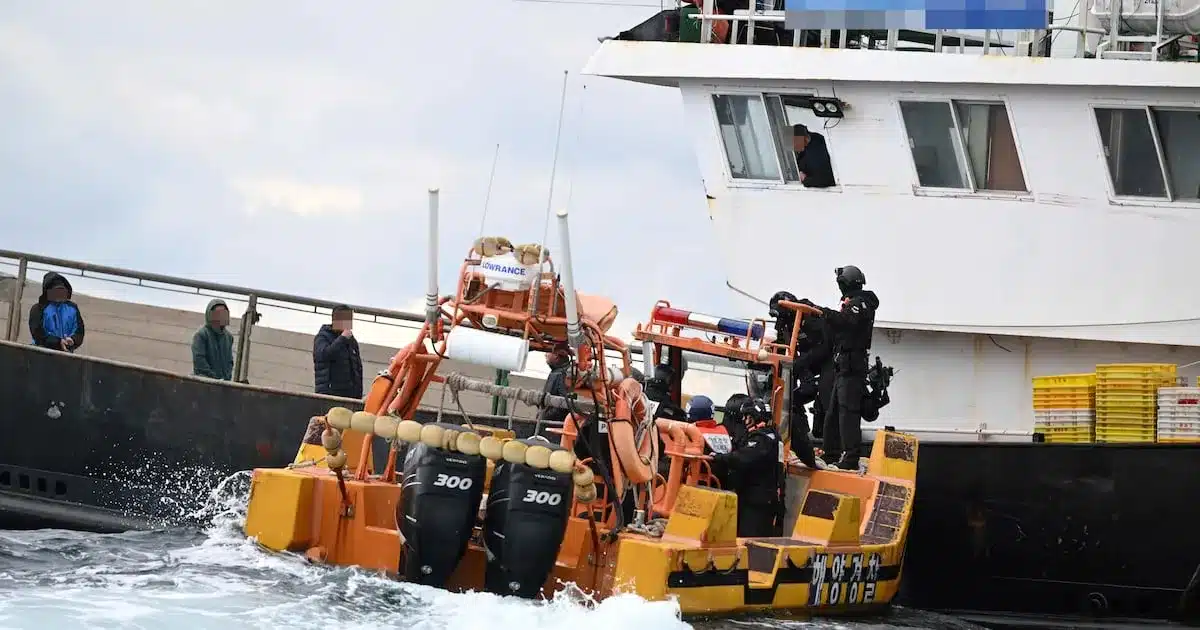
The number of Chinese fishing vessels caught engaging in illegal fishing activities has significantly decreased, reaching its lowest point in five years. This reduction is attributed to intensified crackdowns by the Maritime Police, who have substantially increased their enforcement efforts and penalties. From January to June this year, a total of 21 Chinese vessels were apprehended for suspected illegal fishing operations. This figure represents a sharp 43.2% drop compared to the 37 vessels recorded during the same period last year, marking the lowest semi-annual total since 2021.
Decreased Illegal Fishing Incidents
The annual number of illegal fishing incidents involving Chinese vessels had previously peaked, reaching as high as 115 cases in 2019. While the figures saw a considerable reduction during the COVID-19 pandemic, they have fluctuated in subsequent years. For instance, annual tallies were recorded at 18 cases in 2020, 66 in 2021, 42 in 2022, 54 in 2023, and 46 in 2024. The current substantial decrease in reported cases is largely credited to the heightened vigilance and stricter enforcement measures implemented this year.
Increased Penalties and Enforcement Measures
In response to the ongoing issue of illegal fishing, the Maritime Police significantly revised penalties. In May, amendments to the relevant fisheries law came into effect, increasing the maximum fine for illegal fishing vessels from 300 million won to 1.5 billion won – a fivefold increase. This substantial financial deterrent is designed to discourage unlawful practices at sea.
Beyond financial penalties, the Maritime Police have also ramped up direct enforcement actions. Over 17 days, a concentrated crackdown involving five phases was conducted, leading to the inspection of 664 vessels. During these operations, high-strength search and seizure procedures were employed. The agency is also accelerating the modernization of its equipment to bolster its response capabilities.
Fleet Modernization Efforts
To directly address and intercept illegal fishing activities, the Maritime Police have commenced the construction of large-capacity patrol vessels. Specifically, they are building 500-ton class vessels equipped with advanced fishing-interception technology. The plan is to deploy two such vessels annually to the field starting in 2028, ensuring a sustained presence and enhanced operational capacity.
Joint Operations and Regional Focus
A notable development this year is the initiation of joint special crackdowns in areas near the Northern Limit Line (NLL) in the West Sea. These operations, conducted in collaboration with the Navy, are aimed at strengthening control over maritime activities in this strategically sensitive region, following directives from President Lee Jae-myung. This enhanced joint presence is expected to further deter illegal activities.
Persistent Violations Despite Crackdowns
Despite the intensified pressure and increased penalties, certain types of serious violations, such as territorial incursions and unlicensed fishing, have paradoxically seen an increase. Last year, 8 such serious violations were recorded in the first half of the year. This number rose to 10 in the first half of 2024, indicating a 25% increase in these specific offenses.
In response to these persistent and serious violations, the Maritime Police are implementing a dual-punishment strategy. For eight of the apprehended vessels involved in serious violations, their cases have been directly handed over to Chinese authorities for on-site legal action. This approach aims to ensure that offenders face consequences in their home jurisdiction, adding another layer of deterrence.
Conclusion
The significant reduction in reported illegal fishing incidents involving Chinese vessels highlights the effectiveness of the Maritime Police’s enhanced enforcement and penalty system. The substantial increase in fines, coupled with intensified crackdowns and fleet modernization, appears to be deterring many from engaging in illicit fishing. However, the concurrent rise in more serious violations like territorial incursions necessitates a continued and adaptive strategy, including international cooperation, to ensure maritime security and the sustainable management of fishing resources.
