

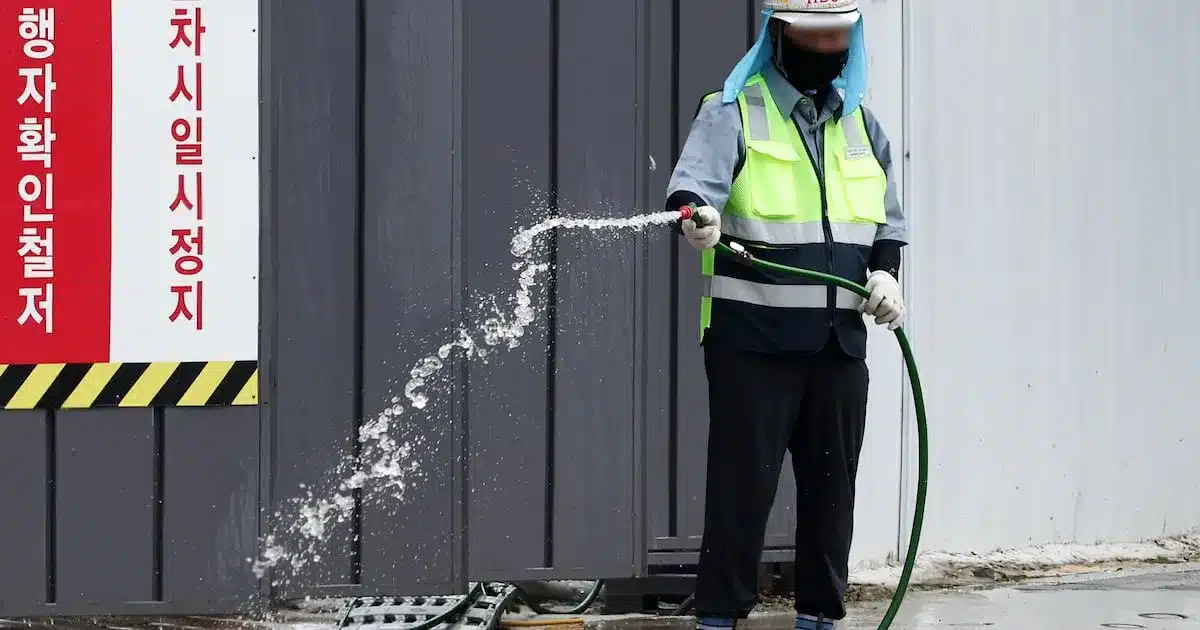
A tragic industrial accident occurred at a concrete product manufacturing plant in Cheonan, South Chungcheong Province, resulting in the death of a worker. The incident took place on the afternoon of October 27th, when a large section of formwork collapsed, tragically trapping and killing a man in his 60s.
Details of the Cheonan Concrete Plant Accident
The accident happened around 4:06 PM at a facility operated by Kamyu & C in Cheonan. Reports indicate that a significant portion of the concrete formwork, a temporary structure used to support concrete while it cures, unexpectedly gave way. This collapse resulted in the worker, identified as Mr. A, being crushed by the falling materials.
Mr. A, who was employed by a subcontracting company, sustained fatal injuries and was pronounced dead at the scene. The severity of the collapse underscores the inherent dangers present in construction and manufacturing environments where heavy materials and complex structures are involved.
Immediate Response and Investigation
Following the incident, the Ministry of Employment and Labor’s Cheonan branch was immediately notified. Officials, including those from the heavy and chemical accident investigation department and the industrial accident prevention division, were dispatched to the site. They have initiated a thorough on-site investigation to determine the precise cause of the collapse and have ordered a halt to all work at the facility pending the outcome of their inquiry.
The Ministry of Employment and Labor is committed to uncovering the exact circumstances that led to this fatal accident. Their investigation will focus on potential violations of the Occupational Safety and Health Act and the Heavy and Chemical Disaster Punishment Act. Depending on the findings, appropriate legal and administrative actions will be taken against those found responsible.
Understanding Concrete Formwork and Collapse Risks
Concrete formwork, often referred to as formwork or shuttering, is a critical component in concrete construction. It provides the mold into which fresh concrete is poured. These structures can range from simple wooden planks to complex steel or aluminum systems, often involving large, heavy panels and supporting elements.
The collapse of formwork can occur due to several factors:
- Inadequate Design or Engineering: The formwork may not have been designed to withstand the immense pressure exerted by the wet concrete, especially in large pours.
- Improper Erection or Bracing: Failure to properly assemble, brace, and secure the formwork can lead to instability.
- Material Defects: Weakness or failure in the materials used for the formwork or its supports.
- Premature Removal of Support: Removing supporting elements before the concrete has gained sufficient strength can cause a catastrophic failure.
- Environmental Factors: Extreme weather conditions, such as high winds or heavy rain, can sometimes compromise the integrity of temporary structures.
- Overloading: Pouring too much concrete at once, exceeding the designed load capacity of the formwork.
The sheer weight of concrete, combined with the forces involved during the pouring and curing process, means that formwork systems must be meticulously planned, constructed, and monitored. The incident in Cheonan highlights the critical importance of adhering to stringent safety protocols in such environments.
Preventing Future Industrial Accidents
Industrial accidents, particularly those involving heavy machinery and construction materials, can have devastating consequences. The Ministry of Employment and Labor’s investigation aims not only to assign responsibility for this specific incident but also to identify systemic issues that could be prevented in the future.
Key areas for prevention in such workplaces include:
- Robust Safety Training: Ensuring all workers, including those from subcontracting firms, receive comprehensive training on safety procedures, hazard recognition, and the proper use of equipment.
- Regular Safety Inspections: Implementing a schedule of frequent and thorough inspections of all equipment, structures, and work processes by qualified safety personnel.
- Engineering and Design Review: Verifying that all formwork and structural plans are reviewed and approved by competent engineers.
- Strict Adherence to Regulations: Ensuring full compliance with national safety standards and regulations, such as the Occupational Safety and Health Act.
- Effective Communication: Fostering clear communication channels between main contractors, subcontractors, and workers regarding potential hazards and safety measures.
- Management Commitment to Safety: Demonstrating a strong organizational commitment to safety from the highest levels of management, prioritizing worker well-being over production targets.
The tragic loss of life in Cheonan serves as a somber reminder of the need for constant vigilance and unwavering commitment to safety in all industrial settings. The findings of the ongoing investigation are expected to provide further insights into how such accidents can be averted, ensuring that workers can perform their duties without facing undue risks.
Conclusion
The fatal collapse of concrete formwork at the Cheonan plant is a deeply regrettable incident that has claimed the life of a worker. Authorities are conducting a thorough investigation to determine the cause and ensure accountability. This event underscores the critical importance of robust safety management systems, rigorous adherence to regulations, and a proactive safety culture within the manufacturing and construction industries to prevent similar tragedies in the future.
