

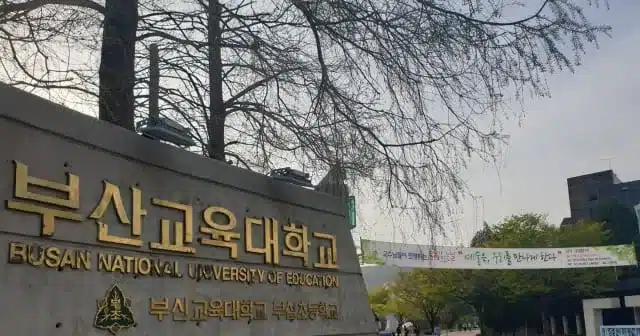
Busan National University of Education (BNUE) is set to hold its final presidential election on December 3rd, marking a significant moment as the institution prepares to merge with Busan University next March. The newly elected president will assume the role of vice president for the unified Busan University’s Yeonsu Campus upon the merger’s completion.
A Historic Final Election
This upcoming election is particularly noteworthy as it represents the last time BNUE will select its own president independently. The merger with Busan University signifies a new chapter, and the leadership chosen now will play a crucial role in navigating this transition and shaping the future of the combined institution. The election process involves a rigorous selection of candidates, with the final decision resting on the outcome of the vote.
The Candidates
Three distinguished professors have been nominated as final candidates for the presidency:
- Professor Im Cheon-taek from the Korean Language Education Department
- Professor Lee Kwang-hyun from the Education Department
- Professor Kim Sung-jun from the Mathematics Education Department (Candidate Number 1)
These three individuals bring a wealth of experience and academic background to the table, each vying for the opportunity to lead BNUE through its final stages as an independent entity and into its integrated future.
The Election Process
The presidential election will proceed in two rounds. In the first round, if no candidate secures an absolute majority of the votes, a runoff election will be held between the top two vote-getters. This ensures that the final chosen candidate has broad support among the electorate.
The appointment of university presidents in South Korea typically involves a multi-step process. For national universities, candidates are first selected by the university’s internal voting system. These nominees are then recommended to the Ministry of Education. Following a review by the Ministry, the candidate is formally appointed by the President of South Korea through the Minister of Education.
Context of the Re-election
The current election follows a unique circumstance from the previous year. The candidate who secured the top position in BNUE’s presidential election last year was not ultimately appointed. This situation has led to the necessity of a new election to determine the leadership for the upcoming merger and the subsequent integration period.
The Significance of the Merger
The impending merger between Busan National University of Education and Busan University is a strategic move aimed at enhancing educational capabilities and fostering greater synergy between the institutions. By combining resources and expertise, the unified university seeks to offer more comprehensive programs and strengthen its position in higher education.
Impact on Campus Leadership
The integration will see the establishment of the Yeonsu Campus under the umbrella of Busan University. The president elected from BNUE will hold a critical position as the vice president overseeing this specific campus. This role will be instrumental in managing the day-to-day operations, academic affairs, and student welfare within the Yeonsu Campus, ensuring a smooth transition and continued excellence.
Navigating the Transition
The final presidential election at BNUE is more than just a leadership selection; it is a pivotal event that underscores the university’s commitment to a successful integration. The chosen leader will be tasked with bridging the gap between the two institutions, fostering a collaborative environment, and setting the strategic direction for the merged entity. The candidates’ platforms and visions for the future will be crucial in guiding BNUE through this transformative period.
Looking Ahead
As December 3rd approaches, the BNUE community will be keenly observing the election results. The outcome will not only determine the final president of BNUE but also set the stage for the unified Busan University. The election represents the culmination of BNUE’s independent history and the beginning of its new identity as part of a larger, integrated academic institution. The focus remains on ensuring a stable and effective transition that benefits students, faculty, and the broader educational landscape.
The successful integration hinges on strong leadership and a shared vision. The candidates understand the weight of this responsibility, and the electorate is poised to make a choice that will shape the future of higher education in the region. The final presidential election is a testament to the dynamic nature of academic institutions and their continuous evolution to meet new challenges and opportunities.
