

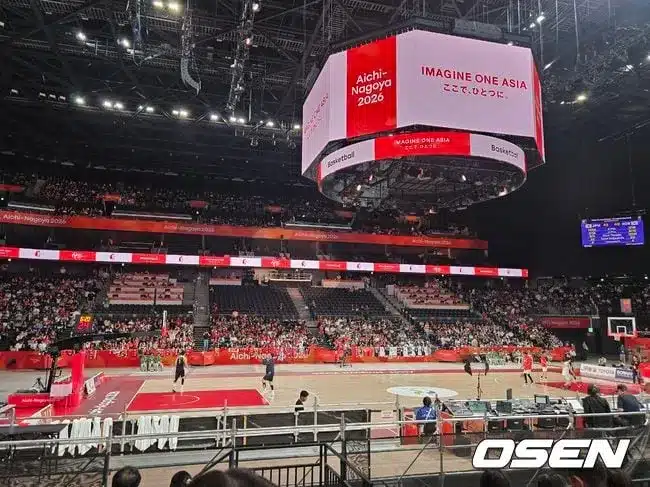
The men’s handball final at the 2026 Asian Games in Aichi-Nagoya has been marred by significant organizational issues, leaving players’ families and dedicated fans scrambling for tickets and expressing frustration. The championship match, featuring the South Korean national team led by coach Nikolaos Malis, is set to take place on September 20th at 7:40 PM KST at the Aichi Prefectural Gymnasium in Japan. South Korea is vying for the gold medal, marking their first attempt at the title in 12 years, since the 2014 Incheon Asian Games.
Unprecedented Demand and Organizational Shortcomings
The high stakes of the final, especially with South Korea aiming for gold on foreign soil against host nation Japan, have drawn considerable attention. Many family members of the South Korean athletes and handball enthusiasts traveled to Nagoya specifically to witness this historic event. However, upon arrival, they discovered a severe lack of available tickets, leaving them in a difficult situation outside the venue.
The Aichi Prefectural Gymnasium is a large-capacity venue, capable of holding 15,000 spectators. Despite this, preliminary matches leading up to the final saw significantly lower attendance, with estimates ranging from 2,000 to 3,000 people. Notably, most of these spectators were concentrated in games involving Japan and South Korea, while other matches garnered little interest.
Japan’s Unexpected Success and Ticket Allocation Issues
The situation dramatically shifted when the Japanese national team, which had sent its second-string players (comprising professionals and university students) to the Asian Games while prioritizing its main squad for the Olympics and World Championship, unexpectedly advanced to the final. This success led to a surge in demand for tickets among Japanese fans.
Reports indicate that the Japan Handball Association did not anticipate their team reaching the final, resulting in a limited release of tickets to the public. Consequently, Japanese fans quickly bought up the available tickets. A South Korean fan present at the venue shared, “Japan’s home team wasn’t expected to make it to the final. Because of that, they only released a small number of tickets for the final match. Korean fans, hoping there might be some tickets available for sale at the stadium, came to the stadium early in the morning and are lining up.”
Families Left Without Access
The ticket scarcity extends to the families of the South Korean players. Typically, player families receive tickets through the Korean Handball Federation, which are then distributed to the athletes. However, in this instance, the organizing committee failed to allocate an adequate number of tickets to the Korean Federation. This has created a crisis, with even officials from the Handball Federation struggling to secure tickets to watch the final match.
One player’s parent expressed their distress: “We came to see our son win the gold medal, but we are standing here with no tickets for the final. Some families, upon hearing there were no tickets, returned to Korea after only watching the semi-final matches.” The situation highlights a critical oversight in event management, particularly concerning the logistical arrangements for the families of the competing athletes.
Potential Solutions and Lingering Concerns
There is a slim hope that the issue might be resolved if any remaining seats or tickets designated for the match day are released for public sale. However, the overall management of the event, particularly the ticket distribution process, has drawn criticism.
The focus now shifts to whether South Korea can overcome the home-field advantage of Japan and secure the gold medal. In their semi-final encounter, South Korea defeated Japan with a decisive score of 100-83, demonstrating their strong performance.
The organizational challenges surrounding ticket access underscore a significant flaw in the event’s planning, leaving a bitter taste for those who traveled far to support their national team and athletes. The success of the South Korean team on the court remains a point of interest, but the surrounding logistical failures have cast a shadow over the event.
