

Five years after the Taliban regained control of Afghanistan, the nation’s capital, Kabul, presented a complex picture on August 14th, 2023. The eve of the anniversary saw young girls, some holding Taliban flags, seated by a low wall, their gaze fixed in a single direction. This scene, captured just before official commemorative events, highlighted the evolving landscape of a country under Taliban governance since August 15, 2021. The following day’s official proceedings further underscored this shift, with a young girl prominently featured amidst the assembled Taliban representatives.
The Loya Jirga: A Traditional Assembly in a New Era
In Kabul’s Loya Jirga hall, representatives from across Afghanistan convened. The Loya Jirga, a traditional grand assembly, is historically convened to discuss critical national issues. Amidst the predominantly male attendees, dressed in traditional attire and with shaved heads, a young girl stood out. She wore a headband inscribed with text and had a Taliban flag beside her, facing the cameras directly. This image symbolized the integration of the younger generation into the current political framework.
Commemorating the Taliban’s Return: Victory or Reclamation?
For the Taliban, August 15th is marked as a day of ‘victory’ and the ‘restoration of Islamic rule’ following the withdrawal of foreign forces. The United States initiated its involvement in Afghanistan following the September 11, 2001, terrorist attacks, targeting al-Qaeda and the Taliban regime that harbored them. Two decades later, as U.S. and NATO troops withdrew, the Taliban rapidly consolidated power, taking control of Kabul on August 15, 2021, after then-President Ashraf Ghani fled the country.
The current administration points to reduced large-scale conflict and improved security over the past five years as key achievements. However, images from outside the official events painted a different narrative. Taliban flags adorned vehicles, and armed security personnel, some dancing amidst the crowds, celebrated the anniversary. Children, some leaning out of car windows and off rooftops, waved flags, indicating a pervasive presence of the Taliban’s symbols and influence.
A Young Girl with an AK-47: A Stark Symbol
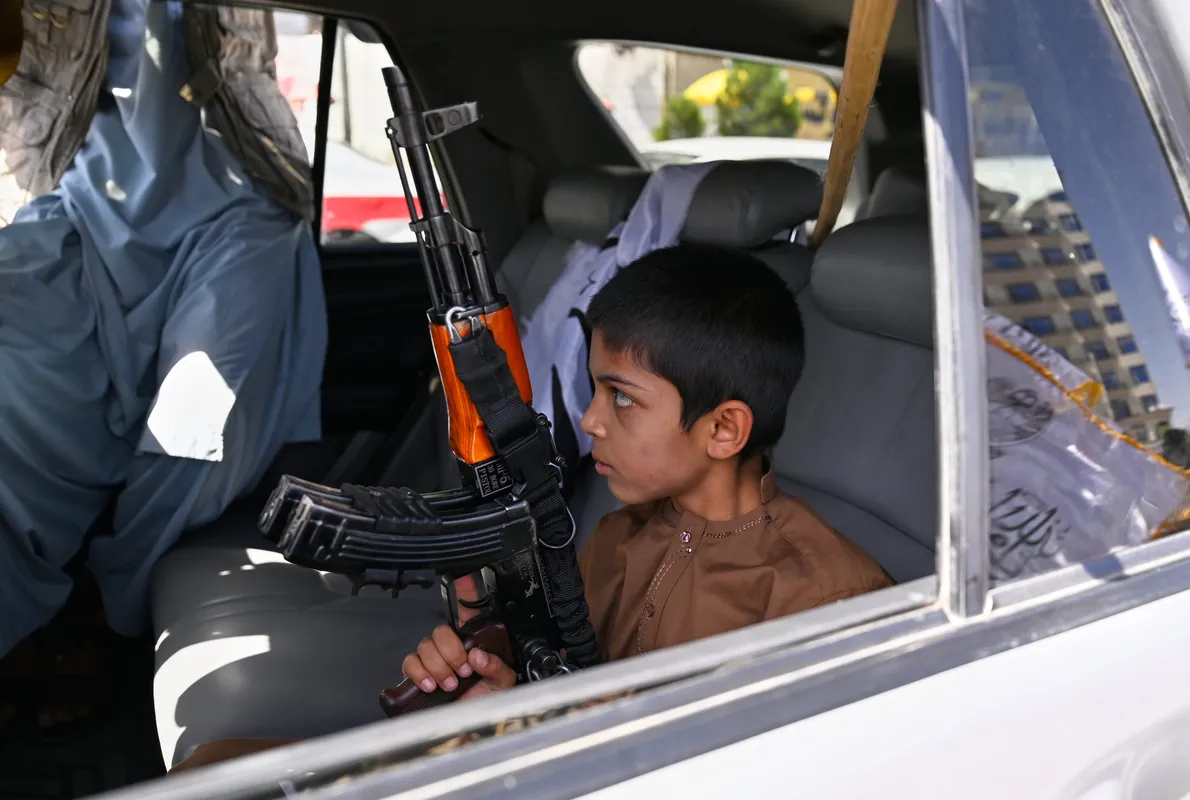
One particular image captured significant attention: a young girl in the back of a flag-adorned vehicle, holding an AK-47-style rifle. The long firearm appeared disproportionately large for the child, its barrel extending above her head. This photograph served as a potent symbol, juxtaposing childhood innocence with the pervasive militarization and the reality of life under the current regime.
Challenges Persist: Economy, Education, and Women’s Rights
Despite the claims of stabilized security, the five years since the Taliban’s return have been marked by persistent economic hardship and humanitarian crises. The restrictions on women and girls, particularly concerning education and social activities, have intensified. UNESCO reported that approximately 2.4 million Afghan girls are excluded from secondary education. This situation underscores the ongoing challenges faced by a significant portion of the population.
The children seen in Kabul’s commemorative scenes, some holding flags and others in military attire, represent a generation that has grown up entirely under Taliban rule. For them, the current system is the only reality they have known. The presence of weapons and military symbols in the context of a national anniversary highlights the deep integration of these elements into the fabric of Afghan society under the Taliban’s governance.
Looking Ahead: A Nation at a Crossroads
As Afghanistan navigates its fifth year under Taliban control, the nation faces a complex future. While security has seen improvements in certain aspects, the economic situation remains dire, and fundamental rights, especially for women and girls, are severely curtailed. The images emerging from the anniversary celebrations offer a glimpse into the realities on the ground, reflecting both the Taliban’s narrative of restored order and the enduring challenges that shape the lives of ordinary Afghans.
