

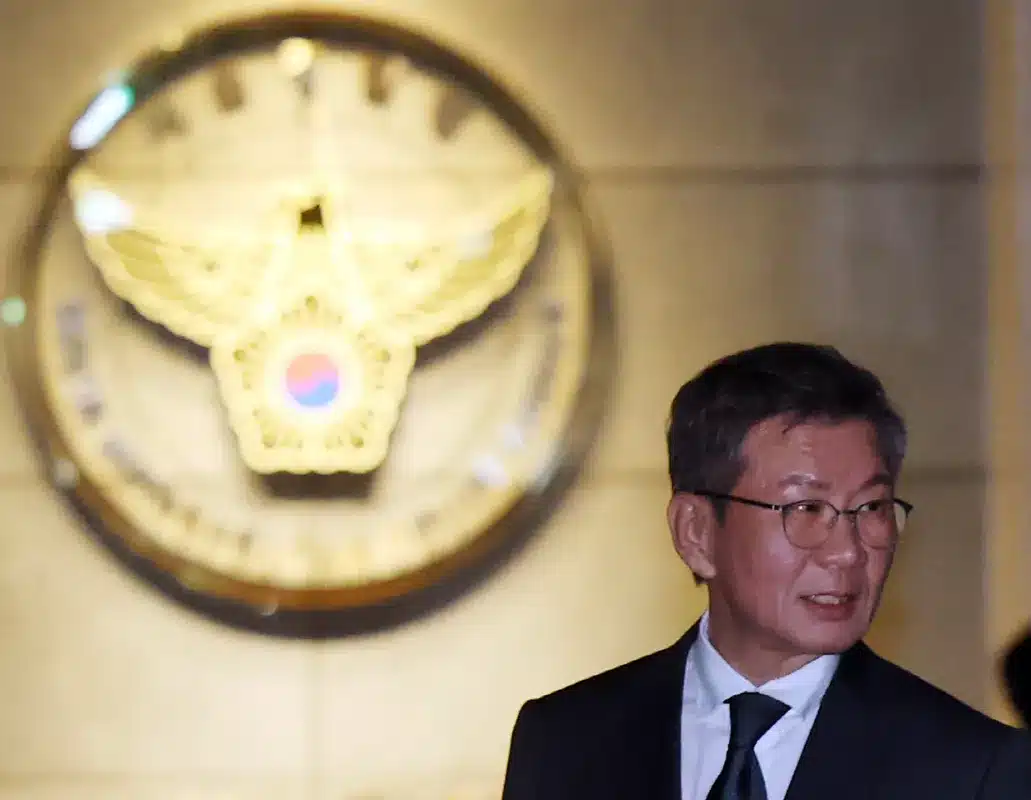
Former Korea Football Association (KFA) President Chung Mong-gyu has been formally sent to prosecutors over allegations of obstructing business during the selection process for the national team coach. The Seoul Metropolitan Police Agency’s financial crime investigation unit transferred Chung, along with former KFA Technical Director Lee Yong-soo and former Vice President Kim Jung-bae, to the prosecution on Tuesday. This action stems from an investigation initiated by Jongno Police Station in July, which was later handed over to the metropolitan agency.
Allegations of Obstruction in Coach Appointment
The investigation into Chung and other KFA officials began following public criticism after the national team’s elimination from the 2026 World Cup qualifiers in July. At the time, President Lee Jae-myung’s remarks about “personnel failures” drew widespread attention and led to the case being escalated.
The police allege that Chung, Lee Yong-soo, and Kim Jung-bae interfered with the duties of the KFA’s standing committee, which is responsible for recommending candidates for the head coach position. Specifically, the charges relate to the alleged falsification of documents submitted to the KFA board of directors to conceal these actions. The police claim that documents were fabricated to suggest that a request for the appointment of a successor coach was made after a committee member resigned, even though such a request was not officially made.
The police’s investigation concluded that this alleged falsification constituted obstruction of the board’s duties. This was reportedly done to circumvent the procedural fairness issues that arose during the coach selection process, which had already drawn public criticism.
Hong Myung-bo Cleared of Suspicion
Notably, former national team coach Hong Myung-bo, who was also investigated, has been cleared of all suspicions and will not face charges. Police determined there was insufficient evidence to suggest his direct involvement in the alleged obstruction during the coach selection process. Hong Myung-bo himself had previously stated that he had no direct contact with Chung Mong-gyu regarding his appointment.
The police found that while the standing committee had the authority to recommend candidates, Chung and the other officials allegedly interfered with this process. The fabricated documents were reportedly created to make it appear as though the committee had requested the appointment of a new coach after a member’s resignation, a move that allegedly misled the board of directors.
Chung Mong-gyu Expresses Deep Regret
Following the decision to send the case to prosecutors, Chung Mong-gyu issued a statement expressing his profound regret. He apologized to the public and football fans for causing distress.
“I sincerely apologize to the citizens and football fans for causing concern,” Chung stated. “Through the investigation, I have faithfully explained that the appointment of the national team coach proceeded legally and through proper procedures. There was no reason to deceive the board of directors, and certainly, no deception occurred.”
He added, “I express my deep regret over the prosecution’s decision to forward the case. I will faithfully explain myself in subsequent investigation processes, including the upcoming prosecutorial review, to clear up any misunderstandings and reveal the truth.”
Background of the Controversy
The controversy surrounding the coach selection process intensified after the national team’s disappointing performance in the World Cup qualifiers. The KFA’s decision-making process came under scrutiny, leading to the initial police investigation.
The police report indicates that the standing committee had initially recommended Hong Myung-bo. However, Chung Mong-gyu reportedly insisted on a direct interview with foreign candidates. This stance reportedly led to the resignation of a committee member who opposed the decision. The situation became complicated, and the opposition eventually used this as grounds for criticism.
While Hong Myung-bo was ultimately appointed, the process was marred by controversy and damage to his reputation. The police’s focus remained on the alleged procedural irregularities and document falsification by KFA leadership, rather than on Hong Myung-bo himself.
The police’s findings suggest that the alleged obstruction involved manipulating the process to ensure a specific outcome while masking the internal disagreements and procedural missteps. The fabricated meeting minutes were central to the obstruction of business charge, as they allegedly misrepresented the committee’s actions and intentions to the KFA board.
Despite the police’s conclusion, some reports suggest that the decision to forward the case to prosecutors might be seen by some as an overzealous interpretation of the facts, potentially influenced by external pressures. Nevertheless, the case highlights significant concerns regarding governance and transparency within the KFA.
Chung’s statement emphasizes his commitment to cooperating with further investigations and proving his innocence. The situation underscores the intense public and media scrutiny faced by sports organizations, particularly concerning high-profile appointments like that of a national team coach.
