

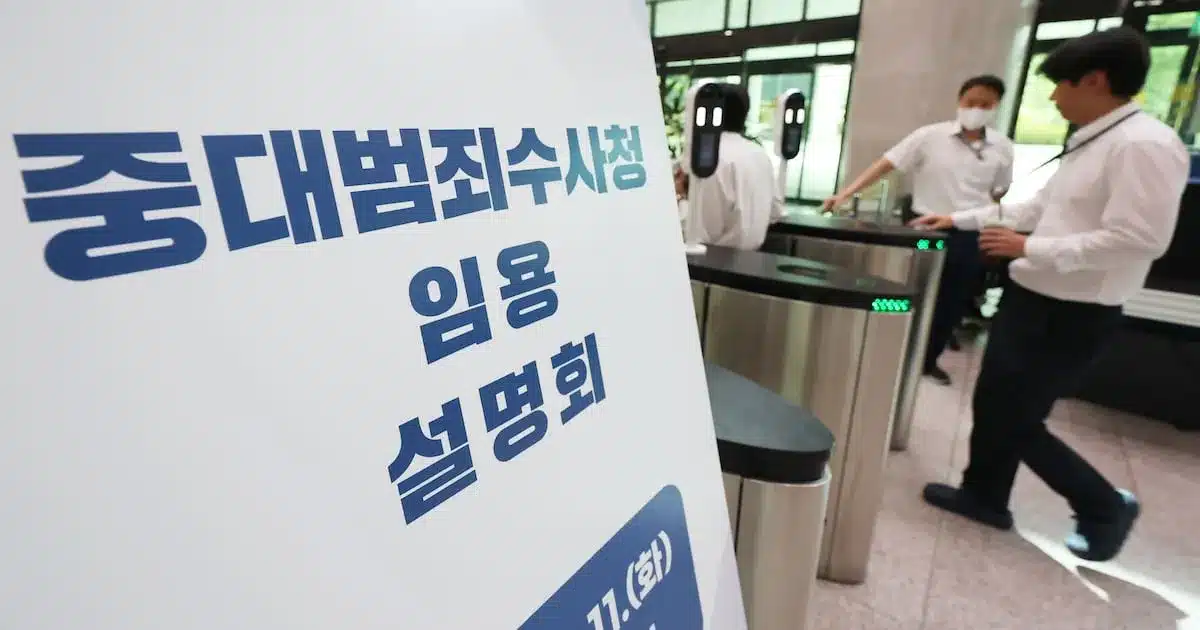
South Korea’s upcoming major crimes agency, the Central Investigation Agency (CIA), is facing significant staffing challenges as its special recruitment drives have fallen short of filling its required positions. The Ministry of Interior and Safety confirmed that the second round of special recruitment for the agency, set to launch next month, attracted only 201 applicants, including prosecutors and investigative officers. This latest round adds to the total applicant pool of 1,962 when combined with the first recruitment phase, still leaving the agency with only approximately 68% of its planned staffing. Concerns are mounting that the CIA will have to open its doors without adequate personnel.
Challenges in Special Recruitment Drives
The initial special recruitment drive, conducted last month, saw a promising 2,376 applicants. However, a substantial number, over 600 individuals, withdrew their applications just before the deadline. This left only 1,761 candidates, representing about 60% of the agency’s total planned workforce of 2,874. The shortfall of over 1,100 positions prompted the CIA preparatory team to conduct a second special recruitment drive, which concluded on the 20th of this month. Despite the urgency, this second round yielded only 201 applicants, further exacerbating the staffing deficit.
Unlike the first round, the second special recruitment did not include a separate period for application withdrawals. The preparatory team plans to finalize the selection of candidates by the end of this month and intends to onboard them sequentially. Positions that remain unfilled after these special recruitment efforts will be filled through subsequent regular competitive hiring processes.
Future Hiring and Agency Structure
The special recruitment drives specifically targeted experienced public officials, including prosecutors, police investigators, and judicial investigators at Grade 7 or higher. Future competitive hiring, however, will broaden the scope to include police officers, lawyers, accountants, and experts in cyber technology and financial analysis. This indicates a strategic approach to building a diverse and skilled workforce for the new agency.
The appointment of the agency’s director also remains pending. On July 7th, Interior and Safety Minister Lee Sang-min proposed Kim Soo-chul as a candidate for the Director of the CIA to President Yoon Suk-yeol. However, over ten days later, the confirmation process, including parliamentary confirmation hearings, has not yet commenced. Reports suggest internal opposition within the ruling party to Kim’s nomination, citing that his background as a prosecutor does not align with the current administration’s plans to reform the criminal justice system, particularly regarding the separation of investigative and prosecutorial powers.
Implications of Staffing Shortfalls
The ongoing staffing issues have led to considerable concern among legal circles. “From the preparatory stages, there were worries about a ‘rushed launch,’ and now it appears the agency will have to open without even securing its full complement of staff, let alone a director,” remarked one observer from the legal community. This situation raises questions about the agency’s operational readiness and its ability to effectively carry out its mandate from day one.
The Central Investigation Agency is being established as a key component of the government’s plan to reorganize the national investigative framework. Its primary role will be to handle complex and serious criminal cases, thereby enhancing the efficiency and effectiveness of law enforcement. The success of this new agency hinges significantly on its ability to attract and retain qualified personnel. The current recruitment challenges suggest that the path to full operational capacity may be more arduous than initially anticipated.
Broader Context and Next Steps
The government’s initiative to create the CIA aims to streamline investigations and improve public safety. The agency is expected to take over critical functions previously handled by various departments, consolidating expertise and resources. The shortfall in recruitment could potentially delay the full transfer of these responsibilities and impact the agency’s initial performance.
Officials are reportedly exploring various strategies to address the recruitment gap, including enhancing recruitment incentives and expanding outreach to potential candidates. The success of these measures will be crucial in determining the agency’s future effectiveness. The appointment of a director is also seen as a critical step that could help galvanize recruitment efforts and provide clear leadership for the new organization.
The coming weeks will be pivotal as the CIA preparatory team works to finalize selections and onboard new staff. Simultaneously, the political process for appointing the agency’s director needs to progress to provide the necessary leadership. The ability of the Ministry of Interior and Safety to navigate these challenges will ultimately shape the operational capacity and public perception of the new Central Investigation Agency.
