

The upcoming 2026 Aichi-Nagoya Asian Games, set to be the first held in Japan in 32 years since the 1994 Hiroshima Games, are already facing controversy even before their opening ceremony. A pre-opening event held on a large cruise ship, the ‘Costa Serena,’ intended to commemorate the games, has sparked debate due to the historical figures represented in its performances.
Historical Figures and Regional Representation
The pre-opening ceremony featured performers portraying figures such as Oda Nobunaga, Toyotomi Hideyoshi, and Tokugawa Ieyasu. These individuals are iconic figures from Japan’s Sengoku period, a time of civil war and unification. Notably, all three figures were born in the Aichi Prefecture, the region hosting the games. The Aichi Prefecture and Nagoya City have actively promoted their local history and culture as key content for tourism and engagement.
Toyotomi Hideyoshi and the Imjin War
However, the inclusion of Toyotomi Hideyoshi has drawn significant criticism. Hideyoshi is historically known as the Japanese general who launched the 1592 invasion of Joseon (Korea), an event known as the Imjin War. This seven-year conflict devastated Korea, causing immense suffering and widespread bloodshed. The war significantly destabilized East Asia, impacting the entire region.
Korean Olympic Committee’s Response
In response to these developments, the Korean Sport & Olympic Committee (KOC) has taken immediate action. On the 17th, under the direction of KOC President Ryu Seung-min, the committee sent a formal letter to the Olympic Council of Asia (OCA) and the Games Organizing Committee. The letter urgently requested the immediate removal of any potentially offensive content and the prevention of its recurrence.
Professor Seo Geong-deok’s Campaign Against the ‘Rising Sun’ Flag
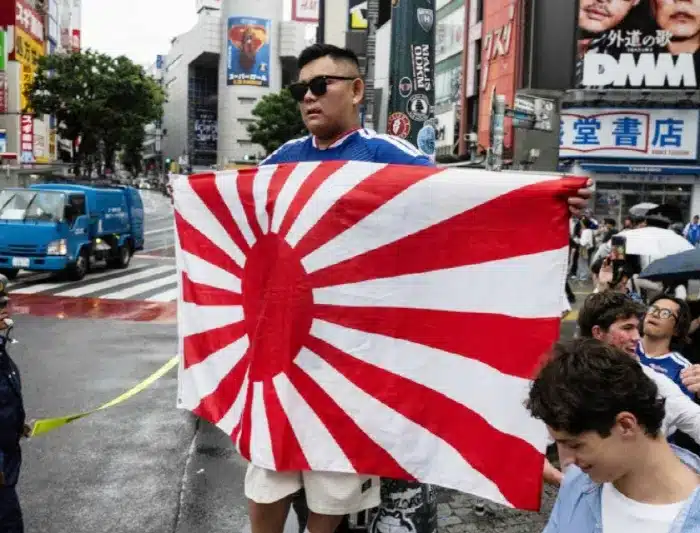
As the opening of the Aichi-Nagoya Asian Games approaches, Professor Seo Geong-deok of Sungshin Women’s University has initiated a campaign calling for the exclusion of the ‘Rising Sun’ flag. Professor Seo expressed his concerns on the 19th, stating, “One of the major concerns for the Asian Games, a grand festival for Asians, is the potential appearance of the Japanese ‘Rising Sun’ flag among supporters.”
The Symbolism of the ‘Rising Sun’ Flag
The ‘Rising Sun’ flag, historically used by Japan during its expansionist period, including the Pacific War, is seen as a symbol of militarism and imperialism. It was prominently displayed on the front lines when Japan invaded various Asian countries. Consequently, its display in international sporting events has consistently generated significant controversy.
Previous Incidents and International Reactions
Japan has a history of controversy surrounding the ‘Rising Sun’ flag at international gatherings. During the 2026 FIFA World Cup qualifiers in North Korea, some Japanese fans displayed the flag within the stadium, leading to strong condemnation. Similarly, at the 2020 Tokyo Olympics (held in 2021), images of individuals waving the ‘Rising Sun’ flag during cycling events were captured and widely criticized, reigniting the debate.
Professor Seo’s Call to Action and Global Awareness
Professor Seo urged the public to report any sightings of the ‘Rising Sun’ flag at the Asian Games, whether in person or through media broadcasts. “Please report it to my social media accounts without fail,” he requested. He emphasized that this campaign presents a valuable opportunity to raise global awareness about the problematic history associated with the ‘Rising Sun’ flag among international sports fans who may not be fully aware of its context.
Professor Seo expressed confidence that by fostering global public opinion, the display of the ‘Rising Sun’ flag can be effectively prevented. “If global opinion is formed, we can definitely stop the support using the ‘Rising Sun’ flag,” he added.
Looking Ahead to the Games
The 2026 Aichi-Nagoya Asian Games are scheduled to take place from September 19 to October 4, 2026. The controversy surrounding historical representations and the potential display of the ‘Rising Sun’ flag highlights the sensitive nature of historical memory and its intersection with international sporting events. The actions taken by the KOC and the ongoing campaign by Professor Seo underscore the efforts to ensure the Asian Games remain a platform for unity and respect, free from symbols that evoke past conflicts and aggression.
The organizing committee and the OCA are expected to address the concerns raised by the KOC and Professor Seo. The resolution of this issue will be crucial in setting the tone for the Aichi-Nagoya Asian Games and ensuring a positive experience for all participating athletes and spectators.
