

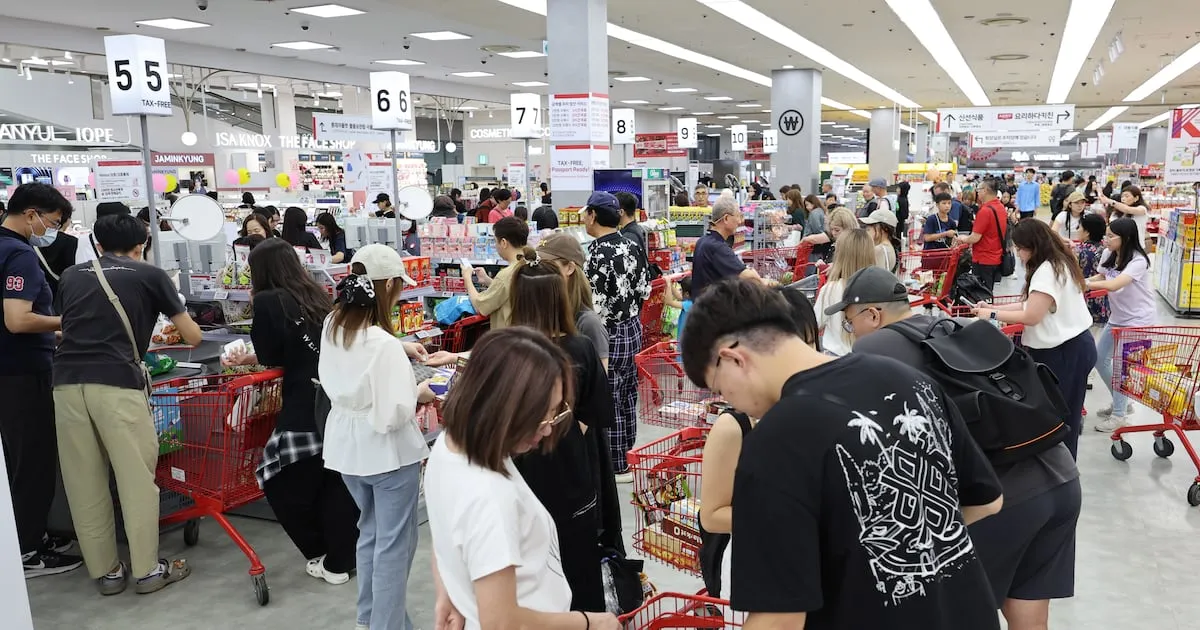
Suppliers to major retailers like large supermarkets and convenience stores will soon receive payments much faster, as a new regulation significantly shortens the payment period. The Fair Trade Commission (KFTC) announced that the revised “Regulations on Fair Transactions in Large-Scale Retail Businesses” have passed the National Assembly plenary session. This change will reduce the payment deadline for suppliers from the current 60 days to 35 days for direct purchase transactions.
Key Changes in Payment Deadlines
The revised regulations aim to improve the financial liquidity and stability of suppliers by accelerating their access to funds. The new 35-day payment period applies to direct purchase transactions, a common model where retailers directly buy goods from suppliers and bear the inventory risk. This method is prevalent in large supermarkets, convenience stores, and online malls.
Under the previous system, retailers had up to 60 days from the date of receiving goods to settle payments with suppliers. The KFTC’s decision to shorten this to 35 days is expected to provide a significant boost to the operational cash flow of many smaller businesses that supply products to these large retail chains.
Exceptions and Special Circumstances
The KFTC has acknowledged potential challenges for retailers in adapting to the shorter payment cycle. Therefore, the regulations include provisions for exceptions. If a retailer faces urgent business risks, such as bankruptcy or restructuring, and has received approval from the KFTC, the payment deadline may be extended beyond the standard 35 days. This allows for flexibility in critical situations while maintaining the general principle of faster payments.
Adjustments for Other Retail Models
Beyond direct purchase models, the revised regulations also address other forms of retail transactions. For department stores, TV home shopping channels, and outlets, which often engage in consignment, entrusted sales, or leasing agreements, the payment period has been reduced from 40 days to 20 days.
- Consignment Sales: In this model, retailers purchase goods from suppliers with the condition that unsold items can be returned. The payment deadline is now 20 days.
- Entrusted Sales: Here, the retailer handles sales on behalf of the supplier and receives a commission. The payment period has also been shortened to 20 days.
- Lease Agreements: This involves retailers receiving a portion of their sales revenue as rent for the store space, often in exchange for selling products from the supplier. The payment deadline for such arrangements is now 20 days.
These adjustments are designed to ensure that suppliers involved in various retail arrangements benefit from quicker payment cycles, thereby enhancing their financial predictability.
Exclusion of Online Marketplace Transactions
It is important to note that the revised regulations do not apply to online shopping malls that operate on an intermediary transaction model, such as Naver Shopping, 11st, and Gmarket. These platforms are not governed by the Large-Scale Retail Business Act in the same way as physical stores and direct online retailers. Therefore, their payment terms with suppliers remain subject to their own contractual agreements and are not affected by this specific regulatory change.
Implementation Timeline
The revised regulations will take effect one year after their official promulgation. Given the typical legislative process, this means the changes are expected to be implemented starting in October of next year. This grace period allows both retailers and suppliers ample time to adjust their internal systems, contracts, and financial planning to comply with the new payment timelines.
Impact on Suppliers and Retailers
The primary goal of these regulatory changes is to bolster the financial health of suppliers, particularly small and medium-sized enterprises (SMEs), who often face cash flow challenges due to long payment cycles. By receiving payments more quickly, suppliers can better manage their inventory, invest in production, meet payroll, and reduce their reliance on short-term financing.
For large retailers, the shortened payment terms may necessitate adjustments to their working capital management. However, the move is also seen as a step towards creating a more balanced and equitable business environment, fostering stronger relationships between retailers and their supply partners. The KFTC’s initiative reflects a broader trend towards ensuring fair trade practices across various industries.
Conclusion
The reduction in payment deadlines for suppliers to major retail outlets marks a significant development in South Korea’s efforts to promote fair trade and support its business ecosystem. While the new rules will require adaptation from large retailers, the anticipated benefits for supplier liquidity and operational stability are substantial. The phased implementation allows for a smooth transition, aiming to create a more robust and fair marketplace for all participants.
