

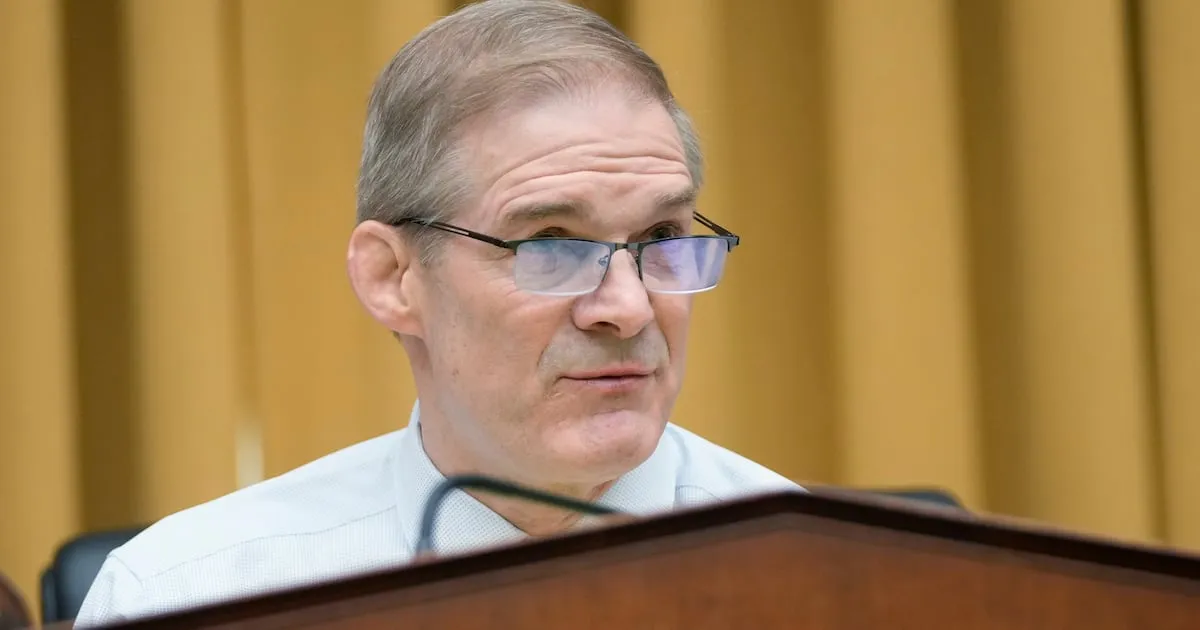
A significant legislative proposal is under consideration in the U.S. House of Representatives that could bar foreign officials from entering the United States if they are deemed to have unfairly targeted American businesses. This development comes as South Korean Vice Foreign Minister Cho Hyun visited Washington D.C. for high-level meetings, including discussions with key congressional figures.
House Judiciary Committee Advances Legislation Targeting Foreign Officials
The U.S. House Judiciary Committee has advanced a critical piece of legislation that could impact international relations and trade. The bill, which aims to penalize foreign officials who engage in discriminatory practices against U.S. companies, was discussed and advanced by the committee, with Chairman Jim Jordan reportedly giving it high marks. The committee stated that the legislation addresses the “important issue” of denying visas to foreign public officials who allegedly engage in discriminatory actions against American businesses, thereby impacting the close alliance between the United States and South Korea.
While details of the meeting between Vice Foreign Minister Cho Hyun and Judiciary Committee Chairman Jim Jordan, a Republican, were not extensively disclosed, the South Korean Ministry of Foreign Affairs confirmed the meeting took place. The legislation in question was introduced in July by Republican Congressman Michael McCaul. It is an amendment to immigration and nationality law, sometimes referred to as the ‘No Sorcery in My Homeland Act’ (H.R. 9834).
Key Provisions of the Proposed Legislation
The core of the proposed bill is to designate foreign public officials as inadmissible to the United States if they are found to have abused their authority. This abuse could manifest in various ways, including:
- Conducting excessive investigations into U.S. companies.
- Imposing discriminatory fines or excessive taxes on American businesses.
- Taking other actions that unfairly disadvantage U.S. enterprises.
The Judiciary Committee held a markup session for the bill on October 16th, making some amendments before approving it by a vote of 15-8. Although the full House may not pass the bill before the midterm elections in November, given the upcoming long recess, the move is seen as a significant signal of intent to pressure South Korea on trade-related matters.
Context: The Coupang Dispute and U.S.-South Korea Trade Relations
The legislative action is closely linked to ongoing trade disputes, particularly concerning the South Korean e-commerce giant Coupang. In July, following the South Korean government’s perceived ‘discriminatory’ actions against Coupang, a bipartisan consensus emerged in the U.S. regarding the issue. The House Judiciary Committee’s discussion and advancement of this bill reflect growing U.S. concerns over what it views as unfair trade practices by foreign governments.
During the markup session on October 16th, Chairman Jordan reportedly referenced an official from the Korean Fair Trade Commission, stating, “I think if you think about what you’re doing to fine American companies, you should just stay home.” He further elaborated on the bill’s intent, suggesting that individuals who have threatened to “prosecute or deport” CEOs of U.S. companies might find themselves denied entry, with the Secretary of State potentially having to inform them, “I’m sorry.”
This legislative push follows a preliminary report released in July by the House Judiciary Committee regarding the Coupang situation. Subsequently, the White House issued a statement expressing deep concern that the South Korean government was targeting Coupang. The Coupang data leak incident, which occurred nearly a year ago, continues to be a point of contention in U.S.-South Korea relations.
The meeting between Vice Foreign Minister Cho Hyun and Chairman Jordan occurred just two months after the preliminary report was issued, highlighting the urgency and significance of the discussions. Following his meeting with the Judiciary Committee, Vice Foreign Minister Cho Hyun also met with Secretary of State Mark Pompeo at the State Department on October 18th.
Broader Diplomatic Engagements
The meeting between the top diplomats of the U.S. and South Korea was the first in approximately seven months, since February. It was anticipated that the discussions would cover critical issues such as South Korea’s investments in the U.S., follow-up measures on security cooperation agreements, and the dynamics of U.S.-North Korea dialogue. The South Korean Ministry of Foreign Affairs had previously indicated that the meeting would provide an opportunity to discuss a wide range of topics, including bilateral relations, North Korea issues, and regional and global matters.
The legislative efforts in the U.S. House, coupled with high-level diplomatic engagements, underscore the complex and multifaceted nature of the U.S.-South Korea relationship, where trade, security, and diplomatic ties are continuously being navigated.
