

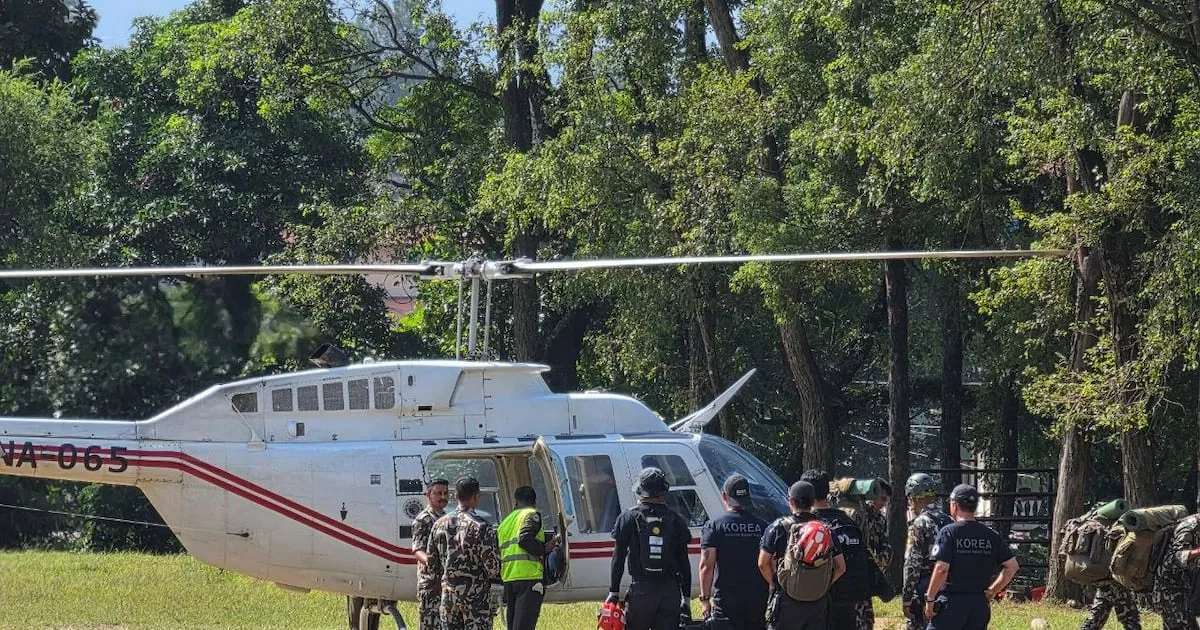
South Korea’s Overseas Emergency Relief Team (KDRT), deployed to Nepal following devastating floods, is scheduled to return home on November 11th. The government is currently preparing a second deployment to continue search and rescue operations for missing individuals. The initial KDRT mission, dispatched on November 2nd, focused on locating those lost in the severe flooding and landslides that have impacted the region.
First Mission Concludes, Humanitarian Aid Delivered
A Ministry of Foreign Affairs official confirmed on November 9th (local time) that the KDRT in Nepal was making preparations to return, in accordance with decisions made by the joint civilian-military emergency relief consultative body. The team is expected to arrive back in South Korea on November 11th aboard a military transport aircraft, the KC-330.
The KC-330 aircraft making the return journey from Nepal will also carry essential relief supplies. These goods, including blankets, clothing, and tents, were donated by domestic South Korean companies and are intended to aid the affected population. This delivery underscores the ongoing commitment to supporting Nepal’s recovery efforts.
Second Deployment Underway for Continued Rescue Efforts
Simultaneously, the South Korean government is planning a second KDRT deployment. Specific details regarding the timing, size, and operational scope of this second mission will be finalized and announced after confirmation by the joint civilian-military emergency relief consultative body. The objective remains to intensify the search for missing persons and provide further assistance.
Focus on the Utkhethli Hydropower Project Site
The first KDRT contingent established a base camp in the Bagmati Province of central Nepal, a region severely affected by the recent floods and landslides. Their primary search operations were concentrated around the Utkhethli (UT)-1 hydropower project construction site. This location was particularly significant as nine South Korean nationals were working at the facility when the disaster struck.
The team conducted extensive search and rescue activities in the vicinity of the hydropower project, facing challenging conditions due to the widespread destruction caused by the floods. Their efforts aimed to locate any survivors and recover the bodies of those who perished.
Background of the Nepal Floods
The severe flooding in Nepal, which triggered the deployment of the KDRT, resulted from exceptionally heavy monsoon rains. The deluge caused widespread landslides, inundating villages, damaging infrastructure, and leading to a significant number of casualties and missing persons. The affected areas, particularly in the central and western regions, experienced catastrophic damage, necessitating international assistance.
South Korea’s rapid response through the KDRT highlights the nation’s capacity for swift humanitarian aid deployment in disaster-stricken regions. The KDRT is a specialized unit trained to conduct search, rescue, and medical support operations in complex international environments.
Challenges and Future Outlook
Search and rescue operations in the aftermath of such a large-scale natural disaster are fraught with challenges. Difficult terrain, unstable ground conditions, and the sheer scale of the affected area complicate efforts. The ongoing presence of the KDRT, even with a second deployment, signifies
