

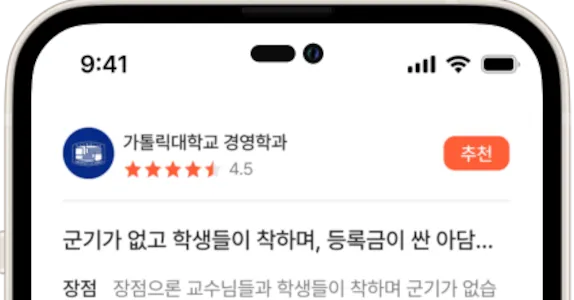
The Supreme Court has rejected a lawsuit filed by educational technology startup Tandem, which accused rival JinHaksA of plagiarizing its university review service. Tandem had alleged that JinHaksA copied its ‘AddCampus’ service, leading to a legal battle over intellectual property and fair competition. However, the court found insufficient evidence to support Tandem’s claims, ruling that the two services are not similar enough to cause confusion among users.
Background of the Dispute
Tandem, an ed-tech company founded in 2016, operates ‘AddCampus,’ a platform where current university students can directly post reviews of their institutions and academic programs. The service was launched in May 2016. In 2018, Tandem entered into a Memorandum of Understanding (MOU) with JinHaksA concerning the development of university review services. Following this agreement, JinHaksA launched its own similar service, ‘CampusReview,’ in 2019.
Tandem contended that JinHaksA had developed ‘CampusReview’ by “mobang” (copying) the ‘AddCampus’ service. They filed a complaint alleging intellectual property theft and unfair competition, arguing that JinHaksA had violated the terms of their MOU. Initially, the Korea Fair Trade Commission (KFTC) had recommended that JinHaksA pay Tandem 20 million won in review usage fees. The KFTC’s stance was that JinHaksA’s actions were not about developing ‘CampusReview’ independently but rather about publishing Tandem’s reviews on ‘CampusReview’ in breach of their business cooperation agreement.
JinHaksA’s Counter-Action and Tandem’s Lawsuit
JinHaksA did not comply with the KFTC’s recommendation. Instead, the company filed a lawsuit against Tandem seeking confirmation of non-debt, asserting that they were not obligated to pay review usage fees. JinHaksA argued that they were not required to pay Tandem for using the reviews and that they owed no damages for unfair or illegal business practices. The initial ruling by the first court sided with JinHaksA, dismissing all of Tandem’s claims. The court determined that JinHaksA’s posting of reviews from Tandem’s side was a legitimate business activity conducted under the MOU.
In response to JinHaksA’s lawsuit, Tandem filed its own counter-suit against JinHaksA. Tandem sought an injunction against unfair competition and damages, alleging that JinHaksA had engaged in unfair practices and misappropriated their ideas. Tandem claimed that JinHaksA had used their review data and information stored on Tandem’s servers, including through an API (Application Programming Interface), without authorization for the development of ‘CampusReview’.
The Supreme Court’s Decision
The Supreme Court’s Third Division, presided over by Justice Lee Suk-yeon, ultimately overturned the initial ruling. The appellate court had previously ordered JinHaksA to pay Tandem 20 million won in damages for unfair competition. However, the Supreme Court reversed this decision, sending the case back to the Seoul High Court. The Supreme Court’s reasoning focused on the lack of evidence of confusion and the nature of the technology involved.
Lack of Confusion and Evidence
The Supreme Court stated that the method of accessing data, such as through an API, was a widely known technique in the university review service sector even before Tandem’s service existed. Therefore, it was difficult to consider it as falling under the protection of unfair competition laws. Furthermore, the court highlighted that Tandem failed to provide concrete evidence that even a single review from their platform was used in JinHaksA’s developed service. Without such proof, the court could not find that the two companies’ services were identical or similar enough to cause actual confusion among consumers or business partners.
Prior Expertise in Review Services
The Supreme Court also acknowledged that JinHaksA had its own established expertise in providing review services. JinHaksA had been operating internet lecture review services since 2016 and employment-related corporate review services since 2017. This prior experience suggested that JinHaksA possessed its own know-how in developing and operating such platforms, independent of Tandem’s service. This finding further weakened Tandem’s argument that JinHaksA had simply copied their ideas.
Conclusion
The Supreme Court’s final decision effectively dismissed Tandem’s claims of plagiarism and unfair competition against JinHaksA. The ruling emphasizes the high burden of proof required to establish intellectual property infringement and unfair business practices, particularly when the alleged copied elements are based on commonly known technological methods and when direct evidence of copying and resulting consumer confusion is absent. The case underscores the importance of demonstrating clear, tangible harm and direct imitation rather than relying on general similarities between services.
