

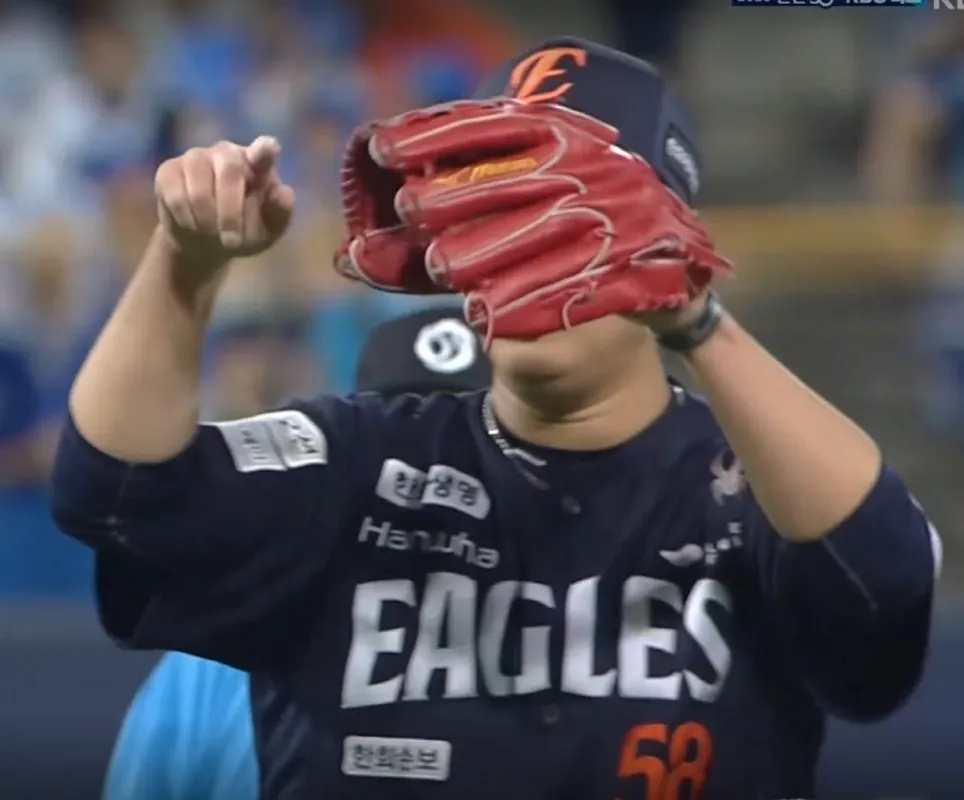
A single moment of instinctive decision-making in baseball can lead to significant consequences, as vividly demonstrated in a recent game where the Hanwha Eagles suffered a defeat. Eagles reliever Park Sang-won found himself at the center of controversy following two critical plays that proved difficult to comprehend, ultimately contributing to his team’s loss against the Samsung Lions. The Eagles fell 11-6 to the Lions in a road game played on the 15th at Daegu Lions Park.
The Pivotal Eighth Inning
Trailing 8-6 in the bottom of the eighth inning, the Hanwha Eagles brought in Park Sang-won to the mound in a bid to keep their comeback hopes alive. However, a single throw by Park from first base during the eighth inning shifted the game’s momentum decisively in favor of the Samsung Lions.
The situation unfolded with runners on first and second base and no outs, following a walk to Ryu Ji-hyuk. Jeon Byung-woo then hit a sacrifice bunt towards the pitcher. Park Sang-won, reacting instinctively, fielded the ball for a short-ground catch. The critical juncture arose next: Ryu Ji-hyuk, the runner on first, was rapidly retreating to the base, believing the ball might be a no-bound. Simultaneously, the runner on third, Jeon Byung-woo, began advancing towards first base. At this precise moment, Park Sang-won threw the ball not to first base, but to second base.
This throw to second resulted in a high throw, a wild pitch that sailed past the second baseman. Ryu Ji-hyuk, who had been returning to first, was able to safely reach second base. The play left runners on first and second with no outs.
The No-Bound Claim and Video Review
Following the wild pitch, Park Sang-won argued to the dugout that the batted ball should have been ruled a no-bound. If the ball had indeed been a no-bound, the runner advancing from third would have been out. Park requested a video review of the play.
The review, however, determined the ball was a short-bound, meaning it had hit the ground before being fielded. Consequently, both runners on base were ruled safe. Park Sang-won was unable to overcome the crisis he had created. In the bottom of the eighth inning alone, the Eagles conceded an additional three runs, ultimately sealing their defeat.
Two Lingering Questions
Park Sang-won’s actions have sparked considerable frustration and raised two primary questions among observers:
Mystery 1: The Throw to Second Base
The foremost question is why Park Sang-won threw to second base if he believed the ball was a no-bound. Baseball commentator Jo Sung-hwan expressed his bewilderment, stating, “Whether it was a no-bound or a short-bound, he should have thrown to first base first.”
If Park truly believed he had caught the ball in the air (a no-bound), the logical and standard procedure would be to throw to first base to get the lead runner, Ryu Ji-hyuk, out. His decision to throw to second suggests that, even in the moment, Park himself may have subconsciously registered that the ball had bounced. This contradicts his subsequent claim and his throw’s direction.
Mystery 2: The Second Base Throw and Video Review Request
The second point of confusion revolves around why, even if it was a short-bound, the throw was directed to second base, and why a video review was requested. Even acknowledging a short-bound, a throw to first base should have been the priority.
With Ryu Ji-hyuk already moving back towards first base, the correct play would have been to throw to first to secure the out on the runner advancing from third. After that, Park could have attempted a tag play between first and second base. By throwing to second, Park allowed the runner advancing to first base a very high probability of being safe.
The fact that Park, having thrown to second, then requested a no-bound call via video review after the play, left many spectators shaking their heads. It appeared to be an attempt to retroactively justify his throw, despite the immediate consequences.
The Impact of the Mistake
More disappointing than the simple fielding error was the momentary lapse in judgment regarding the situation. This critical mistake ultimately extinguished the Hanwha Eagles’ final hope for a comeback in the top of the ninth inning. The team went on to suffer their third consecutive loss, extending their deficit to five games behind the fifth-place KIA Tigers.
The game highlighted how a single, seemingly instinctive decision, when flawed, can have a cascading negative effect on the outcome of a baseball match.
