

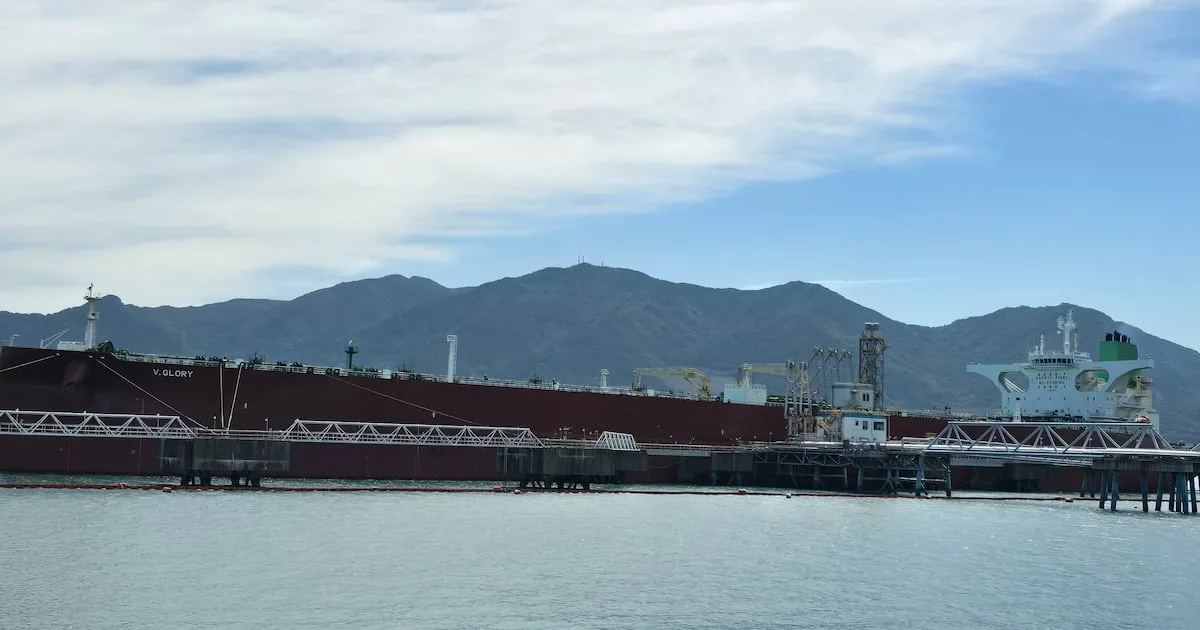
South Korea is successfully rerouting its crude oil imports through the Red Sea, utilizing an alternative shipping lane to circumvent the Strait of Hormuz, which Iran has threatened to blockade. The Ministry of Oceans and Fisheries confirmed on the afternoon of the 12th that a South Korean vessel had safely passed through the Red Sea, transporting crude oil to domestic refineries. This marks the eleventh instance of a South Korean-flagged vessel successfully navigating the Red Sea’s alternative route.
Strategic Shift Amidst Geopolitical Uncertainty
The vessel in question loaded crude oil in Yanbu, Saudi Arabia, before proceeding through the Red Sea. This measure has become a critical strategy for the South Korean government following the closure of the Strait of Hormuz, a vital chokepoint for global energy transport, due to escalating tensions between the United States and Iran. Despite a recent agreement between the two nations to de-escalate hostilities on the 19th of last month, concerns persist regarding potential disruptions and escalations within the Strait of Hormuz. Consequently, the government has opted to continue importing Middle Eastern crude oil via the Red Sea route for the time being.
Background: The Significance of the Strait of Hormuz
The Strait of Hormuz is an extremely narrow waterway, approximately 100 miles long and 21 miles wide at its narrowest point, connecting the Persian Gulf to the Gulf of Oman and the open ocean. Its strategic importance cannot be overstated, as it serves as the primary transit route for a significant portion of the world’s oil supply. Reports indicate that roughly 30% of the world’s seaborne oil trade passes through this strait daily. Given its critical role in global energy security, any disruption to shipping in the Strait of Hormuz has immediate and far-reaching economic implications worldwide.
Iran’s Stance and Potential Blockade
Iran has, at various times, alluded to or threatened the closure of the Strait of Hormuz. These statements are often interpreted as a strategic move to exert pressure on adversaries, particularly the United States and its allies, by threatening global energy supplies. The potential for Iran to disrupt shipping in the strait stems from its geographical proximity and its naval capabilities in the region. Such threats invariably lead to heightened geopolitical tensions and prompt international efforts to ensure freedom of navigation and the stability of oil markets.
South Korea’s Contingency Planning and Maritime Affairs Bureau’s Statement
In response to the volatile situation, South Korea’s Maritime Affairs and Fisheries Bureau has been actively managing the contingency plans. Nam Jae-heon, the Director-General of the Maritime Affairs and Fisheries Bureau, addressed the press on the 2nd, highlighting the inherent uncertainties surrounding passage through the Strait of Hormuz given the fluid diplomatic landscape between the U.S. and Iran. He stated, “In a situation where the negotiations between the United States and Iran are dynamic, there is significant uncertainty regarding navigation through the Strait of Hormuz.”
Director-General Nam further elaborated on the government’s approach, emphasizing the paramount importance of energy supply security. “While considering the importance of energy transportation, we will continue to advise ships to refrain from entering the relevant waters until the situation stabilizes,” he explained. “In unstable situations, we are considering prioritizing the use of the Yanbu route in Saudi Arabia for the transportation of Middle Eastern crude oil.” This proactive stance underscores South Korea’s commitment to ensuring a stable inflow of energy resources while navigating complex international relations.
The Red Sea Alternative Route: A Viable Solution
The adoption of the Red Sea as an alternative route offers a crucial lifeline for South Korean oil imports. The Red Sea connects to the Gulf of Aden and then to the wider Indian Ocean, providing a passage that bypasses the Strait of Hormuz entirely. While this route may involve longer transit times and potentially different logistical challenges, its reliability in the current geopolitical climate makes it a strategically sound choice. The successful passage of eleven South Korean vessels demonstrates the operational viability of this alternative.
Economic Implications and Global Energy Security
The stability of oil prices and supply chains is intrinsically linked to the security of key maritime transit points like the Strait of Hormuz. Disruptions can lead to significant price volatility, impacting economies globally. South Korea, as a major energy-importing nation, is particularly sensitive to these fluctuations. By diversifying its import routes and maintaining open communication with international partners, South Korea aims to mitigate risks and ensure its energy security. The ongoing use of the Red Sea route is a testament to the effectiveness of such contingency planning in safeguarding national economic interests.
Future Outlook and Diplomatic Efforts
The situation remains dynamic, and South Korea will continue to monitor developments closely. The government’s strategy involves a dual approach: ensuring the continuity of energy imports through alternative routes while also advocating for de-escalation and stability in the Middle East. Diplomatic channels are expected to remain active, with South Korea likely engaging with key stakeholders to promote a peaceful resolution to the underlying geopolitical tensions. The successful navigation of the Red Sea route provides a measure of reassurance, but the long-term solution lies in the restoration of stability in the Strait of Hormuz and the broader region.
The Ministry of Oceans and Fisheries remains vigilant, providing timely updates and guidance to shipping companies. The continued safe passage of vessels through the Red Sea underscores the resilience of global supply chains when faced with geopolitical challenges, and highlights the importance of strategic foresight in energy security management.
