

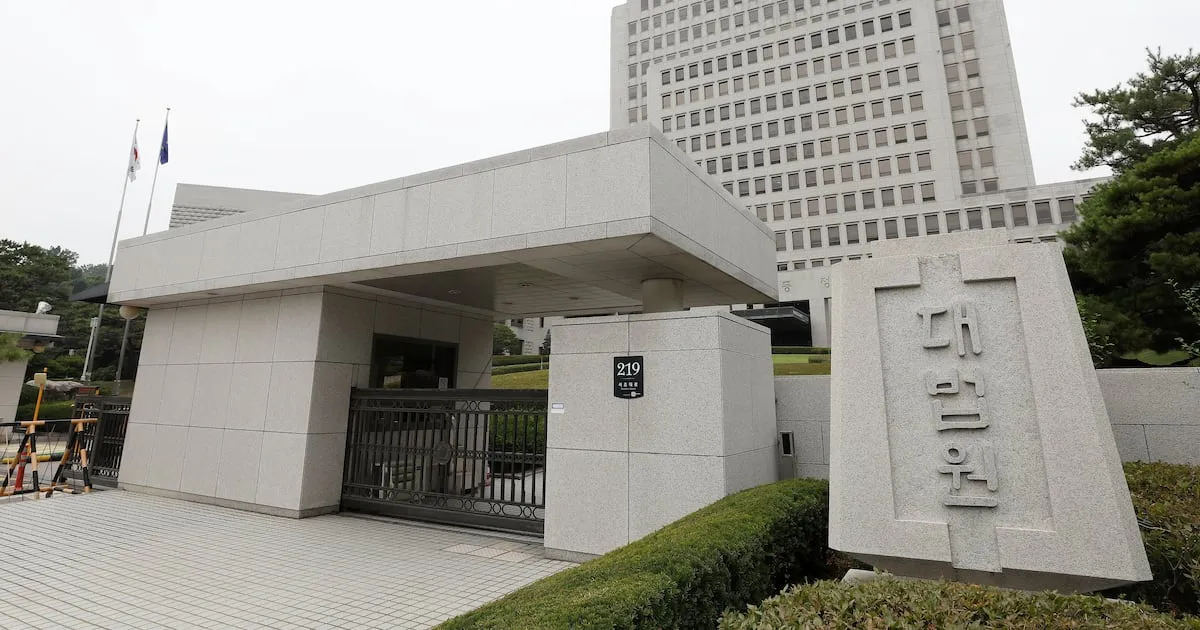
The Supreme Court has ruled that a will distributing property among heirs may not be considered revoked simply because the testator sold the property before their death. The court determined that the intent behind the will, even if the form of the asset changed, should be upheld if the testator’s underlying purpose remains intact.
Will Validity After Asset Sale
The Supreme Court’s Third Division, presided over by Justice Noh Gyeong-pil, overturned a lower court’s decision and remanded a case concerning a filial duty confirmation lawsuit. The lawsuit was filed by a daughter, identified as Ms. B, against her siblings after the death of their father, Mr. A.
In 2016, Mr. A had created a will specifying how his real estate would be divided among his four children. Ms. B was designated to receive 35% of the property, with the remaining shares allocated as 11%, 19%, and 35% to her siblings.
However, before Mr. A’s passing, the property was included in a local housing cooperative project. Consequently, Mr. A sold the real estate in 2019 for 800 million won. Following Mr. A’s death from cancer, the down payment from the sale was distributed to his four children, including Ms. B, with each receiving approximately 177 million won.
Daughter’s Claim and Court’s Reasoning
Ms. B argued that the will’s intent regarding filial duty remained valid, and therefore, the sale proceeds should be distributed according to the original inheritance percentages. She subsequently filed a lawsuit to confirm the will’s effectiveness.
Both the first and second courts ruled against Ms. B, concluding that Mr. A’s act of selling the property constituted a revocation of his will. They reasoned that his actions were inconsistent with the will’s original terms.
The Supreme Court, however, disagreed. The court stated that a testator’s will should not be easily deemed revoked merely because the subject of the bequest was transferred to a third party, provided the testator’s intention to benefit the heirs through the proceeds of the sale can be inferred.
The court viewed the 800 million won sale price as a “substitute asset” for the real estate, representing a change in form but not the underlying asset intended for inheritance. The court emphasized the timing of the will’s creation, noting that Mr. A wrote the will in November 2016, during a period when the housing cooperative project was actively progressing. This suggests Mr. A was aware that the property might be sold and that his children would inherit the sale proceeds.
The Supreme Court further elaborated, stating, “There is a possibility that Mr. A was aware that the property would be sold and the proceeds would be inherited by his children. We cannot find any evidence to suggest that Mr. A intended to treat the sale proceeds differently from the original property, such as using them for personal expenses like living costs or medical bills, or gifting them to others.”
The highest court concluded that the lower courts had erred in their interpretation of the law regarding will revocation. By failing to conduct a thorough examination of the testator’s intent, they incorrectly determined that the will was revoked due to the property sale.
