

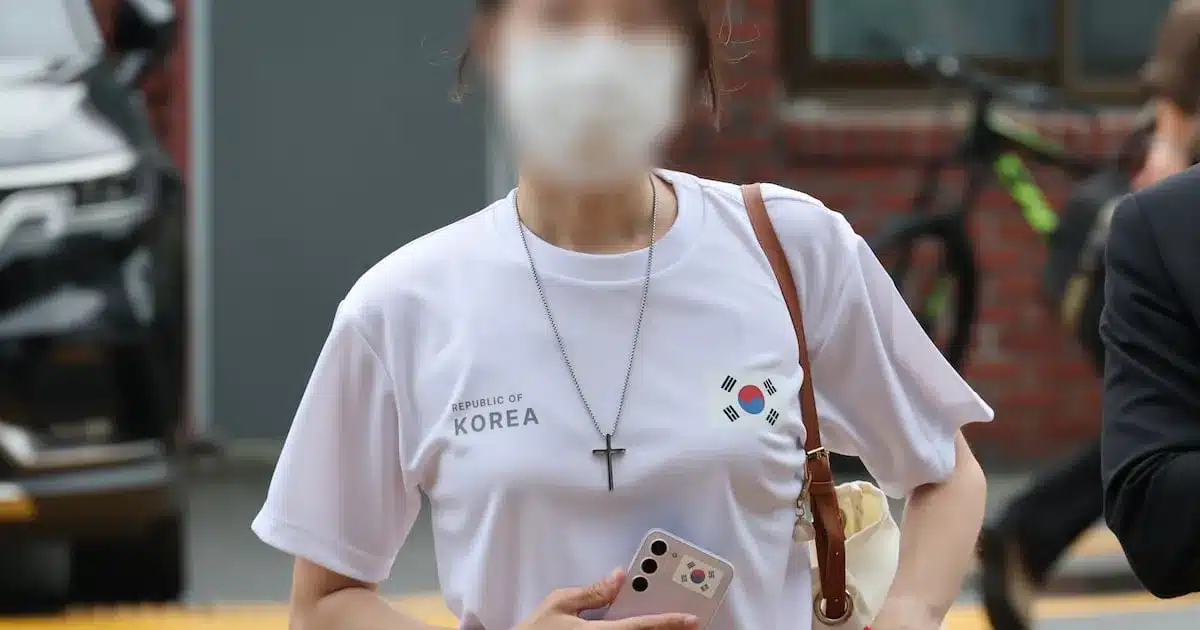
A woman, dubbed ‘Oldaruk’ by some protest participants, is under police investigation for her role in blocking access to the handball venue at the Seoul Olympic Park during the 9th National Simultaneous Local Elections on June 3rd. The Seoul Songpa Police Station summoned the woman on the afternoon of June 10th as a suspect and questioned her regarding the alleged obstruction. This development comes approximately three weeks after the investigation commenced on May 17th.
Background of the Incident
The incident occurred on May 17th when the woman, reportedly wearing a protest banner, physically prevented officials from the Korea Sports Promotion Foundation from entering the handball stadium. This action took place despite mediation efforts by opposition party lawmakers who were attempting to resolve disputes between protest participants and sports officials. For about two hours, the woman stood at the entrance, holding onto the gate and blocking the entry of authorized personnel.
The ‘Oldaruk’ Moniker
Following the May 17th event, some individuals involved in the protests began referring to the woman as ‘Oldaruk.’ This nickname is a portmanteau, combining ‘Old’ (referring to the Olympic Park) and ‘Daruk’ (a phonetic rendering of the surname of a prominent figure associated with the protest, or possibly referencing the ‘Jandaru’ gate at the venue, depending on interpretation). The moniker highlights her prominent role in physically defending the venue’s access points.
Woman’s Stated Motivations
In an interview prior to her summons, the woman stated her belief that decisions from the court or the election management committee should take precedence. She questioned the validity of any subsequent outcomes if established principles and procedures were not followed. “If a verification process proceeds without adhering to the original principles and procedures, will any subsequent conclusion hold any persuasive power?” she asked.
She further elaborated on her commitment to the principles of liberal democracy, stating, “On the day I guarded the gate, if defending liberal democracy required a sacrifice, I was prepared to make that sacrifice.” This statement underscores her conviction that her actions were a principled stand to uphold due process and democratic values.
Continued Vigilance at the Venue
The woman’s involvement in restricting access was not limited to the May 17th incident. On June 2nd, when a special committee for the 6.3 Local Elections fact-finding mission visited the handball stadium, she was again present, blocking the main gate. On that occasion, committee members, including lawmakers, gained entry by utilizing an alternative route secured by the police.
Her consistent presence and actions at the venue suggest a determined effort to control access and ensure that official procedures were being followed to her satisfaction. The police investigation will likely focus on the specifics of the obstruction and whether her actions constituted a criminal offense.
Legal and Procedural Considerations
The investigation into the woman’s actions brings to the forefront questions about the balance between protest rights and the need for unimpeded access for authorized officials and operations. Her defense appears to center on the principle that established legal and electoral procedures must be respected. She argues that without adherence to these foundational steps, any decisions made thereafter lose their legitimacy.
The police are expected to examine the extent of the disruption caused by her actions and whether they violated any laws concerning public order or obstruction of official duties. The outcome of the investigation could set a precedent for how similar situations involving citizen intervention in official proceedings are handled in the future. The focus remains on whether her actions were a legitimate exercise of protest or an unlawful obstruction.
Conclusion
The investigation into the woman who blocked access to the handball venue at Seoul Olympic Park is ongoing. Her actions, which earned her the nickname ‘Oldaruk,’ stem from a belief that procedural integrity is paramount. As the police gather more information, the case highlights the complex interplay between citizen activism, the right to protest, and the adherence to established legal and electoral processes. The findings will be crucial in determining the legal ramifications for her actions and potentially influencing future interactions between the public and election-related bodies.
