

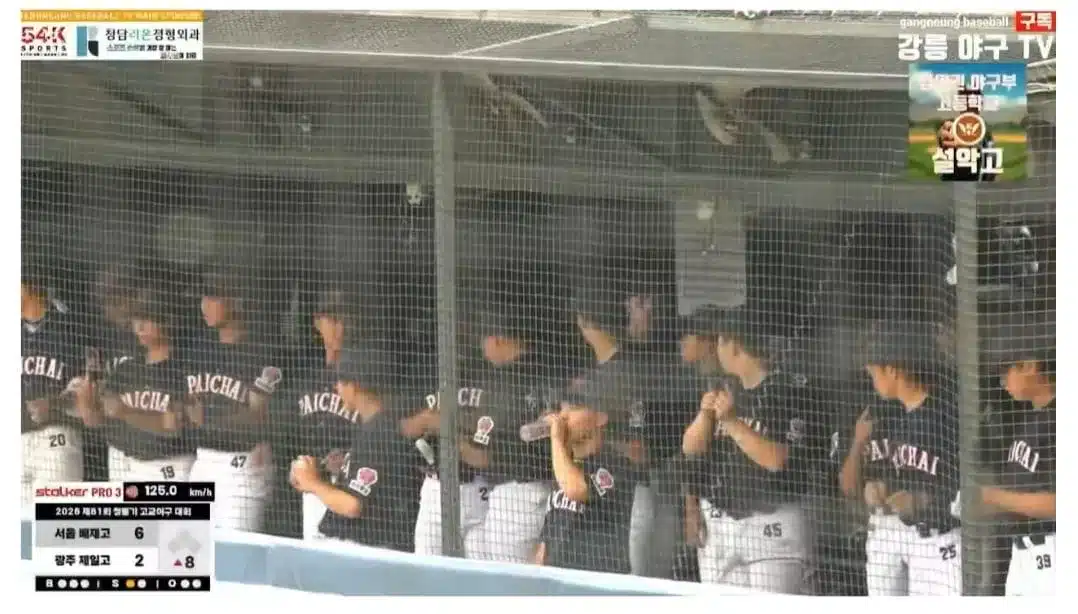
A recent incident involving a high school baseball team’s taunts has ignited a fierce debate, highlighting a growing generational divide in understanding historical events, particularly the 1980 Gwangju Uprising. The controversy centers on remarks made by players from Baejae High School during a game against Gwangju Jeil High School, which were perceived as disrespectful to the Gwangju Uprising and the region.
Incident and Initial Reactions
During a baseball game on June 29th, players from Baejae High School, while in the dugout, were heard shouting taunts that included the phrase ‘Starbucks, let’s go!’ This was reportedly a distortion of a common cheer, adapted to mock the opposing team. The phrase was interpreted by many, especially in the Honam region (which includes Gwangju), as a direct insult to the Gwangju Uprising, a pivotal event in South Korea’s democratization movement.
The Gwangju Jeil High School side lodged a strong protest, leading to the suspension of the taunts. However, the damage was done, and criticism mounted, accusing the Baejae players of disrespecting Gwangju and the 5.18 Uprising. The ruling party and local communities in the Honam region reacted swiftly and with strong condemnation.
Escalating Controversy and Punitive Measures
The ruling party, along with many in the Honam region, deemed the act unforgivable. Democratic Party lawmakers called for a thorough investigation and severe punishment, with some even demanding the dissolution of the Baejae baseball team. The Korea Baseball Softball Association (KBSA) responded by imposing a six-month suspension on the team, effectively ending their season and jeopardizing the academic and professional prospects of the players, many of whom are high school seniors.
This severe penalty, however, has drawn criticism from within the baseball community and from some political quarters. Concerns were raised that the punishment was too harsh for a single mistake by young students, potentially ending their athletic careers. The opposition party argued that the penalty was excessive, drawing parallels to the Starbucks ‘Tank Day’ marketing controversy in May, where the coffee chain faced backlash for its perceived insensitivity towards the 5.18 Uprising. They pointed out that Starbucks did not face such a severe sanction.
Political Polarization and Generational Gaps
The incident quickly became a political football, with the ruling and opposition parties trading barbs. The ruling party emphasized the need for stern punishment and historical education, highlighting the ‘extremism and ‘Ilbe-ification’ (referring to a far-right online community) among some youth. Conversely, the opposition argued for leniency, stressing the players’ youth and the potential for irreparable damage to their futures. They also criticized the ruling party for its perceived double standards, pointing to past instances where similar actions by other groups did not result in such severe penalties.
Adding fuel to the fire, a vice-chairman of the Presidential Committee on Budget and Fiscal Policy, Lee Byung-tae, publicly criticized the handling of the situation, stating that the 5.18 Uprising had become ‘sacralized.’ He suggested that the current societal response, which focuses on punishing young students, was akin to North Korea’s reaction to images of Kim Il-sung being damaged. This comment drew sharp rebuke from the presidential office, which issued a strong warning against such ‘inappropriate remarks.’
Historical Context and Education
The controversy underscores a broader issue: the declining historical awareness of the 5.18 Gwangju Uprising among younger generations. Many born after the 1990s lack a deep understanding of the event’s significance and the suffering of its victims. Experts draw parallels to the ‘586 generation’ (born in the 1970s, politically active in the 1980s and 90s) who, while remembering the Korean War’s devastation, may not have fully grasped the hardships of the industrialization era faced by their parents’ generation.
While acknowledging the players’ actions were wrong, critics argue that a blanket condemnation and severe punishment are not the solution. They advocate for a more nuanced approach that includes education and guidance, rather than solely focusing on punitive measures. The ruling party’s strong stance, some argue, risks further alienating the younger generation and exacerbating intergenerational conflict.
Broader Implications
The incident also reflects the broader political landscape, where historical events are often politicized. The ruling party’s strong reaction to the Starbucks controversy in May, which led to boycotts and public outcry, is seen by some as a contributing factor to the current situation. The intense focus on punishing perceived historical insensitivity, some fear, could lead to unintended consequences, such as fostering a backlash among the very generation it seeks to educate.
Moving forward, the challenge lies in finding a balance between acknowledging historical truths, holding individuals accountable for their actions, and fostering a deeper understanding of the past without resorting to excessive punishment or political polarization. The goal should be reconciliation and education, not further division.
Apology and Future Steps
Following the KBSA’s decision, the Baejae High School baseball team players are scheduled to formally apologize to Gwangju Jeil High School on July 6th and visit the 5.18 Memorial Cemetery. This gesture aims to demonstrate remorse and a commitment to understanding the historical significance of the Gwangju Uprising.
The controversy surrounding the 5.18 Uprising and its commemoration continues to be a sensitive issue in South Korean society. This incident serves as a stark reminder of the ongoing need for historical education and dialogue across generations to ensure that the lessons of the past are not forgotten.
