

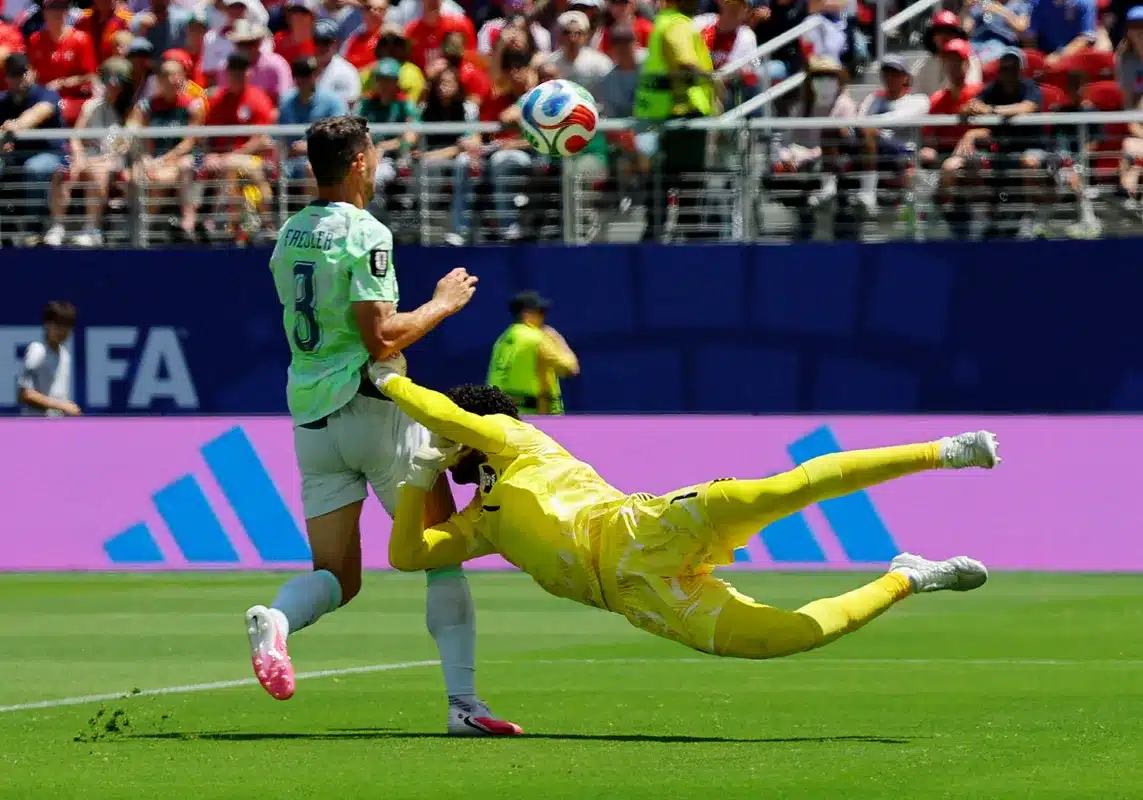
Calls for Clarity as Offside Technology Faces Scrutiny
A significant controversy has erupted regarding the application of semi-automated offside technology (SAOT) during a recent World Cup match, prompting sharp criticism and demands for greater transparency from football’s governing body. The incident, occurring during the Switzerland versus Qatar group stage game, has cast a shadow over the new system, which was heavily promoted for its accuracy and speed.
Key Incident Sparks Debate
The focal point of the controversy arose in the first half of the match. Switzerland’s Remo Freuler was awarded a penalty after a collision with the Qatar goalkeeper. Breel Embolo successfully converted the penalty, giving Switzerland a 1-0 lead. However, replays appearing to show Freuler in an offside position prior to receiving the pass have fueled widespread debate. On-site commentators and global viewers widely interpreted the situation as a clear offside, yet the SAOT system, intended to provide definitive visual evidence, was not deployed to clarify the call.
Expert Criticism and Lack of Evidence
Gary Neville, speaking on a broadcast following the match, expressed strong doubts about the decision. “All of us here think it was offside,” Neville stated. “The viewers at home all think the same. FIFA has the semi-automated offside detection system they’ve been promoting. Until they can show me definitive proof otherwise, it was offside, and there are significant questions surrounding this incident.”
Analysis suggests that the delay in presenting evidence, particularly for the initial penalty incident, has created an environment ripe for speculation and conspiracy theories. This lack of immediate visual confirmation has led some to question whether FIFA might be withholding information.
SAOT Deployment Under Question
While FIFA has championed the SAOT system for this tournament, promising highly accurate offside judgments through player-specific avatars and advanced tracking, its inconsistent application is now under intense scrutiny. In several instances during the tournament, the system’s animated graphics have been displayed, even when the offside call was not marginal. For example, during the match between Bosnia and Herzegovina and Canada, a pre-play offside flag was raised against Jonathan David before he collided with goalkeeper Nikola Vasilj, with the SAOT animation subsequently shown.
Similarly, in a match between Morocco and Brazil, Ismael Saibari scored an opening goal. Despite the lack of any significant offside debate surrounding the play, FIFA rapidly provided related graphics. This indicates a general swiftness in processing offside decisions where the system is deemed applicable.
Demands for Transparency
The selective use of SAOT, particularly its absence in the crucial Switzerland penalty incident, has amplified calls for greater transparency. Reports indicate that FIFA was contacted for an explanation regarding the Switzerland-Qatar match but had not yet provided a response. Neville voiced his frustration, comparing the situation to that of a “rogue state,” where decisions are made internally without public justification and not shared with fans during a tournament. He passionately questioned the rationale behind not showing the evidence for offside calls, urging FIFA to “prove it” and demanding to know why transparency is not being prioritized.
The core issue remains: when the technology exists to provide irrefutable evidence, its deliberate omission in controversial situations erodes trust and fuels doubt among players, officials, and the global football community.
