

High Turnout Marks Crucial Local Elections as Voters Prioritize Jobs and Housing
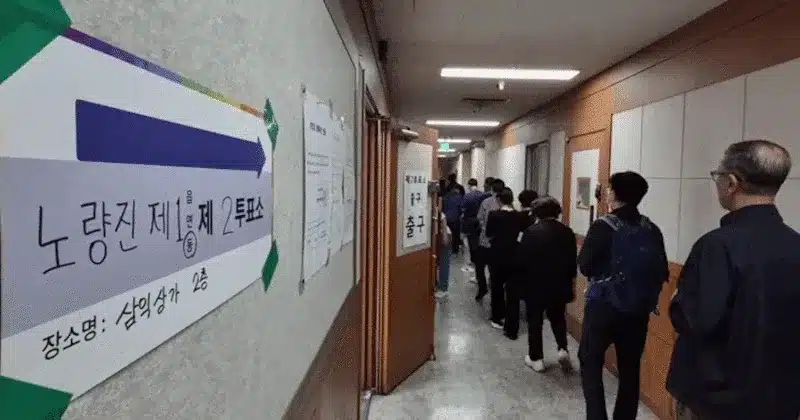
On the morning of June 3rd, the day of the 6.3 Local Elections, a steady stream of citizens arrived at polling stations well before the official opening time. At the No. 1 polling station in Dongjak-gu, Seoul, by 5:55 AM, fifteen individuals were already waiting in line, eager to cast their ballots.
Neighbors greeted each other with familiar remarks like, “You’re here early today,” and “Thank you for coming out so early.” One voter, Ms. Lee, 53, mentioned she was voting on the main election day after working as an election observer during the early voting period. “Voting is a duty, so I came early,” she stated.
Early Voting Surges Indicate Robust Citizen Engagement
Turnout for the 6.3 Local Elections is showing a significant increase compared to previous local elections. The two-day early voting period, concluding on May 29th, saw a record-high 23.51% participation rate. On the main election day, turnout stood at 4.5% by 8 AM, a 0.7 percentage point increase from the 2022 local elections.
Voters Express Hopes for Economic Policies and Local Development
Those who arrived early at polling stations expressed high expectations for the candidates’ domestic economic policies. Kim, a graduate student aged 28, who plans to enter the workforce next year, said, “I’ve been paying close attention to economic policies, especially those focusing on job creation and youth housing.” He noted that candidates emphasizing these issues stood out to him.
Jeong, 68, a resident of the area for two decades, highlighted the importance of real estate policy. “This neighborhood is undergoing continuous redevelopment, and I believe a candidate who can manage this process effectively would be best,” she explained, which motivated her to vote.
Voting as a Civic Duty and a Means for Change
Some voters emphasized the inherent value of participating in the election itself. Yeom, 29, also a graduate student, stated, “Regardless of the outcome, the voting rate by age group is an important indicator, which is why I came to vote.” The sentiment was that lower turnout in certain age demographics might lead to less attention from political parties and officials.
Kim, 34, who arrived with a friend at polling stations in Sangdo-dong, Dongjak-gu, shared, “I don’t expect one election to change the world, but I believe voting is essential to prevent things from getting worse.”
Navigating Polling Station Locations and Identification Requirements
Unlike early voting, the main election day requires voters to cast their ballots at their designated polling stations based on their registered address. However, some citizens were observed mistakenly going to the wrong locations. Around 6:15 AM at the No. 3 polling station in Jegi-dong, Dongdaemun-gu, an attendant asked a citizen in their 70s if they had confirmed their polling station. The voter responded, “I’m a resident of this neighborhood, why would I need to confirm?”
Upon checking the resident registration number, it was found that their designated polling station was the No. 2 polling station in Jegi-dong, a mere five-minute walk away. An attendant at the station noted that approximately five people, mostly elderly, had arrived at the wrong location that morning.
Voters can confirm their polling station location through mailers sent to their homes, or by visiting the official websites of the city, district offices, or the National Election Commission. Additionally, voters must present valid identification, such as a resident registration card, driver’s license, or passport, which includes a photograph, when arriving at the polling station.
Younger Voters Rely on Social Media for Candidate Information
In Seoul, voters receive a total of seven ballots, covering positions such as mayor, superintendent of education, district mayor, district council members, and proportional representatives. Despite the numerous positions, many voters found it challenging to review all the provided campaign materials.
Park, 66, who voted at the No. 3 polling station in Cheongunhyo-dong, Jongno-gu, mentioned he focused on the candidates’ criminal records and military service status. He selected the mayor based on personal preference, while choosing party affiliation for city and district council members.
Ms. Lee, 53, from No. 2 polling station in Noryangjin-dong, Dongjak-gu, found the volume of materials overwhelming. “For city and district council members, I voted based on their experience, as I didn’t recognize many of the names,” she commented.
Voters in their 20s and 30s reported obtaining candidate information primarily through social media (SNS) rather than the official campaign materials. However, many expressed skepticism about the reliability of information shared through candidate-run social media accounts, given the often-partisan nature of the online campaigns.
Kim, 27, encountered at No. 5 polling station in Noryangjin-dong, Dongjak-gu, said, “I watched the Seoul mayoral debates and videos edited for YouTube shorts. But they only showed the parts where they performed well.”
Kim, a public servant aged 32, echoed this sentiment, stating, “The videos on social media always make it seem like the candidate won the debate. It felt like biased information.”
