

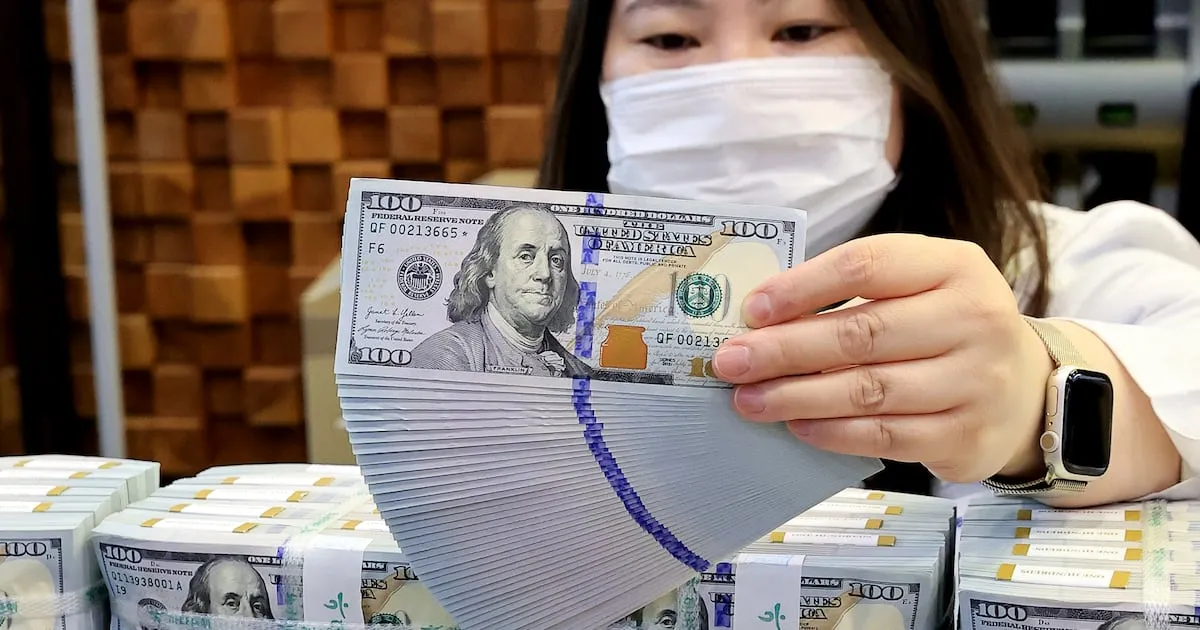
The South Korean won strengthened slightly against the U.S. dollar on the morning of January 4th, with the exchange rate reaching 1431.8 won per dollar. This marks a modest increase of 2 won, or 0.13%, compared to the closing rate of the previous trading day. Analysts had anticipated the exchange rate would hover around the 1430 won mark.
Market Reaction to Geopolitical Developments
The uptick in the won’s value is largely attributed to a shift in investor sentiment following news that the United States had halted its planned attacks on Iran. This development appears to have spurred a greater appetite for riskier assets, such as stocks, over safer havens like the U.S. dollar. Investors are showing a preference for assets perceived as having higher growth potential, even if they carry more risk.
Adding to this sentiment, U.S. President Donald Trump reiterated on January 3rd (local time) that the U.S. was engaged in ongoing negotiations with Iran. This statement further contributed to a sense of de-escalation in geopolitical tensions.
U.S. Stock Market Performance
The positive investor outlook was reflected in the performance of U.S. stock markets. On the same day, the S&P 500 index closed at 7600.51, an increase of 1.48% from the previous session. The Nasdaq Composite saw a more significant gain of 2.13%, while the Russell 2000 index also rose by 1.85%. These gains suggest a broader market confidence driven by the easing geopolitical concerns.
Factors Limiting Further Won Appreciation
Despite the positive market movements and the halt in U.S. military action against Iran, analysts suggest that a substantial drop in the won-dollar exchange rate is unlikely in the immediate future. Several factors are expected to keep the won’s appreciation in check.
Demand for U.S. Dollars
One significant factor is the continued demand for U.S. dollars from South Korean importers. These businesses rely on dollars to purchase raw materials and other goods from overseas. As long as this demand persists, it will exert upward pressure on the dollar, thereby limiting the won’s strength.
Furthermore, there is a growing trend of investment flowing into U.S. stocks and bonds. This increased investment in U.S. financial markets also contributes to a higher demand for dollars, as investors need the currency to make these investments. The sustained demand for dollars from both importers and investors is a key reason why the won-dollar exchange rate is expected to remain relatively stable, or even see continued upward pressure on the dollar.
Analyst Outlook and Market Stability
Min Gyeong-won, a researcher at Woori Bank, provided an outlook on the market dynamics. He stated that the expectation is for continued buying pressure on the dollar throughout the day, which would support the current exchange rate. “We anticipate that there will be consistent buying demand for dollars at low levels today, which will support the exchange rate,” Min noted.
Min further elaborated on the conditions that could lead to greater stability in the won-dollar exchange rate. He suggested that if net buying by foreign investors in the domestic stock market slows down or reverses, the exchange rate could find a more stable footing. The flow of foreign capital into and out of the South Korean stock market is a critical indicator that influences currency movements. A significant outflow of foreign capital could weaken the won, while sustained inflows could help stabilize it.
Conclusion
In summary, the won-dollar exchange rate saw a modest rise to 1431.8 won per dollar on January 4th, influenced by a perceived de-escalation of geopolitical tensions between the U.S. and Iran. While U.S. stock markets reacted positively, factors such as ongoing demand for dollars from importers and investors in U.S. assets are expected to prevent a significant depreciation of the dollar against the won. Market stability may depend on the continued net buying of South Korean stocks by foreign investors.
