

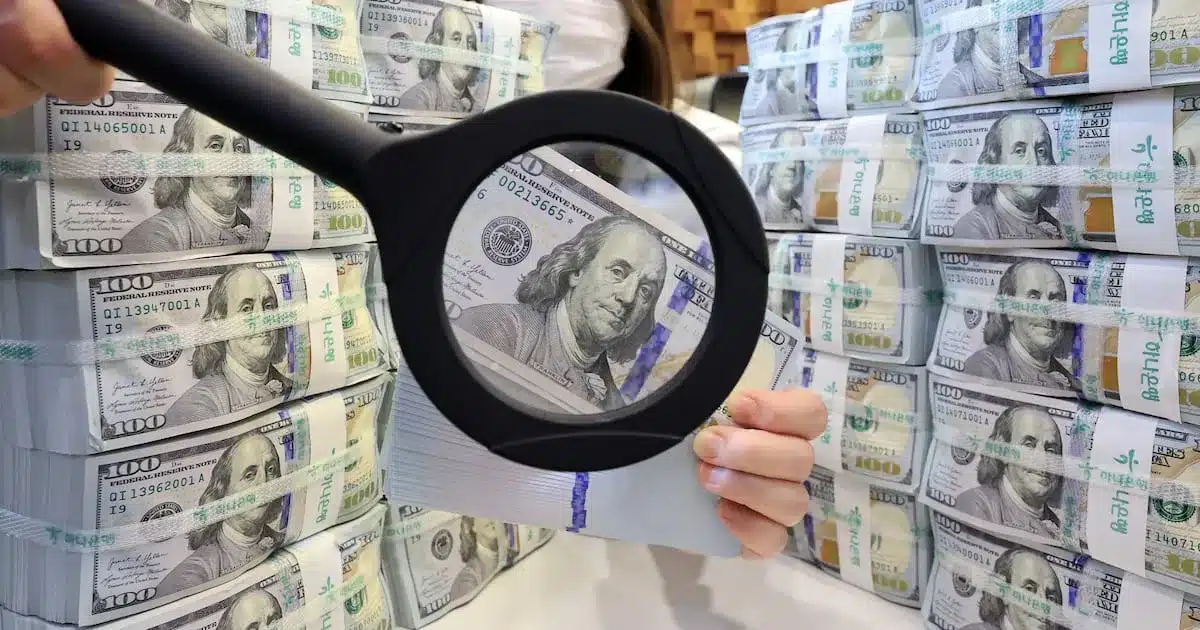
The South Korean won saw a notable increase against the US dollar on March 3rd, with the exchange rate reaching 1435.7 won per dollar as of 9 AM. This marks a rise of 11.7 won, or 0.82%, from the closing rate of the previous trading day. The strengthening of the won, indicating a lower exchange rate, is anticipated to continue in the near term, influenced by several key economic and geopolitical factors.
Factors Driving Won Strength
A primary driver behind the expected appreciation of the Korean won is the strategic selling of US dollars by major South Korean export companies, including industry giant SK Hynix. These corporations, holding significant dollar reserves, are converting their foreign currency holdings back into won. This increased supply of dollars in the Seoul foreign exchange market naturally exerts downward pressure on the exchange rate, thereby strengthening the won.
The global geopolitical landscape is also playing a crucial role. Recent developments concerning the Iran nuclear deal have introduced a new dynamic. The United States and Iran have reportedly reached an agreement, a move that could potentially de-escalate regional tensions. Historically, periods of heightened geopolitical uncertainty often lead to increased demand for the US dollar as a safe-haven asset. Conversely, the resolution or de-escalation of such conflicts can reduce this demand, leading investors to seek higher yields in other markets, including South Korea. This shift away from the dollar could further bolster the won’s value.
Government Intervention and Market Dynamics
Beyond corporate actions and geopolitical shifts, foreign exchange authorities are also demonstrating proactive measures to manage currency fluctuations. Reports indicate that foreign exchange authorities engaged in significant dollar sales in the market on February 30th. This intervention aims to stabilize the currency market and prevent excessive volatility. Such actions by the government signal a commitment to maintaining a favorable exchange rate environment for the national economy.
The coordinated efforts to influence currency values extend to other major economies. Both the United States and Japan have been observed taking steps that have contributed to the appreciation of the Japanese yen. When the Japanese yen strengthens, it often has a ripple effect across Asian currencies. As the Korean won is frequently grouped with the yen in terms of regional currency dynamics, a stronger yen can pave the way for a stronger won, reinforcing the current trend.
Understanding Exchange Rate Fluctuations
The won-dollar exchange rate is a critical indicator of South Korea’s economic health and its integration into the global financial system. Its fluctuations are influenced by a complex interplay of domestic economic performance, international trade balances, capital flows, and global economic sentiment. For South Korea, a strong won can make imports cheaper, potentially curbing inflation, but it can also make its exports more expensive for foreign buyers, impacting the competitiveness of key industries like semiconductors and automobiles.
Conversely, a weaker won can boost export competitiveness, making Korean goods more attractive internationally. However, it also increases the cost of imported goods and services, potentially leading to higher inflation and increased debt servicing costs for companies with foreign currency-denominated loans. The current trend of won appreciation, therefore, presents both opportunities and challenges for the South Korean economy.
The Role of Export-Oriented Industries
South Korea’s economy is heavily reliant on exports, making the exchange rate a particularly sensitive variable. Companies like SK Hynix, a global leader in memory chips, operate with substantial international revenue streams. The decision by such firms to repatriate dollar earnings and convert them to won is a significant market signal. It reflects confidence in the domestic economy or a strategic move to hedge against potential future currency depreciation, but in the immediate term, it increases the supply of dollars, pushing the won’s value up.
The semiconductor industry, in particular, is a bellwether for the Korean economy. Fluctuations in chip demand, global supply chain dynamics, and the pricing strategies of major players like SK Hynix all have a profound impact not only on the company’s bottom line but also on the broader foreign exchange market. As these companies manage their currency exposures, their actions directly contribute to the daily movements of the won.
Geopolitical Influences on Currency Markets
The announcement regarding the potential resolution of the Iran nuclear issue, as stated by former US President Donald Trump, is a significant development. The Joint Comprehensive Plan of Action (JCPOA) has been a point of international contention, and any progress towards its revival or a new agreement could reshape global energy markets and reduce geopolitical risk premiums. During times of perceived global instability, investors often flock to perceived safe-haven assets like the US dollar, driving its value up. A reduction in such tensions can lead to a reversal of this trend, with capital flowing back into emerging markets offering higher potential returns.
The impact on the dollar is multifaceted. If the easing of tensions leads to increased global trade and economic activity, it could support the dollar. However, if it also reduces the demand for the dollar as a safe haven and encourages investment in other regions, it could weaken the dollar against currencies like the won. The market’s interpretation of these geopolitical events is crucial in determining the direction of currency flows.
International Cooperation and Currency Management
The observed actions by foreign exchange authorities, including those in South Korea, Japan, and potentially the US, highlight a degree of international coordination or at least parallel efforts to manage currency markets. The intervention involving large-scale dollar sales by South Korean authorities is a direct attempt to influence the won-dollar rate. Similarly, actions supporting the Japanese yen suggest a shared interest among some nations in preventing excessive currency depreciation, which can fuel inflation and distort trade.
The interconnectedness of Asian currencies means that movements in one major currency, like the yen, can influence others. If the yen strengthens significantly due to coordinated or independent policy actions, it creates an environment where the Korean won is also likely to appreciate. This collective dynamic suggests that currency markets are not solely driven by individual national policies but also by regional and global economic strategies.
Conclusion: A Complex Economic Outlook
The current upward trend in the Korean won against the US dollar is the result of a confluence of factors, including the repatriation of export earnings, potential de-escalation of geopolitical tensions, and active currency management by authorities. While a stronger won can offer benefits such as lower import costs, it also poses challenges for South Korea’s export-driven economy. Market participants will be closely monitoring corporate strategies, geopolitical developments, and the policy responses of central banks and governments worldwide to gauge the future trajectory of the won-dollar exchange rate.
