

The South Korean government has submitted a controversial real estate tax reform bill to the National Assembly, proposing to apply a comprehensive real estate holding tax to non-resident single homeowners. While the ruling party’s leadership had suggested revisions, the government has decided to proceed with its original proposal and leave the final decision to the legislature. This move comes as public opinion on the government’s real estate policies, often cited as a primary reason for declining approval ratings, remains divided.
Real Estate Tax Reform Sparks Debate
The proposed legislation aims to adjust the comprehensive real estate holding tax, a significant property tax levied on owners of high-value real estate. A key point of contention is the differential application of the basic tax exemption amount for single homeowners based on whether they reside in the property. The government’s original plan sought to lower the exemption threshold for non-resident single homeowners, a move that has drawn considerable opposition.
Sources within the ruling party indicated that the decision to pass the bill to the National Assembly without immediate amendments was influenced by the President’s continued stance on distinguishing between owner-occupied and non-owner-occupied properties. Furthermore, strong internal voices within the government advocated for pushing the original plan forward to the legislative body. Despite widespread public sentiment against differentiating the basic tax exemption based on residency status, a faction within the government felt it was necessary to defend the initial proposal.
President Lee Jae-myung, in a social media post, reiterated his commitment to combating speculative real estate investment, stating, “The people’s government will by all means crack down on reckless real estate speculation.” He added, “We will definitely correct the unjust and unreasonable tax system that fuels real estate speculation, from the perspective of tax justice.” He also noted that the government is “preparing for a surge in housing prices,” suggesting a proactive approach to market volatility.
This decision to push forward with the original proposal, even as public approval ratings hover in the 30% range and real estate policy is frequently identified as a major contributing factor to the decline, has been interpreted as a signal that the administration intends to maintain its current policy direction. However, the Democratic Party has indicated that it plans to revise and improve the bill during the parliamentary review process.
Government’s Stance and Opposition Concerns
The government’s decision to maintain its real estate tax policy, despite falling approval ratings, is also reflected in recent personnel changes. The appointment of Hong Ji-seon as the new Minister of Land, Infrastructure and Transport, who previously worked with President Lee when he was the governor of Gyeonggi Province, is seen by some political observers as a sign of the administration’s intent to continue its existing policy framework. Hong, who has limited experience in central government ministries, was rapidly promoted from Vice Minister to Minister within a year.
Another significant issue contributing to the President’s declining approval ratings is the controversy surrounding the cancellation of public holidays. Despite considerable internal opposition within the Democratic Party against the cancellation, President Lee appointed Kim Seung-won, a co-representative of the group advocating for the holiday cancellations, as the new Minister of Justice. A key figure in the ruling party explained this decision, stating, “Prosecutors often feel burdened by the cancellation of public holidays, and we have appointed Minister Kim, who is genuinely committed to and capable of implementing the cancellation.”
Details of the Proposed Tax Reforms
The government plans to submit the tax reform bill to the National Assembly on the first of the month. The bill includes adjustments to the comprehensive real estate holding tax for single homeowners, proposing to apply different basic exemption amounts depending on residency status. While the government has submitted its original proposal, it has stated that any revisions to the real estate tax portion would be announced separately after the bill’s submission to the Assembly.
However, a portion of the proposed reforms concerning the Individual Savings Account (ISA) tax benefits, which President Lee had previously called for a review of, is expected to undergo some modifications before submission to the National Assembly. The government had initially proposed introducing a “productive financial ISA” while limiting the maturity of existing ISAs to five years and disallowing the carry-over of unused annual contribution limits to the following year. This plan faced immediate criticism from investors who argued it would hinder long-term investment.
Economic Ministry’s Perspective
Officials from the Ministry of Economy and Finance have stated that revising the tax code is a complex process and that there is limited time to make significant changes. A representative from the ministry commented, “Revising a tax bill is not as simple as changing a few numbers. We are pressed for time to make revisions.” They reiterated that if the government’s proposal is amended during the parliamentary review, such changes will be announced separately.
The Democratic Party has stated its intention to address the aspects of the government’s proposal that have generated significant public backlash. However, some within the ruling party acknowledge that substantial revisions to the complex tax reform package may be difficult without proactive engagement from the government. This suggests that without a clear directive from the administration, amending the original proposal might prove challenging.
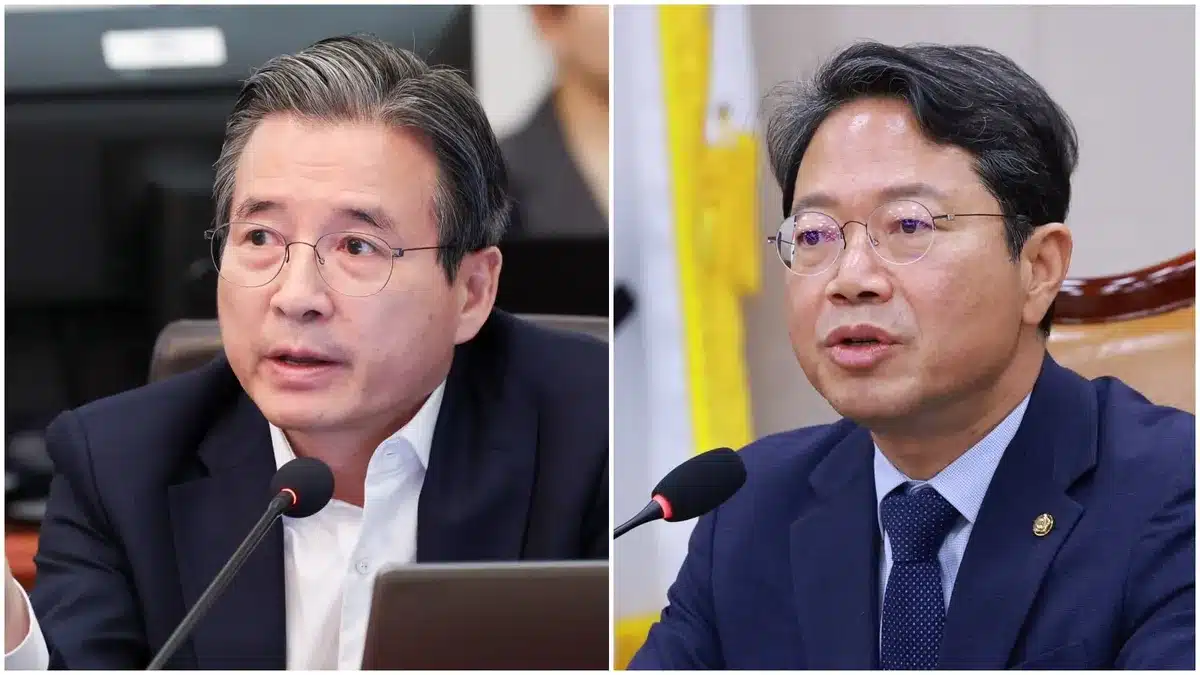
Kim Yong-beom, the Presidential Secretary for Policy, who oversees real estate policy and tax reforms, was scheduled to appear before a special committee of the National Assembly’s Budget and Accounts Committee. However, he did not attend, citing scheduling conflicts. Opposition parties have criticized this absence, interpreting it as an attempt to evade accountability for policy failures.
Public Opinion and Policy Direction
Recent opinion polls indicate a continued decline in President Lee’s job approval ratings. A survey released on the 31st showed a 1.3 percentage point decrease from the previous week, bringing the approval rating to 38.9%. This marks the seventh consecutive week of decline and the first time the rating has fallen into the 30% range since the administration took office. Other regular polls from organizations like Korea Gallup and NBS also show a consistent downward trend in the President’s approval ratings.
Despite this trend, many observers believe that the President’s recent actions have not created an environment conducive to reversing this decline. Even in real estate policy alone, the President promoted Hong Ji-seon, who worked with him in Gyeonggi Province, to the position of Minister of Land, Infrastructure and Transport. Hong, who spent most of his public service career in Gyeonggi Province, is known for proposing the “Gyeonggi Province Basic Housing Plan” when President Lee served as the city mayor of Gyeonggi.
The rapid ascent of Hong, who was appointed Vice Minister in December of the previous year despite lacking central government experience, and then promoted to Minister within eight months, has led to speculation within the administration that the current government’s development projects, such as the Yongsan Park development, will be pushed forward more aggressively once Hong officially takes office.
Regarding the cancellation of public holidays, another factor contributing to the President’s declining approval, a significant number of individuals within the Democratic Party have expressed
