

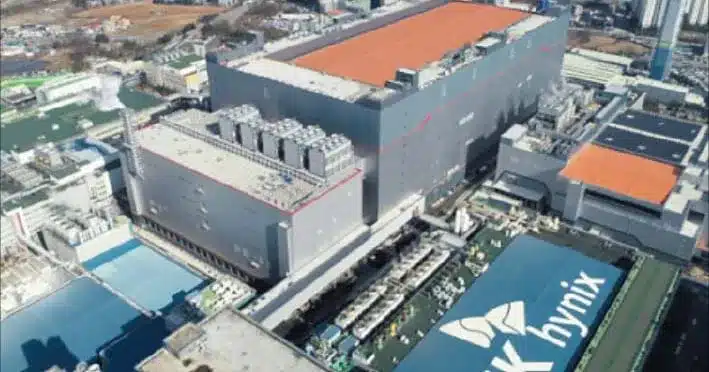
SK Hynix, a leading South Korean semiconductor manufacturer, is making significant waves with its upcoming listing on the NASDAQ in the United States. This move, involving American Depositary Receipts (ADRs), is expected to raise substantial capital, potentially up to 43 trillion Korean won (approximately $30 billion USD), by issuing up to 17.79 million new shares. The scale of this offering could surpass Alibaba’s record-breaking $21.8 billion USD IPO in the U.S. in 2014.
The news of SK Hynix’s ADR listing has already had a palpable impact on its stock price, causing it to surge in recent trading sessions. This surge has even put pressure on Samsung Electronics, the long-standing market leader in South Korea, challenging its position as the most valuable company by market capitalization for the first time in over 25 years.
Understanding American Depositary Receipts (ADRs)
The term ‘ADR’ stands for American Depositary Receipt, which translates to ‘U.S. Depositary Certificate’ in Korean. While the name might sound complex, the core concept is straightforward. ADRs represent ownership of shares in a foreign company that are held by a U.S. bank. Essentially, a U.S. bank holds the actual shares of the foreign company, and in return, issues these depositary receipts to investors in the United States.
For investors, ADRs function much like domestic stocks. They can be traded on U.S. stock exchanges, such as the NASDAQ, providing a convenient way for American investors to access international companies. Crucially, the actual shares of the company do not physically move to the U.S. Instead, the original shares remain in their home country, held in custody by a depositary bank. In SK Hynix’s case, the Bank of New York Mellon is acting as the depositary bank, issuing the ADRs against shares held in Korea by the Korea Securities Depository.
Strategic Capital Raising and Market Valuation
SK Hynix plans to utilize the substantial capital raised from the ADR offering to invest heavily in its manufacturing facilities and equipment. This expansion is driven by the burgeoning demand for semiconductors, particularly High Bandwidth Memory (HBM) chips, which are critical for artificial intelligence (AI) applications. As the AI era unfolds, the need for advanced chip manufacturing capacity is escalating rapidly.
The decision to raise capital in the U.S. market is strategic. While SK Hynix is a global leader in HBM technology, its valuation on the Korean stock market has been perceived by some as undervalued relative to its technological prowess and market position. By listing on a major U.S. exchange, SK Hynix aims to gain greater visibility and attract investment from a broader range of institutional investors. Increased demand from these investors is expected to lead to a more accurate and potentially higher valuation of the company’s worth.
This strategic move has already been reflected in market dynamics. The recent competition for the top market capitalization spot between SK Hynix and Samsung Electronics highlights the growing influence and perceived value of the semiconductor giant in the global financial landscape.
Potential Dilution and Long-Term Growth
While the ADR listing offers significant advantages, it also introduces potential considerations for existing shareholders. The issuance of new shares, as part of the ADR offering, can lead to a phenomenon known as ‘dilution.’ This is akin to sharing a pizza: if more people join the table, each person’s slice becomes smaller. Similarly, an increase in the total number of outstanding shares can reduce the value of each individual share if the company’s overall value does not increase proportionally.
However, the influx of capital is intended to fuel substantial growth. By investing in new factories and advanced technology, SK Hynix aims to increase its production capacity and market share. If these investments lead to significantly higher revenues and profits, the long-term benefits for all shareholders, including existing ones, could outweigh the initial dilution effect. The increased production of chips will ultimately contribute to the company’s overall value and profitability, potentially leading to greater returns for all investors.
Looking Ahead
The SK Hynix ADR listing represents a pivotal moment for the company and a significant development in the global semiconductor industry. Investors and market observers will be closely watching how this strategic move unfolds, its impact on the company’s valuation, and its contribution to the rapidly evolving landscape of artificial intelligence and advanced computing. The success of this offering could set a precedent for other South Korean tech giants seeking to leverage international capital markets.
