

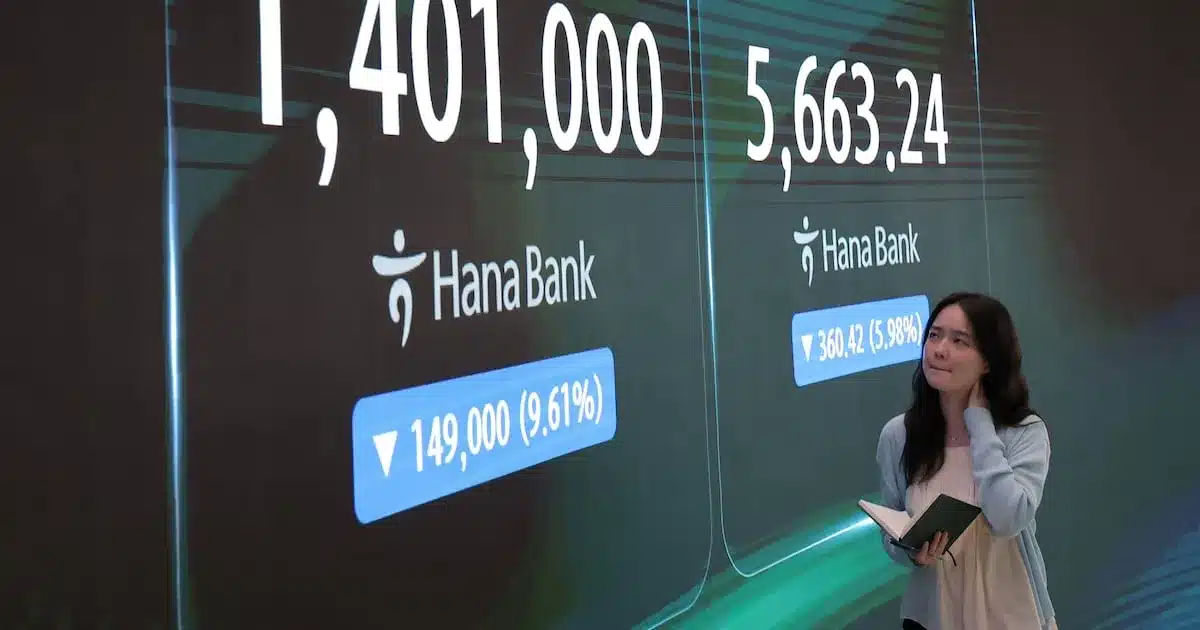
The South Korean stock market has experienced a dramatic downturn, with the KOSPI index plummeting significantly in recent weeks. This sharp decline has left individual investors in a state of despair and frustration, as market volatility escalates and once-promising gains evaporate. International financial news outlets are closely monitoring the situation, highlighting the severe impact on domestic investors.
KOSPI Suffers Steep Losses Amidst Investor Panic
On the 29th, the KOSPI index fell by nearly 6%, dropping below the 6000-point mark. This significant drop is part of a broader trend that has seen the South Korean stock market, which boasted some of the world’s highest gains earlier in the year, experience a rapid and severe correction. Reports indicate that the KOSPI recorded its largest-ever monthly decline of approximately 33% in the current month, fueling widespread feelings of despair and frustration among South Korean retail investors.
The optimism that propelled the Korean market to top global returns at the beginning of the year has quickly faded. Investors are increasingly questioning the viability of substantial investments in the artificial intelligence (AI) sector, particularly in light of rapid technological advancements by Chinese competitors. This uncertainty has contributed to the market’s sharp decline.
SK Hynix Earnings Report Fuels Sell-off
A key factor contributing to the recent market slump was the earnings announcement from SK Hynix. Investors expressed disappointment following the company’s conference call, citing a lack of detailed explanations regarding its share buyback policy and long-term supply agreements. This perceived lack of clarity exacerbated investor concerns and contributed to the sell-off.
Investor Stories Reflect Market Turmoil
Anecdotal evidence from South Korean investors paints a grim picture of the current market conditions. Stories circulating on social media reveal the extent of financial distress:
- One investor reportedly invested their entire wedding savings into the stock market, only to face losses of up to 40%.
- Another individual shared that their estimated profit, which had exceeded 600 million won, had turned into a loss of 700 million won within the current week.
These personal accounts underscore the profound impact of the market volatility on individual financial well-being.
Unprecedented Market Volatility
The KOSPI has exhibited extreme volatility in recent trading sessions. Notably, the market experienced circuit breakers being triggered for two consecutive days, an event described as unprecedented in its history. Of the 15 times circuit breakers have been activated since 2000, nine have occurred this year alone based on KOSPI standards, underscoring the heightened instability.
Government Intervenes to Stabilize Market
In response to the escalating crisis, the South Korean government has announced additional measures aimed at stabilizing the market. Following the substantial losses incurred by numerous investors due to the recent market crash, the government has introduced plans to restrict retail investor access to leveraged exchange-traded funds (ETFs). This move is intended to mitigate further risks for individual investors who may be overexposed to volatile instruments.
The current market environment presents a stark contrast to the earlier part of the year when South Korean stocks were among the best-performing globally. The rapid reversal has caught many investors off guard, leading to significant financial and emotional distress. The government’s intervention signals a serious effort to curb further losses and restore confidence in the market, though the path to recovery remains uncertain.
Future Outlook and Investor Sentiment
The sharp decline in the Korean stock market raises critical questions about the underlying economic factors and investor sentiment. While the government’s measures aim to provide a buffer against extreme volatility, the fundamental drivers of the downturn, including global economic uncertainties, sector-specific concerns like AI investment viability, and geopolitical risks, will continue to influence market performance. Investors are now grappling with a new reality, shifting from a period of rapid growth to one of significant correction, necessitating a re-evaluation of investment strategies and risk management approaches.
The coming weeks will be crucial in determining whether the implemented stabilization measures can effectively curb the sell-off and begin to restore investor confidence. The resilience of the South Korean economy and its key industries will be closely watched as the market navigates this challenging period.
