

Chungnam Province is projected to face a significant budget deficit of approximately 1.304 trillion won in the latter half of the year, according to Governor Park Sung-hyun. He emphasized that addressing and normalizing the province’s finances is a critical responsibility for the current provincial government.
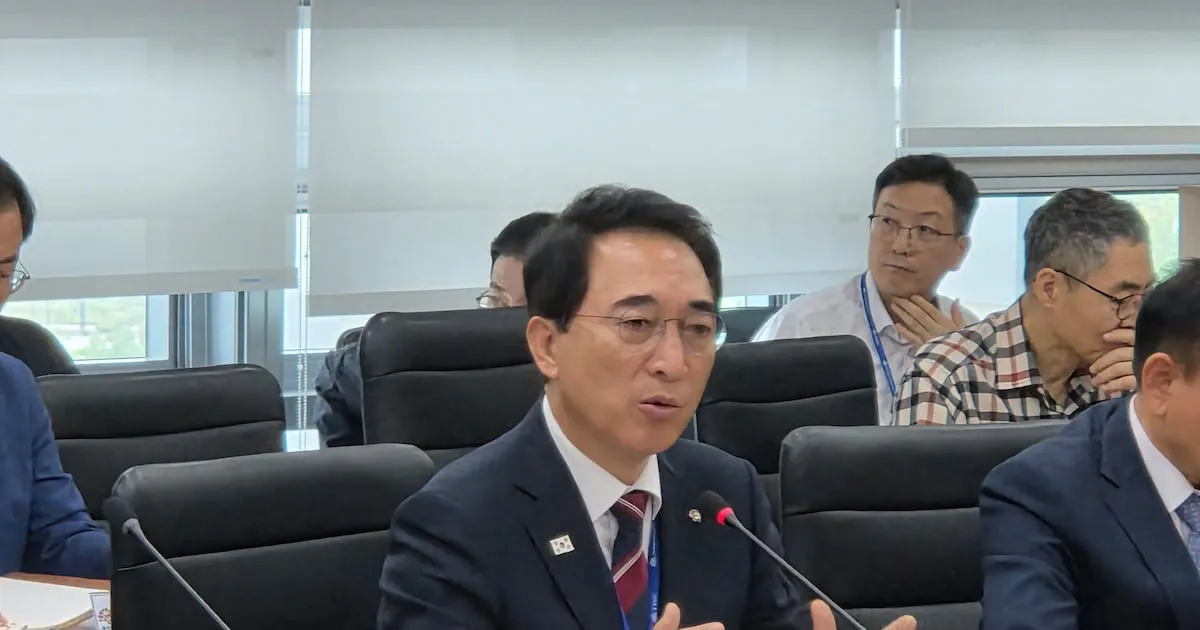
Governor Park revealed these figures during a public reporting session for the ‘Connecting Chungnam Preparation Committee’ held at the KAIST Mobility Research Center in Naepo City. He stated his intention to provide a clear and accurate picture of the province’s current financial situation to the residents and to collaboratively seek solutions.
Understanding the Financial Deficit
The projected deficit stems from a combination of revenue shortfalls and increased expenditure needs. Governor Park detailed the primary reasons behind this fiscal challenge:
- Shortfall in Universal Basic Income Payments: A deficit of 135.3 billion won is anticipated in this area.
- Reduction in General Local Consumption Tax: A decrease of 33.4 billion won is expected.
- Unrealized Revenue from Forest Resource Sales: The failure to collect 300 billion won from the sale of forest resources, specifically related to the Geumgang Sumokwon (Geumgang Forest), has significantly impacted revenue projections.
Governor Park highlighted a critical flaw in the province’s financial planning: “The budget was planned with the assumption that revenue from the sale of public assets, which has not yet materialized, would be collected as tax income. This represents a fatal flaw.” He further elaborated that the revenue shortfall is expected to exceed 468.7 billion won compared to initial estimates.
Additional Expenditure Pressures
Beyond the unrealized revenue, the province faces substantial additional expenditure requirements:
- Provincial Matching Funds for National Projects: An estimated 68.8 billion won is needed for provincial contributions to expanded national support projects.
- Statutory Expenditure Payments: An outlay of 464.2 billion won is required for legally mandated expenses.
- Unfunded Welfare Projects: An additional 28.7 billion won is necessary for welfare initiatives that were not fully funded.
In total, these additional expenditures amount to over 561.7 billion won. When combined with the revenue shortfall, the province faces a deficit exceeding 1 trillion won for the current year alone.
Despite the extensive work required to address these financial issues, Governor Park noted that only 15 billion won has been allocated in the budget for the second half of the year to implement campaign pledges. This limited allocation underscores the severity of the fiscal constraints.
Proposed Solutions for Fiscal Recovery
To mitigate the impending deficit, Governor Park proposed several measures:
- Adjustment of Large-Scale Investment Projects: Reallocating funds from some ongoing large-scale investment projects is expected to generate 326.4 billion won.
- Reallocation of Statutory Expenses: A portion of the statutory expenses, including general local government grants and education grants, will be re-prioritized, yielding 464.2 billion won.
- Reduction in Existing Budget Items: A 20% cut in existing budget items, such as general operating expenses, is projected to save 148.9 billion won.
- Utilization of Reserve Funds: An available reserve fund of 60 billion won will be deployed.
These measures are intended to secure the necessary funds to address the immediate financial crisis.
Chungnam’s Debt Burden
Governor Park also addressed the province’s overall debt level, stating, “Currently, the total debt stands at 2.3594 trillion won, the highest among provincial-level local governments.” He pointed out that the debt has increased by approximately 1.2 trillion won over the past four years, from 1.1734 trillion won at the end of the 7th People’s Power administration in 2022.
While refraining from assigning blame for the increase in debt, Governor Park reiterated, “What is clear is that the responsibility for normalizing the province’s finances also rests with the current provincial government of the 9th term.”
Debt Reduction Goals
The administration has set a target to reduce the debt-to-budget ratio from the current 18.93% to around 17% during the 9th term.
Governor Park concluded with a forward-looking statement: “During the 9th term, we will boldly reduce unnecessary expenditures and stably manage debt. Simultaneously, we will continue strategic investments in cutting-edge industries and future growth engines without wavering, aiming to achieve both fiscal stability and future development.”
