

Christopher Nolan, a filmmaker renowned for his intricate narratives and ambitious scope, continues to captivate audiences worldwide. With his latest film, The Beguiled, now in theaters, it’s an opportune moment to revisit the director’s most impactful works. Nolan’s filmography is characterized by its unique and often overwhelming style, earning him critical acclaim and numerous accolades. Over three decades, his films have garnered 49 Academy Award nominations and secured 18 wins. While early recognition often focused on technical achievements like visual effects, sound, and editing, his awards portfolio expanded significantly in March 2024. Oppenheimer, a critical and commercial triumph, received 13 Oscar nominations and won 7 awards, including Best Picture, Best Director, Best Actor for Cillian Murphy, Best Supporting Actor for Robert Downey Jr., Best Cinematography for Hoyte van Hoytema, Best Editing for Jennifer Lame, and Best Original Score for Ludwig Göransson.
Exploring Nolan’s Cinematic Universe
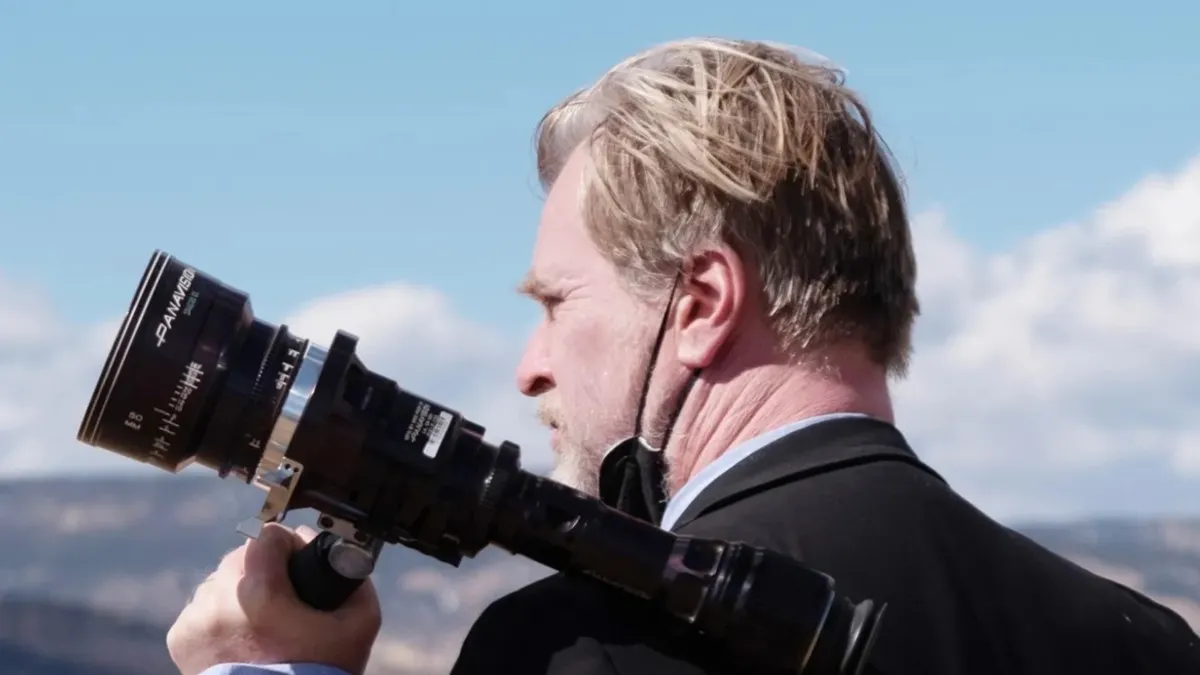
Nolan himself has noted the thematic connections between Oppenheimer and his upcoming film, The Beguiled. While Oppenheimer delves into the emotional turmoil of a man confronting the reality of his own creation, The Beguiled is set to explore the profound suffering inflicted upon humanity by war. Furthermore, the film is expected to provoke contemplation beyond the screen, challenging viewers to engage with the very definition of cinema and Nolan’s worldview. Having completed what many consider his grandest cinematic achievement to date, the question arises: what’s next for Nolan? The Beguiled, filmed entirely with IMAX film cameras—reportedly using approximately 600 kilometers of film—promises to usher in a new era for the medium. As we ponder these grand questions, revisiting Nolan’s previous works offers valuable insight into his evolving artistry and thematic preoccupations.
Key Works from Christopher Nolan’s Filmography
Memento (2000)
Nolan’s feature-length debut was The Following (1998), a low-budget thriller about a man who follows strangers. While it garnered some attention and achieved significant success relative to its budget in North America, it wasn’t until two years later that Nolan achieved international recognition with his second feature, Memento. This neo-noir psychological thriller perfectly encapsulates Nolan’s signature style, exploring themes of identity, memory’s fallibility, and fragmented timelines through its innovative structure of alternating black-and-white and color sequences. The film follows a man with anterograde amnesia who uses Polaroids and tattoos to track down his wife’s killer. His method of recording and re-interpreting clues mirrors the meticulous construction that would become his hallmark. Notably, Memento is cited as one of Steven Spielberg’s favorite Nolan films.
Inception (2010)
In Inception, the landscape of dreams transforms into a dangerous playground. The film intricately depicts the process of infiltrating human dreams to extract deeply guarded secrets from the subconscious. While categorized as an action thriller, Nolan crafts a universally relatable narrative about the nature of dreams—how time warps within them, and the disorienting experience of waking up only to find oneself still dreaming. His commitment to minimizing CGI, even when depicting the surreal world of dreams, became a trademark that intrigued cinephiles. The film’s ambiguous ending remains one of the most debated in cinematic history.
Interstellar (2014)
Following Inception, Christopher Nolan once again played with the concepts of time and space, this time venturing into the vastness of the cosmos. Set in a future where Earth is succumbing to resource depletion, the film follows a team of astronauts tasked by NASA with finding a new habitable planet for humanity. Their journey through a wormhole leads to interstellar travel, creating unimaginable time dilation effects. Despite the complex scientific underpinnings, including theories of relativity, Nolan grounds the narrative in a compelling family drama, captivating audiences. The film resonated particularly strongly with South Korean audiences, drawing over 10 million viewers. Nolan expressed his delight, remarking that Korean audiences possess a sharp intellect and a lack of apprehension towards science.
Dunkirk (2017)
This film revisits a harrowing historical event: the Dunkirk evacuation in May 1940. During World War II, Allied soldiers trapped on the beaches of Dunkirk were surrounded by German forces. The film, codenamed ‘Operation Dynamo,’ chronicles the desperate rescue mission. Nolan again explores the cinematic potential of ‘time,’ weaving together the perspectives of soldiers on the beach, at sea, and in the air over the course of a week, a day, and an hour. Dunkirk earned three Academy Awards in 2018 and became the highest-grossing film about World War II globally, a title it held until the release of Oppenheimer.
Oppenheimer (2023)
Oppenheimer stands as a monumental biopic, charting the story of American physicist J. Robert Oppenheimer and his pivotal role in the development of the atomic bomb during the Manhattan Project. Nolan meticulously dissects Oppenheimer’s political, moral, and personal journey, simultaneously undertaking the ambitious feat of recreating the world’s first nuclear test without CGI. Cillian Murphy delivers a powerful performance as the conflicted scientist, standing at a precipice where he could either save or destroy humanity. The film garnered widespread critical acclaim and achieved remarkable commercial success, grossing nearly $1 billion worldwide.
The Beguiled (2026)
Building on the success of Oppenheimer, Christopher Nolan has secured the opportunity to adapt one of the most enduring texts in literature: Homer’s The Odyssey. This epic poem, with a history spanning 3,000 years, recounts the arduous journey of the warrior Odysseus as he strives to return home to his wife Penelope and son Telemachus after the Trojan War. The Odysseus portrayed by Matt Damon is a hero scarred by conflict, burdened by his own capabilities. Does this echo the protagonists Nolan has explored, from Bruce Wayne in The Dark Knight to Robert Oppenheimer? The Beguiled is undoubtedly Nolan’s most ambitious project to date, and its execution is expected to match its grand aspirations.
As Nolan continues to push the boundaries of filmmaking, his body of work serves as a testament to his unique vision and enduring impact on cinema. Each film offers a distinct exploration of complex themes, rendered with technical mastery and profound emotional resonance.
