

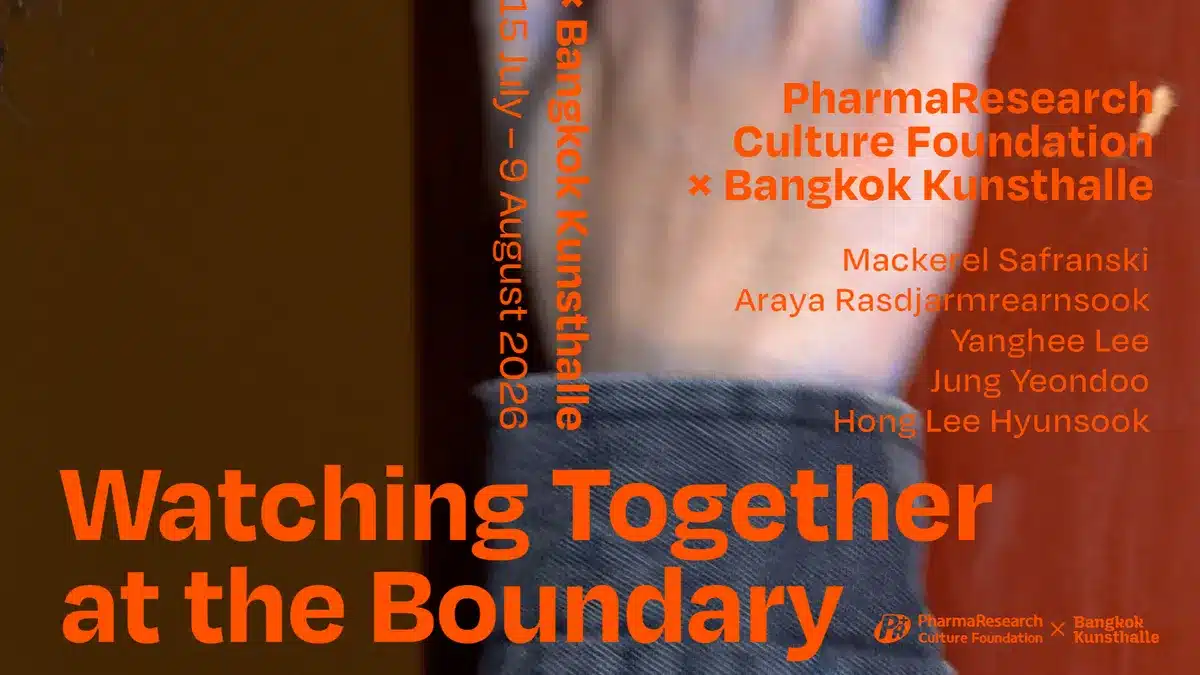
An exhibition titled Looking Together at the Border at Bangkok’s KUNSTHALLE is drawing parallels between the vibrant Thai capital and the South Korean coastal city of Gangneung. Running until August 9th, the exhibition explores the shared characteristics and cultural connections between these two popular destinations, highlighting themes of nature, healing, and artistic expression.
Bridging Two Cities Through Shared Experiences
Bangkok, recognized as the ‘World’s Most Visited City’ in 2024, and Gangneung, named South Korea’s top domestic travel destination for 2025 during the ‘Golden Week’ holiday, share more than just their appeal to travelers. The exhibition, a collaboration between the Famarichese Cultural Foundation and Bangkok KUNSTHALLE, aims to uncover these deeper connections.
Park So-hee, Director of the Famarichese Cultural Foundation, and Stefano Rabolli Pansera, Director of Bangkok KUNSTHALLE, identified ‘healing’ as a primary commonality. “Bangkok and Gangneung are connected by nature,” stated Pansera. “Both Bangkok KUNSTHALLE and the Gangneung International Art Festival (GIAF) showcase artworks inspired by the beauty of their respective natural environments and cities, offering a sense of healing to visitors.”
The exhibition also draws inspiration from traditional folk festivals. The Songkran festival in Bangkok and the Dan-ohje festival in Gangneung, both UNESCO Intangible Cultural Heritage of Humanity, are communal celebrations that invoke blessings and wish for collective recovery. This connection was celebrated at the exhibition’s opening on July 15th with a performance by Kim Moon-seok’s traditional percussion group, Pungmul, which led the Dan-ohje procession.
The Pungmul performance began with the distribution of colorful traditional Korean jihwa (paper charms) made in Korea. The vibrant sounds of drums and horns filled the first floor of Bangkok KUNSTHALLE, with four musicians and dancers embodying the spirit of Dan-ohje. This performance resonated with the shared experiences of both cities: Gangneung, which endures severe wildfires annually due to strong winds, and Bangkok KUNSTHALLE, which rebuilt itself after a fire devastated its premises for 24 years before reopening as an art museum.
In the Dan-ohje tradition, jihwa are burned at the end of the festival to make wishes. At the Bangkok opening, these charms served as a memorable keepsake for attendees. The exhibition posits that these folk celebrations, despite differences in language and customs, inspire artists and offer moments of healing to the public by invoking new blessings and prosperity.
Cultural Patrons and Artistic Vision
Bangkok KUNSTHALLE is Thailand’s first private contemporary art museum, established two years ago by Marisa Chearavanont, a Korean-Thai executive of CP Group, a leading Thai conglomerate. The Gangneung International Art Festival is led by Park Pil-hyun, Director of the Famarichese Cultural Foundation, with the 5th edition scheduled for 2027. In 2028, Gangneung will officially open the Museum IN-ON, designed by architect Cho Byoung-soo.
The shared passion for culture by Thai and Korean patrons and corporations is another significant commonality highlighted by the exhibition. Both Marisa Chearavanont and Park Pil-hyun were present at the opening to express their gratitude to the attendees.
A Glimpse into the Exhibition’s Artworks
Looking Together at the Border marks the first official exhibition of Korean artists since the opening of Bangkok KUNSTHALLE, signaling promising future exchanges. The exhibition features media art by five artists from Korea and Thailand, including Jeong Yeon-du, Hong Yi-sook, Go Deung-eo, Lee Yang-hee, and Araya Rasdjarmrearnsook.
An artist talk featuring Jeong Yeon-du and Park So-hee was held on the opening day, receiving warm applause from Thai media and visitors.
Exploring the Concept of ‘Border’
Park So-hee explained the multifaceted meaning of the exhibition’s title, ‘Looking Together at the Border.’ “The ‘border’ can be interpreted in various ways,” she said. “Firstly, it can be seen as a ‘threshold’ – a point that separates but can also be crossed. To reach Gangneung from Seoul, one must cross the Daegwallyeong Pass, which acts as a threshold or border for Gangneung. By crossing over to Bangkok KUNSTHALLE, visitors can view media art from five artists featured at the Gangneung International Art Festival, making ‘looking together at the border’ possible.”
Park further elaborated that the works by the five artists all address the theme of recovery and solace found within borders and beyond them.
Jeong Yeon-du’s work, Singkofiction #5 (2025), a three-channel 4K digital video, captures the landscape of the Dan-ohje festival in Gangneung. The piece depicts the process of making prayer beads from rice cakes, the piano performance of a refugee composer inspired by the displacement of Koreans, and the ritual of burning jihwa while wishing for a good harvest. Jeong shared anecdotes about the meticulous process of making the prayer beads, even dropping a string containing a sacred bead at the very end.
Araya Rasdjarmrearnsook’s The Palace of Dogs (2022) elevates the reality of stray animals into art. The artist, who cares for stray dogs in Chiang Mai, juxtaposes the act of abandonment with the compassion shown to these animals, prompting reflection on the dual nature of protection and abandonment.
Hong Yi-sook’s What You Are Touching Now – Gangneung (2025), a striking image used as the exhibition poster, features the artist gently touching old buildings like Imyeongwan and Chilsadang in Gangneung. This performance, which included opening the doors of Imyeongwan – Gangneung’s only national treasure, closed for 50 years – to visitors, highlights the preservation of cultural heritage.
Lee Yang-hee’s Lee Yang-hee’s Mouth (2020/2025) presents a traditional Korean dance, Ip chum, exploring its fundamental forms. Go Deung-eo’s The Blackness of Sagak (2023) tells the story of migrant laborers in Gangneung, a significant portion of whom are from Russia and Kyrgyzstan. These workers, employed in construction, face the irony of not being able to build their own places of worship, a reality poetically captured in the artwork.
While the exhibition’s title suggests looking ‘at the border,’ the artworks ultimately invite viewers to transcend borders and find solace. The ongoing collaboration between Bangkok KUNSTHALLE and the Famarichese Cultural Foundation promises more exhibitions that will continue to foster cultural exchange between Bangkok and Gangneung.
