

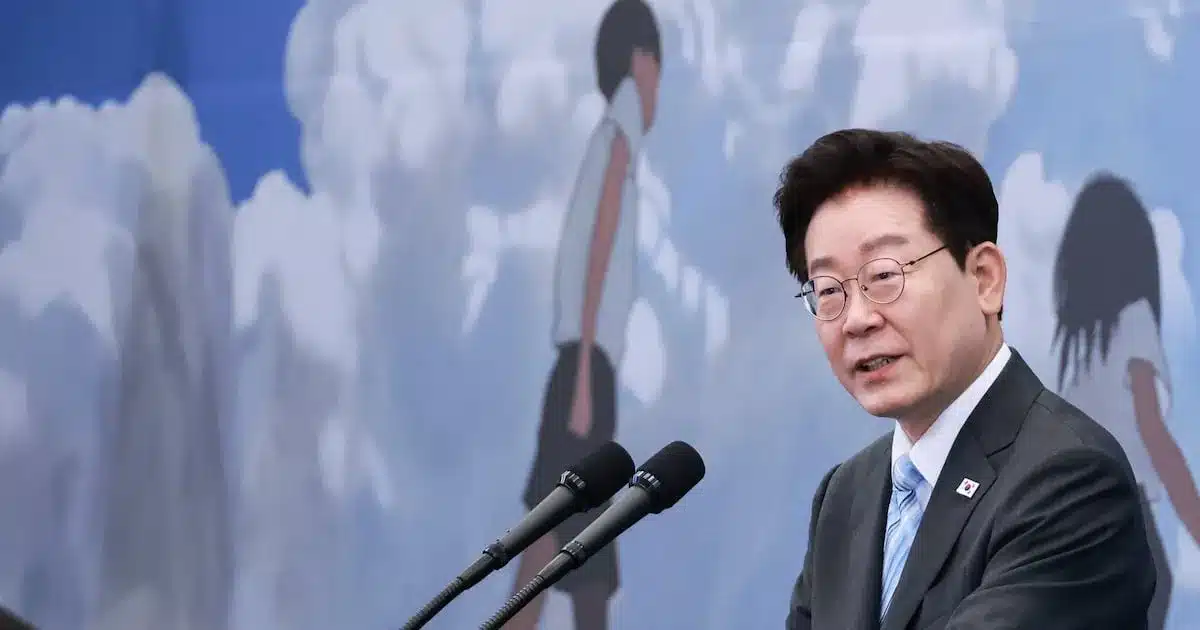
President Lee Jae-myung is contemplating the establishment of a dedicated agency to oversee and coordinate youth policies, acknowledging the limitations of current governmental structures in addressing the complex challenges facing young people. The President expressed this consideration on September 19th during the “2026 Youth Day Commemoration Ceremony” held at the Yeongbin Gwan in the Blue House.
Addressing Youth Challenges Requires a New Approach
During the ceremony, President Lee stated, “I am contemplating whether we should establish a separate, overarching organization to manage youth policies.” He elaborated that the existing government organizations and personnel are finding it difficult to adequately respond to the multifaceted issues confronting the youth demographic. The President emphasized that the current situation is a “crisis” that is challenging to overcome with the capabilities of existing policy decision-makers.
“It’s not just about the organization itself, but also about the individuals with the capacity to substantively handle policy,” President Lee noted. He explained that even when individuals with significant policy-making authority wish to provide opportunities to a generation that feels disconnected from the realities of governance, their efforts are often hampered. “When you consider experience and track record, it eventually becomes difficult to find the right people,” he remarked, highlighting a perceived disconnect between policymakers and the younger generation.
Diagnosis of the Youth Situation
President Lee offered a stark diagnosis of the current situation for young people. “The generation that studied the longest faces the longest wait for employment, and the generation that prepared the most is the one that has the least,” he stated. This observation points to a growing disparity where extensive education and preparation do not necessarily translate into stable employment or economic security.
The President identified the widening socioeconomic gap and the industrial restructuring driven by artificial intelligence (AI) as primary causes for these difficulties. He was clear in asserting that these systemic issues are “definitely not the fault of individuals.” However, when pressed for specific solutions to these pressing problems, President Lee acknowledged the difficulty, stating, “There isn’t a proper plan yet. It’s not easy.”
Youth Policy as a Fundamental National Issue
President Lee underscored the critical importance of addressing youth issues, framing it as a fundamental question for the nation’s future. “The issue of youth is a fundamental question of whether the Republic of Korea can remain a nation of continuous growth and development,” he declared. He pledged the government’s full commitment, stating, “The government will do its utmost.”
Youth Day, observed on the third Saturday of September each year according to the Youth Basic Act, serves as a legal commemorative day. The government holds annual events to raise awareness and promote the protection of youth rights and address youth-related challenges. This year’s ceremony saw the participation of approximately 150 individuals, including representatives from youth organizations, government youth advisors, members of the Youth Policy Deliberation Committee, and youth policy beneficiaries.
The Need for Specialized Youth Policy Infrastructure
The President’s remarks signal a recognition that traditional policy frameworks may be insufficient to tackle the unique and evolving needs of the younger generation. The proposal for a new, overarching agency suggests a move towards a more centralized and focused approach to youth affairs. Such an entity could be tasked with:
- Developing comprehensive youth strategies: Moving beyond fragmented initiatives to create cohesive, long-term plans.
- Enhancing inter-agency coordination: Ensuring that various government departments work together effectively on youth-related issues.
- Directly engaging with youth: Creating channels for meaningful dialogue and feedback from young people themselves.
- Research and data analysis: Staying abreast of emerging trends and challenges affecting youth.
- Advocacy and resource allocation: Championing youth needs within the government and securing necessary funding.
The challenges identified by President Lee – long study periods followed by extended job searches, the impact of economic polarization, and the disruptive force of AI – are significant hurdles. The current approach, he implied, lacks the agility and specialized focus required to navigate these complexities effectively. A dedicated agency, staffed by individuals with a deep understanding of youth issues and the authority to implement impactful policies, could represent a significant step forward.
Looking Ahead
While the specifics of the proposed agency remain under discussion, the President’s commitment to exploring new structures highlights the urgency and national importance placed on youth development. The path forward involves not only organizational reform but also a fundamental shift in how policy is conceived and executed to ensure that the nation’s youth are equipped to face the future and contribute to Korea’s continued prosperity. The government’s pledge to “do its utmost” suggests a serious effort to find workable solutions to the complex problems facing the next generation.
