

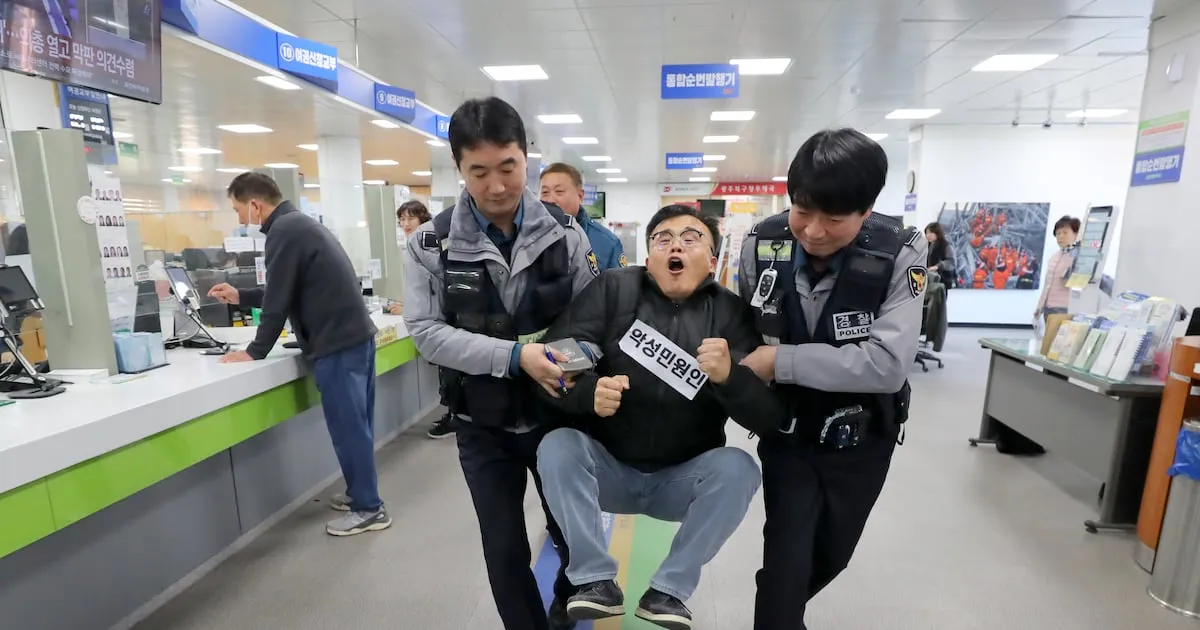
Public institutions across South Korea are increasingly implementing time limits on citizen complaint calls, a measure aimed at curbing excessive and abusive interactions with public officials. This initiative, driven by a surge in what is termed ‘malicious complaints,’ has seen various government bodies, from central ministries to local governments and educational institutions, adopt policies to cap call durations, often between 10 to 30 minutes. The trend gained significant momentum following the June local elections, with many agencies adopting these measures after previously delaying requests from public official unions.
The Rise of ‘Malicious Complaints’ and Call Restrictions
The issue came to a head when a Seoul-based self-employed individual, identified as Mr. Jo (55), attempted to inquire about license renewal and permits. His experience highlighted the frustrations many citizens face. After being transferred to the relevant department, he left a message due to the official’s absence and waited five hours for a callback. When he finally connected, the supervisor initially dismissed his inquiry as a repeat complaint from two months prior, only agreeing to look into relevant laws after Mr. Jo clarified it was a new issue. During their 15-minute conversation, a robotic voice announced that calls exceeding the limit would be automatically terminated. The supervisor, rushing to explain, stated the call time was now restricted to 20 minutes before the line was cut off. Mr. Jo, feeling he might be labeled a ‘malicious complainant,’ hastily ended his subsequent call after just one minute.
This situation reflects a broader trend. Seoul City first introduced call time limits in 2024, citing continuous, abusive complaints lasting over 20 minutes. This was based on a revised enforcement decree for complaint processing, which allows for the termination of calls exceeding a set duration. While some questioned the authority of public officials to ‘select’ calls, the success of these measures spread. Songpa District Office in Seoul implemented a system where calls are logged, with a warning at 10 minutes and automatic termination at 15 minutes. This reportedly led to a 26% decrease in long-duration calls. Officials noted that the automated system and warning messages often prompted complainants to end calls themselves, reducing emotional outbursts and the need for officials to directly handle verbal abuse.
Expansion and Rationale Behind the Measures
The ‘malicious complaint’ containment strategy has since been adopted by provincial governments like Gyeonggi Province and central bodies such as the Ministry of Employment and Labor. The rationale behind these restrictions is multifaceted. Public institutions generally consider calls averaging 9.4 minutes to be sufficient for resolution, with 15 minutes deemed ample. Calls exceeding this duration are seen as potentially unresolvable through phone calls alone, leading to administrative inefficiency and psychological distress for public officials. The average call duration for complaints is around 9.4 minutes, and 15 minutes is considered sufficient.
Data underscores the severity of the problem. According to the National Assembly Research Service, between 2021 and 2023, there were over 130,000 instances of illegal complaints, including verbal abuse and property damage, averaging 151 cases daily. Low pay and the fear of complaints are cited as the top reasons for public officials resigning. Many new recruits are assigned to frontline citizen service roles, becoming ’emotional trash cans’ and ‘targets of abuse,’ leading to widespread burnout among experienced civil servants.
While ‘malicious complaint’ is not a formal legal term, the line between legitimate, albeit forceful, complaints and abusive ones can be blurred. Internally, such complainants are sometimes referred to as ‘Jinsang’ (a slang term implying unreasonable behavior). Examples of clearly malicious behavior include repetitive, unresolvable complaints, excessive information requests, verbal abuse, threats, property damage, and sexual harassment. Some individuals have reportedly submitted tens of thousands of online complaints annually, often using macros. Others have lodged complaints about trivial matters, such as dissatisfaction with restaurant meals, requests to catch beetles at their homes, or questioning why their marriage registration wasn’t met with congratulations.
Impact on Public Officials and Services
The toll on public officials is significant, with tragic incidents reported. A teacher in Seoul committed suicide in 2023 after facing relentless complaints from parents. A Gimpo City official died by suicide in 2024 after being criticized for not preventing traffic congestion during road construction. Another official collapsed and died while handling a complaint at a Dongtan community center, and a Daejeon City official died recently amidst a surge in electric vehicle subsidy applications. One administrative official described facing over 500 complaints accumulated over a weekend, working from dawn till night to process them diligently, sometimes to the point of tears.
In response, the government has established task forces and appointed dispute resolution officers to handle malicious complaints firmly. Officials subjected to such complaints receive psychological counseling and special leave. Some local governments are even piloting AI systems to pre-screen calls, analyze content and emotions, and then relay the information to officials, reducing direct exposure to abuse. Public institutions also conduct joint drills with police twice a year, simulating responses to malicious complainants, an exercise that reportedly surpasses the urgency of civil defense drills for emergencies like North Korean invasions.
Underlying Causes and Future Concerns
Several factors contribute to South Korea becoming a ‘complaint republic.’ Firstly, the ease of filing complaints, facilitated by advanced digital infrastructure, and the expectation of swift government responses have elevated complaint submission to a global high. Secondly, the stressful urban environment, characterized by noise, parking issues, and welfare demands, fuels frequent citizen grievances. The long-standing culture of ‘government by officials’ (Gwan-chi) means many issues are expected to be resolved through government intervention and regulation rather than private initiative.
Sociological perspectives suggest that high social stratification, coupled with a lower capacity for managing social conflict compared to other OECD nations, pushes citizens towards administrative complaints as a readily available, albeit often ineffective, means of conflict resolution. Furthermore, a strong sense of civic power, stemming from experiences like presidential impeachment, and the expectation that the state should be responsible for private disasters have inflated the perceived efficacy of complaints. A unique Korean sentiment of ‘unfair treatment’ (‘Eok-ul-ham’) combined with a desire for ‘preferential treatment’ (‘Dae-jeop-bat-go sip-da’) fuels this complaint culture.
However, a blanket approach to curbing complaints could have unintended consequences. Some argue that alongside malicious complainants, there are also ‘malicious public officials,’ leading to a perceived decline in the quality of administrative services. Examples include tasks that once took one person now requiring several, or significant delays in processing even basic administrative tasks. Some citizens worry that these measures might lead to a passive administrative response, where only those with connections to power can expect effective complaint resolution.
The implementation of call time limits is a complex issue, reflecting deep-seated societal pressures and the challenges faced by public servants. While intended to protect officials and improve efficiency, concerns remain about potential negative impacts on genuine citizen grievances and the overall quality of public services.
