

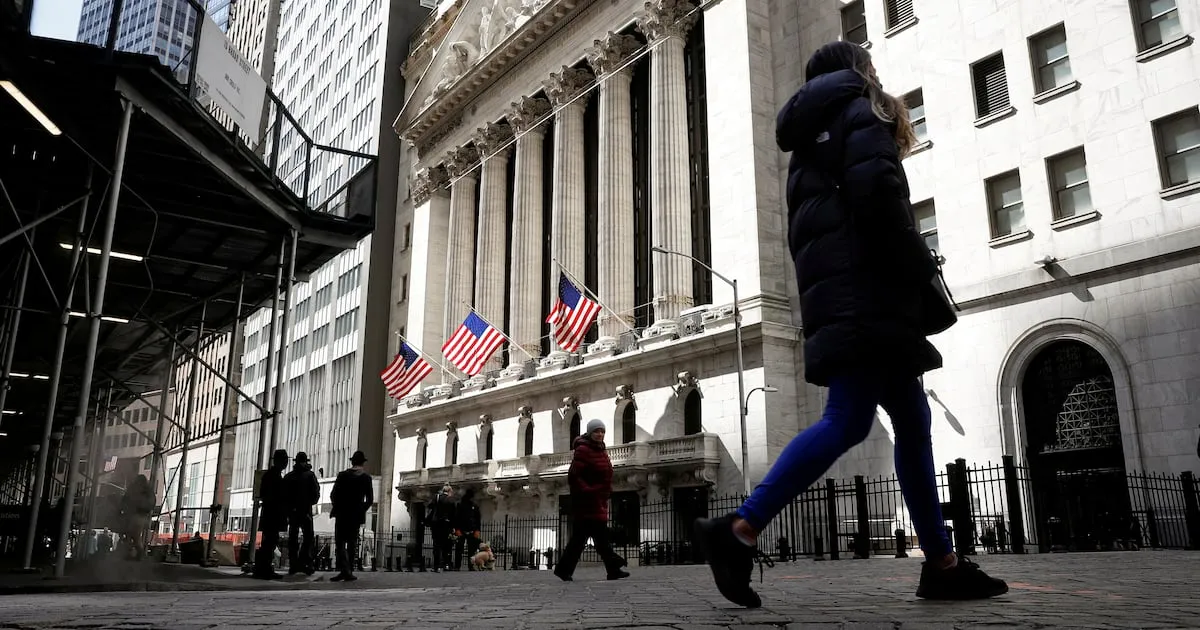
U.S. Treasury yields have surpassed the 5% mark, reaching their highest level since October 2023, a significant development that could increase financial pressure on corporations. This surge is largely attributed to escalating geopolitical tensions, particularly in the Middle East, which have driven international oil prices back above $100 per barrel. The renewed inflationary concerns are fueling speculation that the U.S. Federal Reserve might consider another interest rate hike. This follows a similar move by the European Central Bank (ECB) last week, which raised its key interest rate to 2.65% from 2.4%. As interest rates trend upward globally, there are growing worries about the mounting burden on companies concerning their commercial paper (CP) and short-term bonds, instruments with maturities ranging from a few days to several months that are particularly sensitive to interest rate changes.
U.S. Treasury Yield Surge Triggers Global Ripple Effects
The rise in U.S. Treasury yields has had a direct impact on South Korean government bond yields. The yield on 10-year Korean government bonds climbed by 6.4 basis points to 4.6% on the day of the report. Similarly, 5-year and 3-year bond yields rose by 6.6 basis points each, reaching 4.345% and 4.091%, respectively. Even longer-term bonds were affected, with 20-year and 30-year yields increasing by 0.8 and 3.1 basis points to 4.618% and 4.729%, respectively.
In the United States, the 10-year Treasury yield serves as a benchmark for various financial products, including mortgage rates, student loans, and corporate bond issuance costs. The 5% threshold is widely considered a critical psychological level. Crossing this mark can potentially alter global investment flows and significantly impact the real economy. The current climb in U.S. Treasury yields is exacerbated by the prolonged conflict in the Middle East, leading to renewed fears of inflation as oil prices surge past $100 a barrel. This situation adds to existing pressures on U.S. Treasuries, which have already seen increased demand due to substantial U.S. government deficits and significant investment in artificial intelligence (AI).
With inflation showing signs of resurgence, analysts are increasingly predicting that the Federal Reserve may opt for further interest rate increases. This prospect intensifies the focus on the stability of corporate financing, especially for companies heavily reliant on short-term debt instruments.
Corporate Reliance on Short-Term Debt Increases Financial Risk
Domestically, in South Korea, the anticipation of potential interest rate hikes by the Bank of Korea, driven by rising global oil prices due to the Middle East conflict, has already pushed market interest rates higher. In response to this environment, many companies have increased their issuance of commercial paper (CP) and short-term bonds, which typically have shorter maturities than corporate bonds. The total volume of CP and short-term bond issuances reached 1,272.8483 trillion won, marking a substantial 68% increase compared to the previous year and setting a record for the first half of the year.
This growing dependence on short-term financing instruments like CP and short-term bonds, coupled with rising global interest rates, is raising concerns about the potential for increased corporate refinancing burdens. While corporate bonds, with maturities of at least one year, offer more stability in interest costs even when market rates rise, CP and short-term bonds present a different challenge. Because their maturities are much shorter, typically weeks or months, companies must refinance them more frequently. Each refinancing event means the debt could be rolled over at a newly adjusted, higher interest rate, progressively increasing the interest expense over time.
Data from the Financial Supervisory Service indicates a shift in corporate financing patterns. In the first half of the year, the issuance volume of corporate bonds decreased by 15.2% year-on-year to 123.5968 trillion won. Notably, 73% of these corporate bond issuances were used to refinance existing debt rather than fund new investments. In contrast, the issuance of CP and short-term bonds saw a significant jump, with net issuance more than doubling from 8 trillion won last year to 16.6 trillion won this year. As of the end of August, the outstanding balance for these short-term instruments stood at 69.7 trillion won, highlighting a clear trend towards shorter-term financing among South Korean corporations.
Understanding Commercial Paper and Short-Term Bonds
Commercial Paper (CP) is a short-term, unsecured promissory note issued by corporations to finance short-term liabilities such as accounts payable, inventories, and working capital. It typically has maturities ranging from one day to 270 days. Because it is unsecured, only financially strong companies with high credit ratings can issue CP. The interest rates on CP are generally lower than those on bank loans.
Short-term bonds, while also having relatively short maturities, can vary more in terms of security and issuance terms compared to CP. They are often used by companies to manage cash flow and fund immediate operational needs. The increased reliance on these instruments by corporations, especially when interest rates are volatile, exposes them to significant refinancing risk. As market yields rise, the cost of rolling over these short-term debts increases, potentially straining corporate liquidity and profitability.
Conclusion: Navigating a High-Yield Environment
The crossing of the 5% threshold for U.S. Treasury yields marks a critical juncture in the global financial markets. This development, coupled with geopolitical instability and persistent inflation concerns, necessitates careful monitoring by businesses and investors alike. The increasing burden on corporate short-term debt, evidenced by the surge in CP and short-term bond issuance, underscores the need for robust financial planning and risk management strategies. Companies that have heavily relied on these shorter-term instruments may face significant challenges in managing their debt servicing costs as interest rates continue their upward trajectory.
