

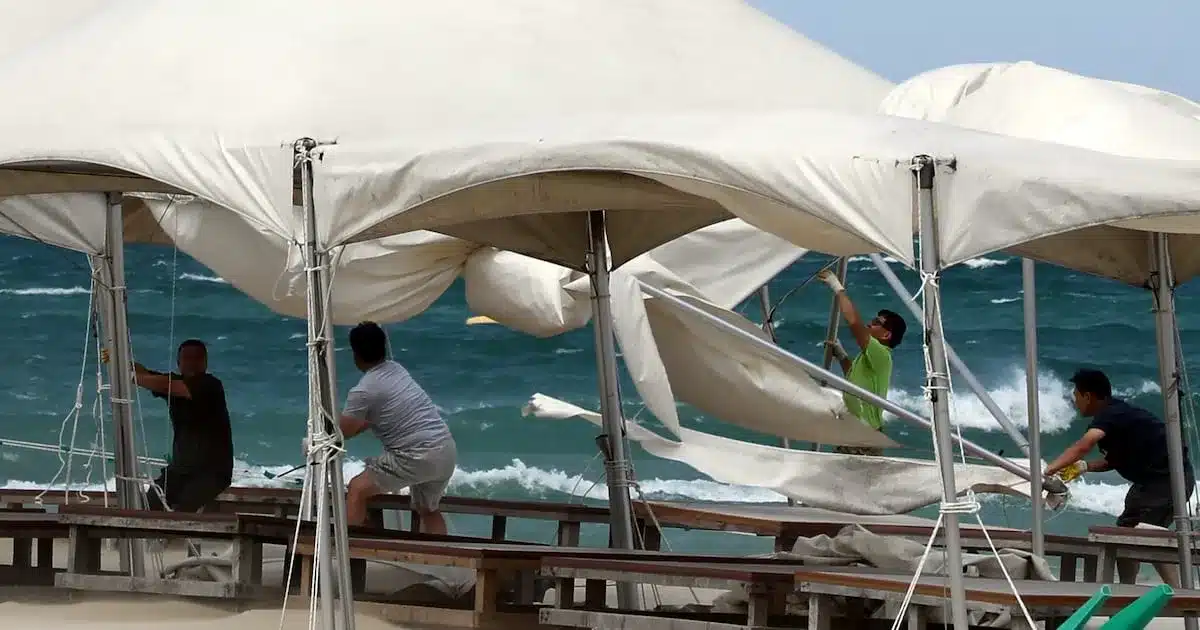
Jeju Island experienced strong winds on October 4th due to the indirect influence of Typhoon Crovan. While the typhoon did not make a direct landfall, its peripheral effects brought gale-force winds, leading to some property damage and disruptions across the island. The situation prompted weather advisories and caused significant impacts on transportation and daily life.
Gale Warnings Issued Across Jeju
The Jeju Regional Meteorological Administration issued gale-force wind special advisories for much of the island. Specifically, mountainous areas, central regions, the northern and eastern parts of Jeju City, and the southern and eastern areas of Seogwipo City were under the special advisory. Other regions of Jeju Island were under a strong wind advisory. Meanwhile, a storm surge warning was in effect for coastal waters surrounding the island.
Gusts exceeding 20 meters per second were recorded at various points, showcasing the intensity of the winds. These conditions led to immediate disruptions, including flight delays at Jeju International Airport. Ferry services connecting Jeju to mainland areas like Wando and Samcheonpo were suspended. Additionally, all ferry routes linking Jeju Island to its smaller surrounding islands, such as Gapa and Marado, were canceled.
Incidents and Damage Reported
The strong winds resulted in several incidents and damage reports throughout Jeju. One of the most serious incidents occurred around 3:53 PM at Jeju Port, where a crane toppled from a docked vessel. The accident tragically resulted in the deaths of two workers. A 50-year-old vessel foreman, identified as Mr. A, was found in cardiac arrest and later died at the hospital despite rescue efforts. Mr. B, a 50-year-old crane operator, sustained severe injuries after being pinned by steel plates.
The Coast Guard is investigating the exact cause of the crane’s collapse, suspecting the strong winds played a significant role. The fire department also reported injuries. Around 1:50 PM, a worker, identified as Mr. C, was injured in Gujwa-eup, Jeju City, after being struck by a piece of flying debris caused by the strong winds. Later, around 5:36 PM, a citizen in Beophwan-dong, Seogwipo City, was injured by flying debris.
Infrastructure also suffered damage. Around 9:38 AM in Ido-dong, Jeju City, a central dividing wall was blown over by the strong winds. Traffic lights were damaged and toppled in various locations, including Gujwa-eup and Hallym-eup in Jeju City, and Dosun-dong in Seogwipo City. Reports also indicated that a speed camera in Seongsan-eup, Seogwipo City, was dislodged around 11:55 AM.
Numerous reports of trees breaking or falling were also received across the island, highlighting the widespread impact of the gale-force winds on the natural and built environment.
Access Restrictions and Weather Outlook
In response to the hazardous conditions, access to several natural sites was restricted. All seven hiking trails within Hallasan National Park were closed to visitors due to the strong winds. Furthermore, entry to 12 designated beaches in the Jeju region was prohibited.
The meteorological administration forecast that the current gale and storm surge advisories could persist for an extended period, potentially lasting until October 8th. Typhoon Crovan, which had weakened to a tropical storm over the southern waters of Japan, was expected to further dissipate within 96 hours, according to the agency’s projections.
Typhoon Crovan’s Trajectory and Impact
Typhoon Crovan, while not directly hitting Jeju, served as a stark reminder of the region’s vulnerability to tropical cyclones. Its indirect influence, characterized by strong peripheral winds, caused considerable disruption. The typhoon’s path, moving away from the Korean Peninsula, meant that the most severe weather associated with the storm was experienced elsewhere, but its outer bands still delivered significant wind speeds to Jeju.
The events of October 4th underscore the importance of weather monitoring and preparedness in island regions like Jeju. While the damage was not catastrophic, the incidents highlight the potential dangers posed by strong winds, flying debris, and the disruption of essential services and transportation. Authorities continue to monitor the situation and advise residents and visitors to stay informed about weather updates and adhere to safety guidelines.
Conclusion
The indirect impact of Typhoon Crovan brought strong winds and disruptions to Jeju Island, leading to property damage, transportation cancellations, and several injuries. While the typhoon itself weakened and moved away, its peripheral effects necessitated gale warnings and advisories, impacting daily life and leading to temporary closures of natural parks and beaches. The situation serves as a reminder of the dynamic weather patterns affecting the region and the ongoing need for vigilance and preparedness.
