

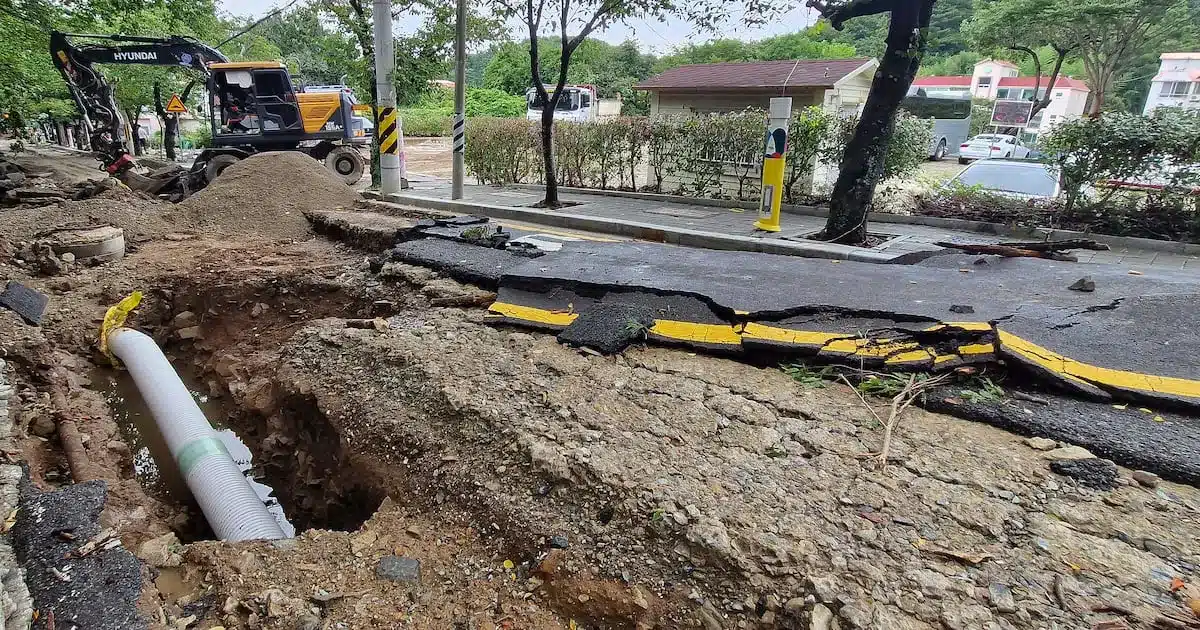
The Ministry of the Interior and Safety has officially designated the entire city of Tongyeong in Gyeongsangnam-do Province as a special disaster area. This decision, made on September 4th, follows the severe damage caused by torrential downpours that inundated the region. The designation allows for additional government support to aid in the recovery and reconstruction efforts for the affected populace.
Understanding Special Disaster Area Designations
When an area is declared a special disaster zone, it unlocks a range of benefits aimed at alleviating the burden on local governments and directly assisting residents. A key aspect of this designation is that the national government will cover a portion of the reconstruction costs that would typically be borne by the local municipality. This financial assistance is crucial for undertaking large-scale recovery projects.
Furthermore, residents within the designated area are eligible for various forms of support. This includes disaster relief funds to help individuals and families cope with immediate losses. Additionally, they may receive exemptions or deferrals on national and local taxes, as well as reductions in public utility fees. These measures are intended to provide immediate financial relief and ease the strain on households impacted by the disaster.
The Torrential Rains and Their Impact
The severe weather event occurred between August 15th and 18th, coinciding with the Liberation Day holiday. During this period, Tongyeong and the nearby Geoje area experienced extreme rainfall, with accumulations reaching up to 900 millimeters. This intense precipitation led to significant damage across the region.
Tragically, the heavy rains resulted in human casualties, with one fatality and three individuals sustaining injuries. Beyond the personal toll, the disaster caused widespread property damage, most notably through extensive flooding and inundation of homes and infrastructure. The sheer volume of water overwhelmed drainage systems and caused rivers to overflow, leading to submerged buildings and damaged roads.
Initial Response and Expanded Designation
In the immediate aftermath of the flooding, the government initiated preliminary damage assessments. Based on these initial findings, on August 21st, the city of Geoje and two specific areas within Tongyeong – Sanyang-eup and Bongpyeong-dong – were provisionally designated as special disaster areas. This early designation allowed for the swift deployment of initial relief resources.
Following this initial declaration, a joint investigation team was dispatched to conduct a more thorough assessment of the damage. This central joint investigation, which took place from August 29th to September 4th, involved representatives from ten government ministries and agencies, including the Ministry of the Interior and Safety, the Ministry of Environment, and the Korea Forest Service, along with private sector experts. The findings of this comprehensive survey confirmed that the damage in Tongyeong city met the criteria for a special disaster area designation across its entirety. Consequently, the entire city was added to the list of special disaster zones.
Government Commitment to Recovery
Yoon Ho-joong, the head of the Central Disaster and Safety Countermeasures Headquarters, emphasized the government’s commitment to supporting the affected residents. He stated, “We will swiftly formulate a recovery plan to help the disaster victims return to their daily lives as soon as possible.” He further assured that “support for the disaster-stricken areas will be provided without interruption.” This commitment signals a focused effort to expedite the recovery process and ensure that all necessary resources are allocated to assist Tongyeong in rebuilding.
Looking Ahead: Reconstruction and Resilience
The designation of Tongyeong as a special disaster area marks a critical step in the region’s recovery journey. The influx of national funds and resources will be instrumental in repairing damaged infrastructure, assisting affected businesses, and providing much-needed support to residents who have lost homes and livelihoods. The government’s proactive approach, from initial assessments to the expanded designation, underscores the seriousness with which the situation is being treated.
As the recovery plan is developed and implemented, the focus will be on not only restoring what was lost but also on building greater resilience against future extreme weather events. This includes potentially upgrading infrastructure, improving early warning systems, and enhancing community preparedness measures. The collective efforts of the government, local authorities, and the community will be vital in helping Tongyeong overcome this challenge and emerge stronger.
